There’s something about setting down a big platter of creamy hummus that instantly feels like an invitation.
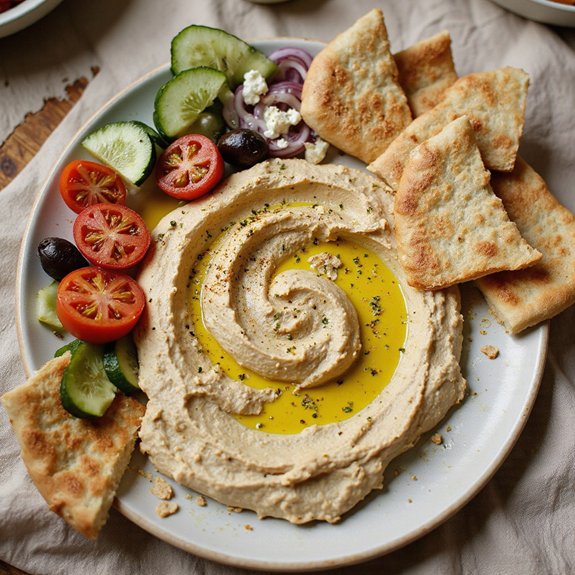
Picture ribbons of velvety chickpea dip swirled with golden olive oil, sprinkled with ruby pomegranate seeds, crisp cucumbers, juicy tomatoes, and warm, toasty pita tucked along the edges.
This loaded hummus platter is a vibrant, no-cook meal that comes together in about 20 minutes—perfect for busy weeknights, casual lunches, or easy entertaining.
It’s ideal for beginners, plant-focused eaters, and anyone who loves to graze rather than commit to a single heavy dish.
I started making this when a last-minute group of friends came by and I’d “nothing” for dinner; a few pantry staples and fridge veggies turned into a centerpiece that everyone gathered around, talking and dipping for hours.
It shines at impromptu gatherings, light Sunday suppers, or those nights you need effort to feel effortless.
Ready to bring this dish to life?
Why You’ll Love It
- Delivers bold, zesty flavor with creamy hummus and fresh toppings
- Serves a crowd easily, perfect for parties, picnics, and potlucks
- Uses simple pantry staples plus a few fresh veggies and herbs
- Adapts effortlessly to vegetarian, dairy-free, and gluten-free preferences
- Preps ahead well, so hosting feels relaxed and low-stress
Ingredients
- 2 cans (15 oz each) chickpeas, drained and rinsed — use good-quality canned for best flavor
- 0.25 tsp baking soda — helps soften chickpeas for ultra-creamy texture
- 0.25 cup fresh lemon juice — from about 1–2 lemons, not bottled
- 1 large clove garlic, roughly chopped — adjust to taste if sensitive to garlic
- 0.5 tsp fine sea salt — start here, then adjust after blending
- 0.5 cup tahini, well stirred — choose a smooth, runny Middle Eastern brand
- 0.25 cup ice-cold water, plus more as needed — essential for light, fluffy hummus
- 3 tbsp extra-virgin olive oil, plus more for drizzling — fruity, good-quality oil shines here
- 0.5 tsp ground cumin — adds warm, earthy depth
- 0.25 tsp smoked paprika, plus more for garnish — gives subtle smokiness and color
- 1 cup cherry tomatoes, halved — choose sweet, ripe tomatoes
- 1 medium cucumber, sliced into half-moons — Persian or English cucumbers work well
- 1 small red onion, thinly sliced — soak briefly in cold water if you want milder bite
- 0.5 cup Kalamata olives, pitted — use briny, firm olives packed in brine
- 0.5 cup feta cheese, crumbled (optional) — use block feta in brine for better texture
- 0.25 cup fresh parsley, roughly chopped — flat-leaf parsley has best flavor
- 4 pieces pita bread, cut into wedges — fresh, soft pita to toast up nicely
- 1 tbsp olive oil, for brushing pita — helps pita crisp and brown lightly
- 0.25 tsp dried oregano, for pita — rub between fingers to release aroma
- 0.25 tsp salt, for vegetables — season veggies just before serving
- 0.25 tsp black pepper, freshly ground — adds a little sharpness to the platter
Step-by-Step Method
Simmer chickpeas with baking soda until very soft. Cover them with water in a saucepan and bring to a gentle boil for about 10 minutes. Stir occasionally so they don’t stick.
Drain in a colander, rinse under cool water, and let them steam-dry for five minutes. This step breaks down skins and guarantees extra-creamy hummus.
Build the Lemon-Garlic Base
Combine lemon juice, chopped garlic, and salt in the food processor. Process until the garlic is finely minced and the mixture smells bright and sharp.
Scrape the sides once or twice as needed. This base mellows the garlic and infuses the hummus with balanced acidity and seasoning from the start.
Whip the Tahini Until Creamy
Add the tahini to the lemon-garlic mixture and blend until thick, smooth, and creamy. Scrape down the bowl to catch any bits on the sides.
With the processor running, slowly drizzle in ice-cold water. Watch for the tahini to turn lighter in color and fluffy. This whipping step creates the signature silky hummus texture.
Blend in Chickpeas and Spices
Add the warm chickpeas, cumin, smoked paprika, and olive oil to the processor. Blend for two to three minutes until the mixture becomes ultra-smooth.
Pause to scrape the bowl as needed. If the hummus feels too thick, add cold water a spoonful at a time. Taste and adjust with more salt or lemon juice.
Chill the Hummus to Set
Transfer the hummus to a container, smooth the top, and cover tightly.
Refrigerate for at least 30 minutes to let the flavors meld and the texture set. Use this time to prep your toppings and pita.
Chilling firms the hummus slightly and deepens the lemon, garlic, and spice notes.
Prep and Season the Vegetables
Slice cucumber into half-moons, halve cherry tomatoes, and thinly slice red onion.
Arrange them in neat sections on a large serving platter. Add Kalamata olives and crumbled feta to their own spots.
Sprinkle the vegetables lightly with salt and freshly ground black pepper. Keep everything colorful and separated for an appealing presentation.
Toast the Pita Wedges
Preheat the oven to 375°F (190°C). Arrange pita wedges in a single layer on a baking sheet. Brush them lightly with olive oil and sprinkle with dried oregano.
Bake for six to eight minutes until warm and just crisp at the edges. Remove from the oven and let cool slightly so they’re easy to handle.
Swirl and Garnish the Hummus
Spoon the chilled hummus into the center of the platter in a wide mound. Use the back of a spoon to create shallow swirls and a small well. Drizzle extra-virgin olive oil over the top.
Dust with more smoked paprika and scatter chopped fresh parsley. This finishing touch adds color, aroma, and richness.
Arrange and Serve the Platter
Nestle warm pita wedges around the hummus or place them in a separate bowl.
Add small bowls for extra olives or toppings if desired. Bring the loaded platter to the table and serve immediately.
Encourage everyone to scoop hummus with pita and pile on their preferred vegetables, olives, and feta for customizable bites.
Ingredient Swaps
- Make it vegan/dairy-free by omitting the feta or swapping in a plant-based feta-style cheese.
- For a budget option, use dried chickpeas cooked from scratch instead of canned, and any mild neutral oil in place of some of the extra-virgin olive oil.
- If tahini is hard to find, substitute a mix of smooth peanut butter or sunflower seed butter with a little extra lemon juice to brighten the flavor.
- Swap toppings based on what’s available: use any ripe tomatoes, bell peppers, or carrots in place of cherry tomatoes and cucumber, and any briny olives you have on hand.
You Must Know
- Doneness • If your hummus looks grainy after processing 2–3 minutes, let it run another 2–4 minutes and add 1–2 teaspoons ice-cold water; it should ribbon off a spoon in a soft mound with no visible chickpea bits.
- Troubleshoot • If the hummus tastes “flat” even with salt, add 1–2 teaspoons more lemon juice and a pinch (⅛ teaspoon) of cumin; bright acid plus warm spice will balance the rich tahini.
- Flavor Boost • For a deeper, nuttier flavor, drizzle an extra 1–2 teaspoons olive oil over the hummus right before serving and dust lightly with smoked paprika until you see a fine red veil across the surface—not opaque, just tinted.
- Make-Ahead • To keep the top from drying or darkening in the fridge (up to 24 hours), press plastic wrap directly onto the hummus surface, then remove it and add the olive oil drizzle and parsley within 5–10 minutes of serving.
- Scale • For a crowd, you can double all ingredients; process the hummus in two batches so the processor isn’t filled more than about ¾ full—overfilled bowls tend to leave chunky pockets.
Serving Tips
- Serve in a wide shallow bowl so toppings are visible and easy to scoop.
- Pair with warm pita, pita chips, and crunchy vegetables for dipping variety.
- Offer small bowls of extra olive oil, lemon wedges, and chopped herbs alongside.
- Add roasted nuts or seeds on top just before serving for crunch and aroma.
- Arrange toppings in colorful clusters for a gorgeous, centerpiece-worthy platter.
Storage & Make-Ahead
This hummus platter is ideal for prepping ahead.
The hummus keeps in an airtight container in the fridge for up to 4–5 days; the veggies are best cut the day of serving.
Assemble the platter just before serving.
Hummus also freezes well for up to 2 months; thaw overnight.
Reheating
Reheat hummus gently: in the microwave at 50% power, stirring often.
In a covered oven-safe dish at low heat.
Or in a small saucepan over low, thinning with water.
Hummus in Mezze Culture
Once you’ve warmed leftover hummus back to its silky, scoopable self, it naturally belongs in its favorite setting: a generous mezze spread.
I picture a low table crowded with little plates—jewels of olives glistening, curls of red onion, cool cucumber half-moons, salty feta crumbles, blistered pita stacked and ready.
For me, hummus is the anchor in that sea of color and texture. It invites lingering: you tear bread, drag it through those olive-oil-filled swirls, snag a tomato or two on the way.
Mezze isn’t about one star; it’s about conversation between bites, building the perfect scoop each time. When I set out this loaded platter, I’m not just serving a dip—I’m laying out an easy, unhurried way to eat together.
Final Thoughts
Give this loaded hummus platter a try and see how quickly it disappears at your next gathering.
Don’t hesitate to tweak the toppings to match your taste or what you have on hand—this recipe is meant to be flexible and fun.
Frequently Asked Questions
How Can I Make This Hummus Platter Kid-Friendly for Picky Eaters?
I’d soften flavors: skip raw onion, use mild paprika, extra olive oil, and smooth hummus. I’d offer toppings “buffet-style,” add carrot sticks and plain pita, and let them dip, scoop, and play with colors.
What Drinks Pair Best With a Loaded Hummus Platter?
I’d pour chilled mint lemonade, crisp dry white wine, or light citrusy beer. You’ll taste bright herbs, cool citrus, gentle fizz; they cut through richness, refresh your palate, and let all those savory, smoky flavors sing.
How Do I Scale This Recipe for a Large Party or Potluck?
I triple everything for a big crowd, then make one extra batch of hummus for safety. I prep toppings separately, keep vegetables chilled, warm breads in waves, and refresh the platter so it always looks abundant.
Can I Turn This Loaded Hummus Platter Into a Full Main-Course Meal?
You absolutely can. I’d double the hummus, pile on extra veggies, add grilled chicken or falafel, tuck in warm pita, then finish with a sharp salad—suddenly it’s a colorful, fragrant, completely satisfying dinner spread.
How Do I Present the Platter Attractively for Special Occasions or Holidays?
I’d spread it on a wide white platter, swirl deep olive-oil pools, then ring it with jeweled tomatoes, cucumbers, and olives; finish with feta “snow,” emerald parsley, warm pita fans, and tiny twinkling tea lights.
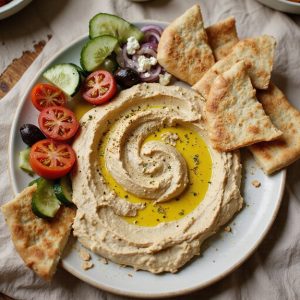
Loaded Hummus Platter
Equipment
- 1 food processor or high-speed blender
- 1 Medium saucepan
- 1 colander
- 1 large serving platter
- 2 small serving bowls
- 1 Cutting board
- 1 Chef's knife
- 1 Baking sheet
- 1 Spatula
- 1 measuring cup set
- 1 measuring spoon set
Ingredients
- 2 can chickpeas 15 ounces each; drained and rinsed
- 0.25 teaspoon baking soda
- 0.25 cup fresh lemon juice
- 1 large clove garlic roughly chopped
- 0.5 teaspoon fine sea salt
- 0.5 cup tahini well stirred
- 0.25 cup ice-cold water plus more as needed
- 3 tablespoon extra-virgin olive oil plus more for drizzling
- 0.5 teaspoon ground cumin
- 0.25 teaspoon smoked paprika plus more for garnish
- 1 cup cherry tomatoes halved
- 1 medium cucumber sliced into half-moons
- 1 small red onion thinly sliced
- 0.5 cup Kalamata olives pitted
- 0.5 cup feta cheese optional; crumbled
- 0.25 cup fresh parsley roughly chopped
- 4 piece pita bread cut into wedges
- 1 tablespoon olive oil for brushing pita
- 0.25 teaspoon dried oregano for pita
- 0.25 teaspoon salt for vegetables
- 0.25 teaspoon black pepper freshly ground
Instructions
- Add drained chickpeas to a saucepan, cover with water, sprinkle in baking soda, and bring to a gentle boil over medium heat for 10 minutes until very soft.
- Drain chickpeas in a colander and rinse briefly under cool water, then let them steam-dry for 5 minutes.
- In the bowl of a food processor, combine lemon juice, garlic, and salt, then process until the garlic is finely minced.
- Add tahini to the processor and blend until thick and creamy, scraping down the sides as needed.
- With the processor running, slowly drizzle in ice-cold water until the mixture becomes very smooth and light in color.
- Add the warm chickpeas, cumin, smoked paprika, and olive oil to the processor and blend for 2–3 minutes until the hummus is ultra-smooth, adding a spoonful of water if too thick.
- Taste the hummus and adjust seasoning with additional salt or lemon juice as desired, then let it rest in the refrigerator for at least 30 minutes.
- While hummus chills, arrange cucumber, cherry tomatoes, red onion, olives, and feta in separate sections on a large serving platter and season vegetables lightly with salt and black pepper.
- Preheat oven to 375°F (190°C), arrange pita wedges on a baking sheet, brush with olive oil, and sprinkle with dried oregano.
- Bake pita wedges for 6–8 minutes until warm and lightly crisp around the edges, then remove from the oven.
- Transfer chilled hummus to the center of the serving platter in a wide mound and use the back of a spoon to create shallow swirls.
- Drizzle extra olive oil over the hummus, dust with additional smoked paprika, and sprinkle with chopped parsley.
- Place warm pita wedges around the platter or in a separate bowl and add small bowls for olives or extra toppings if desired.
- Serve the loaded hummus platter immediately, allowing everyone to scoop hummus with pita and pile on their favorite toppings.
Notes

Cynthia Weatherford is a seasoned chef and culinary enthusiast who serves as the Recipe creator of Somonday. With decades of experience in the kitchen and a passion for exploring diverse cuisines, Cynthia brings a blend of creativity and technique to every dish. Known for transforming simple ingredients into show-stopping meals, Cynthia believes that cooking is an art form anyone can master. Dedicated to inspiring home cooks, Cynthia shares approachable recipes, pro tips, and culinary wisdom to make every meal memorable.