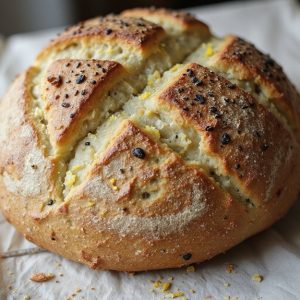
Lemon Poppyseed Sourdough Bread
Equipment
- 1 large mixing bowl
- 1 Medium bowl
- 1 digital kitchen scale
- 1 measuring spoon set
- 1 dough scraper or bench scraper
- 1 proofing basket or medium bowl lined with a towel
- 1 Dutch oven with lid or 1 baking stone and 1 oven-safe pan for steam
- 1 sharp knife or lame for scoring
- 1 Cooling rack
Ingredients
- 100 gram active sourdough starter 100% hydration
- 350 gram water room temperature
- 450 gram bread flour
- 50 gram whole wheat flour
- 9 gram fine sea salt
- 2 tablespoon poppy seeds
- 1 tablespoon poppy seeds for topping
- 2 tablespoon granulated sugar
- 1 large lemon zested
- 20 gram fresh lemon juice
Instructions
- In a large mixing bowl, whisk together the active sourdough starter and water until mostly dissolved.
- Add the bread flour and whole wheat flour, mix until no dry flour remains, then cover and let rest for 30–45 minutes (autolyse).
- Sprinkle the salt, sugar, lemon zest, lemon juice, and poppy seeds over the dough and mix by pinching and folding until evenly incorporated.
- Let the dough rest 30 minutes, then perform a set of stretch-and-folds by pulling each side of the dough up and folding it over the center.
- Repeat stretch-and-folds every 30 minutes for 3–4 sets total over about 2 hours, keeping the bowl covered between sets.
- After the final set, cover the bowl and let the dough bulk ferment at room temperature until roughly doubled and puffy, 3–5 hours depending on room temperature.
- Lightly flour your work surface, gently turn the dough out, and shape it into a tight round or oval loaf without deflating it too much.
- Place the shaped dough seam side up into a floured proofing basket or towel-lined bowl.
- Cover and refrigerate for a cold proof of 8–12 hours, or until the dough feels airy and slightly springy when gently pressed.
- Place the Dutch oven with its lid in the oven and preheat to 475°F (245°C) for at least 30 minutes.
- Carefully remove the hot Dutch oven from the oven, gently invert the dough onto a piece of parchment, and sprinkle the top with the remaining poppy seeds.
- Score the top of the loaf with a sharp knife or lame to allow controlled expansion.
- Transfer the dough on the parchment into the hot Dutch oven, cover with the lid, and return to the oven.
- Bake covered for 20 minutes, then reduce the temperature to 450°F (230°C) and remove the lid.
- Continue baking uncovered for 20–25 minutes more, or until the crust is deep golden and the internal temperature reaches about 205–210°F (96–99°C).
- Carefully remove the bread from the Dutch oven and cool completely on a wire rack for at least 1–2 hours before slicing.
Notes
For best flavor and structure, ensure your starter is bubbly and recently fed so it can rise the lemon-enriched dough well, and avoid adding too much extra lemon juice, which can weaken gluten and slow fermentation. Adjust bulk fermentation times based on your kitchen temperature, using dough appearance (volume increase, bubbles, and jiggle) as your main guide instead of the clock. If the dough feels sticky, lightly wet your hands rather than adding extra flour, which can dry the crumb. You can increase or decrease the lemon zest to taste, but keep the sugar modest so the bread remains more tangy than sweet and pairs well with both sweet and savory toppings. Finally, let the loaf cool fully before slicing to prevent a gummy interior and to allow the lemon and sourdough flavors to fully develop.
Tried this recipe?Let us know how it was!