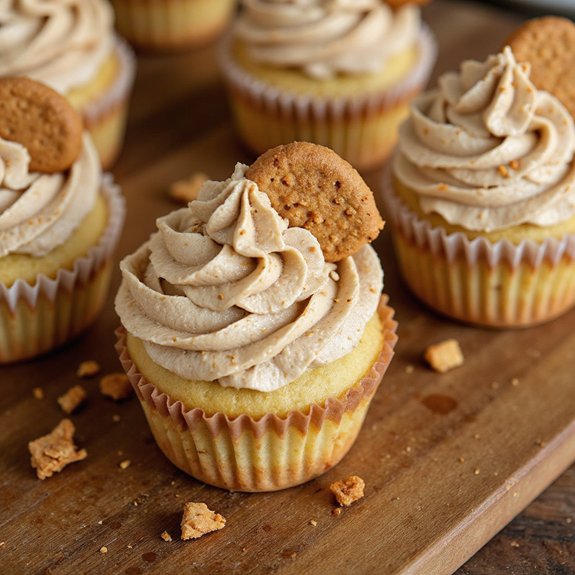
There’s something about peeling back a cupcake liner and seeing that golden Biscoff crumb, crowned with a swirl of cookie butter frosting, that feels instantly cozy.
These Biscoff cupcakes are a soft, tender dessert with warm caramelized cookie notes, a hint of spice, and a creamy, velvety frosting that melts on your tongue. They’re surprisingly quick to pull together—perfect when you need a sweet treat in under an hour.
They’re ideal for sweet-tooth fans, beginner bakers, and anyone who loves an easy yet impressive dessert for gatherings, birthdays, or last-minute cravings. I still remember a rainy Sunday when friends dropped by unannounced; this recipe saved the day.
While we shook off umbrellas and brewed coffee, the kitchen filled with the buttery, cinnamon aroma of cupcakes baking, and dessert practically made itself.
These cupcakes shine at potlucks, casual get-togethers, or quiet nights in. Ready to bring this dish to life?
Why You’ll Love It
- Delivers bold flavor from Biscoff in both cupcake and frosting
- Stays incredibly soft and moist thanks to oil-based batter
- Uses simple pantry ingredients plus store-bought Biscoff spread and cookies
- Preps quickly, bakes fast—great for last-minute entertaining
- Pipes beautifully for bakery-style cupcakes with minimal decorating skills needed
Ingredients
- 190 g all-purpose flour, sifted — measure accurately for light cupcakes
- 150 g granulated sugar — standard white sugar works best here
- 1.5 tsp baking powder — check it’s fresh for proper rise
- 0.25 tsp fine salt — enhances flavor and balances sweetness
- 120 ml whole milk, room temperature — avoids curdling and dense texture
- 2 large eggs, room temperature — incorporate more easily into batter
- 120 ml vegetable oil, neutral — use canola or sunflower for no added flavor
- 1 tsp vanilla extract — pure vanilla gives better depth
- 120 g Biscoff spread, smooth, melted slightly — warm just until pourable
- 12 Biscoff cookies, whole — for decorating the tops
- 60 g Biscoff cookies, crushed (optional) — adds crunchy topping texture
- 170 g unsalted butter, room temperature — soft but not greasy for frosting
- 220 g powdered sugar, sifted — prevents lumpy frosting
- 120 g Biscoff spread, smooth — main flavor for the frosting
- 2–3 tbsp heavy cream or milk — adjust for a soft, pipeable frosting
- 0.5 tsp vanilla extract — rounds out the frosting flavor
- 1 pinch fine salt — balances the sweetness in the frosting
Step-by-Step Method
Preheat and Prepare the Pan
Preheat the oven to 175°C (350°F). Line a 12-cup muffin tin with paper cupcake liners, pressing them into each cavity so they sit flat. Set the pan aside. This step guarantees the oven is hot and ready when the batter is mixed, which helps the cupcakes rise evenly and bake properly.
Combine the Dry Ingredients
Whisk together the sifted flour, granulated sugar, baking powder, and fine salt in a medium mixing bowl. Break up any clumps and ensure everything is evenly distributed.
This step guarantees that the leavening and seasoning are consistent throughout the batter, leading to an even texture and flavor in every cupcake.
Mix the Wet Ingredients
In a separate medium bowl, whisk the milk, eggs, vegetable oil, and vanilla extract until completely smooth. Make sure the mixture looks cohesive and slightly thickened.
Using room-temperature ingredients helps them blend easily and prevents the batter from curdling, giving your cupcakes a tender, uniform crumb.
Bring the Batter Together
Pour the wet mixture into the bowl of dry ingredients. Whisk gently until just combined, stopping as soon as no dry flour streaks remain.
Avoid vigorous mixing, which can develop gluten and toughen the cupcakes. The batter should look smooth but not overworked, with a soft, pourable consistency.
Warm and Fold in the Biscoff
Microwave 120 g of Biscoff spread in a small heatproof bowl for 10–15 seconds until pourable but not hot. Gently fold it into the batter with a spatula.
For a marbled effect, stop folding while streaks remain. For a uniform flavor, fold fully. Work gently to keep the batter airy and light.
Fill and Bake the Cupcakes
Use an ice cream scoop or large spoon to divide the batter evenly among the 12 liners, filling each about two-thirds full. Slide the tin into the preheated oven.
Bake for 16–18 minutes, or until a toothpick inserted in the center comes out clean or with a few moist crumbs attached.
Cool the Cupcakes Completely
Remove the pan from the oven and place it on a wire rack. Let the cupcakes cool in the tin for 5 minutes so they set.
Carefully transfer each cupcake directly onto the rack. Allow them to cool completely, about 25 minutes, so the frosting won’t melt when applied.
Beat the Butter and Biscoff
Place the room-temperature butter in a mixing bowl. Beat with a hand mixer or stand mixer on medium speed for 2–3 minutes until pale and fluffy.
Add 120 g of Biscoff spread and beat again until completely smooth and creamy. Scrape down the sides of the bowl to ensure everything is well incorporated.
Add the Sugar and Liquids
Gradually add the sifted powdered sugar, mixing on low speed at first to prevent a sugar cloud. Increase to medium once it starts to combine.
Beat until thick and smooth. Add the vanilla extract, pinch of salt, and 2 tablespoons of cream or milk. Beat until light and pipeable, adding another tablespoon of liquid if needed.
Pipe and Garnish the Cupcakes
Transfer the Biscoff frosting to a piping bag fitted with a large round or star tip. Pipe a generous swirl onto each cooled cupcake, starting at the outer edge and spiraling inward.
Press a whole Biscoff cookie gently into the top of each. Sprinkle with crushed Biscoff cookies if using, then serve and enjoy.
Ingredient Swaps
- Flour: Use a 1:1 gluten-free all-purpose blend for gluten-free cupcakes; add an extra tablespoon of milk if the batter seems thick.
- Milk: Swap whole milk with any plant-based milk (oat, soy, almond) or 2% dairy; avoid very low‑fat for best texture.
- Oil/Butter: Any neutral oil (canola, sunflower, light olive) works; for a richer flavor, replace half the oil with melted butter.
- Eggs: For egg-free, use 2 flax “eggs” (2 tbsp ground flax + 6 tbsp water, rested 5–10 minutes), noting the crumb will be slightly denser.
- Biscoff spread/cookies: Use any speculoos spread and spiced biscuits; for regions without Biscoff, gingersnaps or digestive biscuits plus ½ tsp extra cinnamon are good stand-ins.
- Frosting dairy: Swap butter with vegan block butter and milk/cream with plant milk for a dairy-free frosting; start with less liquid, as vegan butters can be softer.
You Must Know
– Scale – *For a smaller batch of 6,* use half of every ingredient and check for doneness a bit earlier at around 14–16 minutes.
Pan should still be spaced evenly so air circulates well, preventing uneven rising.
Serving Tips
- Serve on a white platter so the caramel color and cookie garnish stand out.
- Pair with hot coffee, chai latte, or cold brew to echo the spiced Biscoff flavor.
- Warm extra Biscoff spread and drizzle on plates before setting cupcakes on top.
- Add contrast with a small scoop of vanilla or cinnamon ice cream beside each cupcake.
- Crumble extra cookies over the serving plate for texture and a bakery-style presentation.
Storage & Make-Ahead
Store frosted Biscoff cupcakes in an airtight container in the fridge for up to 4 days.
Bring to room temperature before serving.
Unfrosted cupcakes can be baked 1 day ahead and kept covered at room temperature.
Both unfrosted cupcakes and frosting freeze well separately for up to 2 months.
Reheating
Reheat unfrosted cupcakes briefly in a 150°C (300°F) oven, 5–8 minutes, or 5–10 seconds in the microwave.
Gently warm leftover cookie crumbs in a dry skillet on the stovetop if desired.
Final Thoughts
Give these Biscoff cupcakes a try and enjoy the cozy, caramelized flavor in every bite.
Feel free to tweak the recipe with extra cookie crunch, a little cinnamon, or your favorite frosting swirl to make them your own.
Frequently Asked Questions
Can I Make These Biscoff Cupcakes Gluten-Free or Dairy-Free?
You can, and I’d gladly guide you. I’d swap in 1:1 gluten‑free flour and certified GF cookies, then use plant milk and vegan butter; the flavor still feels like childhood cookie crumbs on warm afternoons.
How Do I Scale This Recipe for a Crowd or Party?
You can easily double or triple everything, and bake in batches; I’d keep ratios strict, just like old family birthday bakes. I’d test one batch first, then scale, so every guest tastes that same cozy magic.
What Tools Are Best for Achieving Bakery-Style Frosting Swirls?
I reach for a large open or closed star tip, a sturdy piping bag, and a lazy Susan. Then I swirl slowly from the outer edge inward—like decorating childhood birthday cakes at grandma’s table.
Are There Kid-Friendly Variations With Less Sugar or Smaller Portions?
Yes—I’d make mini cupcakes, halve the frosting, and swirl thinly. I’d swap some sugar for mashed banana or applesauce, and let kids decorate with a single cookie shard, just like childhood bake-sale treasures.
How Can I Price These Cupcakes if Selling at a Bake Sale?
I’d price them around $2.50–$3 each, or $25–$30 per dozen. Think of it like those childhood fair treats—affordable, a tiny splurge, but special enough that people feel good supporting your table.
Biscoff Cupcakes
Equipment
- 1 Muffin tin (12-cup)
- 12 paper cupcake liners
- 2 medium mixing bowls
- 1 small heatproof bowl
- 1 hand mixer or stand mixer
- 2 rubber spatulas
- 1 Whisk
- 1 wire cooling rack
- 1 Ice cream scoop or large spoon
- 1 piping bag with large round or star tip
Ingredients
- 190 gram all-purpose flour sifted
- 150 gram granulated sugar
- 3/2 teaspoon baking powder
- 1/4 teaspoon fine salt
- 120 milliliter whole milk room temperature
- 2 large eggs room temperature
- 120 milliliter vegetable oil neutral
- 1 teaspoon vanilla extract
- 120 gram Biscoff spread smooth; melted slightly
- 12 Biscoff cookies whole; for garnish
- 60 gram Biscoff cookies optional; crushed; for topping
- 170 gram unsalted butter for frosting; room temperature
- 220 gram powdered sugar for frosting; sifted
- 120 gram Biscoff spread for frosting; smooth
- 1 2–3 tbsp heavy cream or milk for frosting
- 1/2 teaspoon vanilla extract for frosting
- 1 pinch fine salt for frosting
Instructions
- Preheat the oven to 175°C (350°F) and line a 12-cup muffin tin with paper cupcake liners.
- In a medium bowl whisk together the flour, granulated sugar, baking powder, and salt until well combined.
- In a separate bowl whisk the milk, eggs, vegetable oil, and vanilla extract until smooth.
- Pour the wet ingredients into the dry ingredients and whisk gently until just combined and no dry streaks remain.
- Warm the 120 g of Biscoff spread in a small heatproof bowl in the microwave for 10–15 seconds until pourable but not hot.
- Gently fold the melted Biscoff spread into the batter, leaving streaks for a marbled effect if desired.
- Divide the batter evenly among the 12 cupcake liners, filling each about two-thirds full.
- Bake the cupcakes for 16–18 minutes or until a toothpick inserted into the center comes out clean or with a few moist crumbs.
- Transfer the tin to a wire rack and let the cupcakes cool in the pan for 5 minutes.
- Remove the cupcakes from the pan and place them directly on the wire rack to cool completely, about 25 minutes.
- While the cupcakes cool, beat the room-temperature butter with a mixer on medium speed for 2–3 minutes until pale and fluffy.
- Add the 120 g of Biscoff spread for the frosting and beat again until fully combined and creamy.
- Gradually add the powdered sugar, mixing on low at first, then increasing to medium until smooth and thick.
- Beat in the vanilla extract, pinch of salt, and 2 tablespoons of cream or milk, adding an extra tablespoon if needed to reach a soft, pipeable consistency.
- Once the cupcakes are completely cool, transfer the Biscoff frosting to a piping bag fitted with a large tip.
- Pipe a generous swirl of frosting onto each cupcake, starting from the outside and working toward the center.
- Garnish each cupcake with a whole Biscoff cookie and sprinkle with crushed cookies if using.
Notes
Cynthia Weatherford is a seasoned chef and culinary enthusiast who serves as the Recipe creator of Somonday. With decades of experience in the kitchen and a passion for exploring diverse cuisines, Cynthia brings a blend of creativity and technique to every dish. Known for transforming simple ingredients into show-stopping meals, Cynthia believes that cooking is an art form anyone can master. Dedicated to inspiring home cooks, Cynthia shares approachable recipes, pro tips, and culinary wisdom to make every meal memorable.