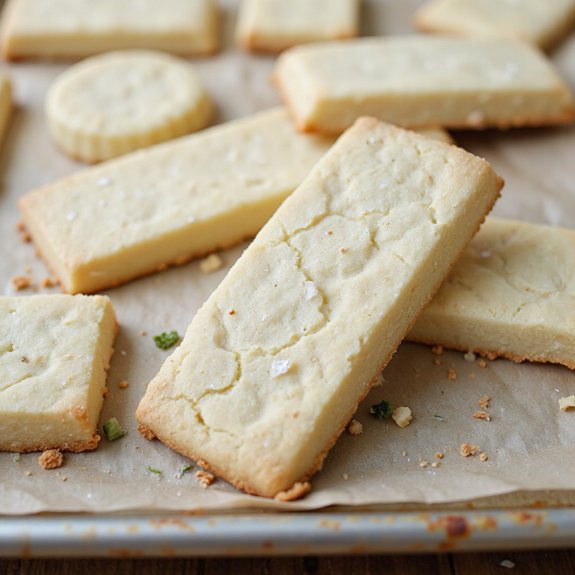
Imagine a tray of butter-kissed cookies emerging from the oven, edges just blushing gold, their tender centers melting into a sandy crumb that perfumes the kitchen with warm vanilla.
Picture the quiet snap as you break one in half—delicate, gently sweet, a cozy antidote to long days and chilly afternoons.
Shortbread is comfort in its simplest form, and that simplicity is why it matters to me: six humble ingredients, one gentle method, and you’ve got treats that suit everything from busy weeknights to Sunday suppers, coffee breaks to celebratory gift boxes.
When my kids’ school bake sale landed on the same night as a late meeting, this dough came together in minutes, chilled while I wrapped up emails, and baked off into perfect squares just in time.
This recipe is forgiving, elegant, and endlessly useful—dress it up, keep it classic, or tuck it into lunchboxes.
Ready? Let’s cook!
Why You’ll Love It
- Delivers rich, buttery flavor with a tender, melt-in-mouth crumb
- Uses simple pantry staples you likely already have on hand
- Mixes quickly; minimal steps and equipment required
- Holds clean edges; chills well for tidy, uniform cookies
- Bakes to a classic pale, delicate shortbread finish
Ingredients
- 1 cup unsalted butter, softened — high-fat European-style yields richer crumb
- 1/2 cup granulated sugar — superfine dissolves more evenly
- 1/4 cup powdered sugar — adds tender, meltaway texture
- 1 teaspoon vanilla extract — pure vanilla for best flavor
- 1/4 teaspoon fine sea salt — balances sweetness subtly
- 2 cups all-purpose flour, leveled — measure accurately to avoid dry dough
Step-by-Step Method
Cream the Butter and Sugars
Beat softened butter with granulated and powdered sugars on medium speed until pale and fluffy, about 2 minutes. Scrape the bowl once to make certain even mixing. Aerate well for a light, tender crumb. Avoid overbeating past fluffy stage. The mixture should look smooth and slightly increased in volume.
Blend in Vanilla and Salt
Mix in vanilla extract and fine sea salt until just combined. Keep the mixer on low to prevent overworking. Distribute flavor evenly without deflating the creamed butter. Scrape down the bowl to capture any unmixed bits along the sides and bottom before adding flour.
Add Flour in Two Batches
Reduce speed to low and add half the flour. Mix just until incorporated, then add the remaining flour. Stop as soon as a soft dough forms with no dry pockets. Avoid overmixing to preserve tenderness. If crumbs remain, gently fold with a spatula until the dough comes together.
Shape into a Slab
Turn dough onto parchment. Gently pat or roll to 1/2-inch thickness, keeping edges even. Use a rolling pin if preferred, dusting lightly with flour only if necessary. Keep movements gentle to avoid toughness. Slide the parchment onto a baking sheet for easy chilling.
Chill to Firm
Refrigerate the dough slab for 30 minutes. Let butter firm so cookies hold shape during cutting and baking. Avoid freezing, which can overly harden edges. If the dough cracks, press it together lightly. Chilling also helps achieve sharp, clean edges after cutting.
Preheat and Prepare Pans
Heat oven to 325°F (165°C). Line two baking sheets with parchment for even baking and easy release. Arrange oven rack in the center. Bake one sheet at a time for consistent coloring. Have a fork ready for docking and a sharp knife or cookie cutter for clean cuts.
Cut and Dock
Cut chilled dough into rectangles or rounds. Transfer pieces to prepared sheets, spacing slightly. Prick tops lightly with a fork to prevent excessive puffing. Re-chill cut shapes for 10 minutes for crisp edges if desired. Work quickly to keep dough cool as you arrange.
Bake to Pale Gold
Bake 16 to 18 minutes until edges just turn pale golden and tops remain light. Rotate the sheet once if needed for even coloring. Don’t overbake; shortbread should stay fair. Remove promptly to prevent further browning from residual heat.
Cool and Finish
Cool cookies on the baking sheet for 5 minutes to set. Transfer to a wire rack to cool completely. Handle gently; they’re delicate when warm. Store in an airtight container once fully cool. Enjoy plain or dust lightly with powdered sugar for a classic finish.
Ingredient Swaps
- Dairy-free/vegan: Replace butter with equal amount of high-fat vegan butter (stick variety; 80%+ fat). Avoid tub margarines to prevent spreading.
- Gluten-free: Use a 1:1 gluten-free all-purpose blend with xanthan gum; add 1–2 tsp cornstarch for tenderness if blend lacks it.
- Sugar swaps: Use all granulated sugar (total 3/4 cup) for crisper cookies, or all powdered sugar (3/4 cup) for a meltaway texture. Superfine sugar can improve delicacy.
- Flavor twists: Swap vanilla for almond extract (1/2 tsp), add citrus zest (lemon/orange), or a pinch of cardamom.
- Budget/regional: Use salted butter and omit added salt, or ghee/European-style butter for richer flavor; if vanilla is pricey, use vanilla sugar or a small amount of imitation vanilla.
You Must Know
Doneness • Look for matte, set surfaces with only the faintest golden rims; pull at 16–18 minutes when bottoms are pale straw, not brown—carryover heat finishes them, preserving a tender, sandy crumb.
Troubleshoot • If edges slump or cookies spread into ovals, re-chill shaped pieces 10–15 minutes until firm to the touch; colder fat holds structure in the first 5 minutes of the bake.
Avoid • Overworking the dough after flour is added; stop as soon as it clumps and holds together—gluten development toughens shortbread and reduces that delicate snap.
Scale • For a double batch, divide dough into two equal 500 g slabs (approx.) and chill separately; smaller, flatter pieces cool faster (30 minutes) and cut more cleanly, keeping thickness at 1/2 inch for even doneness.
Flavor Boost • Swap 15–20 g of flour for cornstarch or rice flour and add a 1/8 teaspoon fine lemon zest; increases melt-in-mouth texture and brightens aroma without altering the 16–18 minute bake window.
Serving Tips
- Serve with hot tea or coffee; add a small dish of lemon curd.
- Pair alongside fresh berries and lightly sweetened whipped cream.
- Plate with vanilla ice cream; drizzle with warm caramel or chocolate.
- Offer a cheese board: aged cheddar, jam, and shortbread for sweet-salty bites.
- Dust with powdered sugar and garnish with a twist of lemon zest.
Storage & Make-Ahead
Store baked shortbread airtight at room temperature 1 week.
In the fridge up to 2 weeks.
Dough can be made ahead, wrapped well, and refrigerated 3 days.
Both dough slabs and baked cookies freeze well up to 2 months.
Thaw in the fridge, then to room temp.
Refresh baked cookies briefly at 300°F.
Reheating
Revive shortbread gently.
Microwave 5–10 seconds wrapped in a paper towel.
Oven at 300°F for 3–5 minutes on a parchment-lined sheet.
Stovetop warm in a covered skillet over low heat briefly.
Hogmanay Tea-Time Tradition
Once those warm cookies come out perfectly tender again, I love setting them out for Hogmanay tea-time—a cozy Scottish send-off to the old year.
I stack the shortbread on a slate board, their pale edges barely golden, and sprinkle a whisper of sugar so they glint like frost.
The room smells of butter and vanilla, the kind of aroma that hushes chatter for the first bite.
I pour strong black tea, splash in milk, and set out marmalade for bright, citrusy contrast.
A nip of whisky for toasts, if you fancy, pairs beautifully with the rich crumb.
We nibble slowly, listening for the clock, savoring that crisp snap, then melt.
It’s simple hospitality—warm light, good company, and immaculate shortbread.
Final Thoughts
Give these buttery shortbread cookies a try—you’ll love their tender, melt-in-your-mouth crumb.
Feel free to tweak with a touch of lemon zest, a hint of vanilla bean, or a sprinkle of sugar on top to make them your own!
Frequently Asked Questions
How Can I Scale This Recipe for a Crowd or Small Batch?
Scale directly: I halve or double every ingredient by weight. For crowds, I quadruple, bake in batches, and rotate sheets. For small batches, quarter it, form a dough log, slice, and chill well for crisp, buttery edges.
What Altitude Adjustments Are Needed for Baking Shortbread?
At high altitude, I lower sugar slightly, add 1–2 teaspoons extra flour per cup, chill dough colder, and bake hotter by 15–25°F, slightly shorter. I watch edges lightly gold, ensuring tender, crisp snaps without spreading.
Are These Cookies Suitable for Freezing the Raw Dough?
Yes—they freeze beautifully. I portion or shape the dough, wrap tightly, and freeze up to 2 months. Bake from frozen at 325°F, adding 2–3 minutes. You’ll get crisp edges, tender centers, and buttery aroma.
How Do I Package Shortbread Safely for Shipping?
Ship them in snug tins. I cushion layers with parchment and bubble wrap, pack desiccant, and seal. I choose priority shipping, label “Fragile,” and avoid heat. You’ll hear a gentle rattle, not crumbs.
Can I Make This Recipe Gluten-Free Successfully?
Yes—you can. I swap in a fine gluten-free 1:1 baking flour plus 1–2 tablespoons cornstarch. I keep the dough chilled, mix gently, and bake just until pale. The cookies stay tender, buttery, and delicately crumbly.
Buttery Shortbread Cookies
Equipment
- 2 Mixing bowls
- 1 stand mixer or hand mixer
- 1 Rubber spatula
- 2 baking sheets
- 2 sheets parchment paper
- 1 Wire rack
- 1 Measuring cups set
- 1 Measuring spoons set
- 1 Rolling Pin optional
- 1 sharp knife or cookie cutter
Ingredients
- 1 cup unsalted butter softened
- 1/2 cup granulated sugar
- 1/4 cup powdered sugar
- 1 teaspoon vanilla extract
- 1/4 teaspoon fine sea salt
- 2 cup all-purpose flour leveled
Instructions
- Cream the softened butter, granulated sugar, and powdered sugar together on medium speed until pale and fluffy, about 2 minutes.
- Mix in the vanilla extract and salt until combined.
- Add the flour in two additions on low speed and mix just until a soft dough forms with no dry pockets.
- Turn the dough onto a sheet of parchment and gently pat or roll to 1/2-inch thickness.
- Chill the slab of dough on a baking sheet in the refrigerator for 30 minutes to firm up.
- Preheat the oven to 325°F (165°C) and line two baking sheets with parchment.
- Cut the chilled dough into rectangles or rounds, transfer to prepared sheets, and prick tops lightly with a fork.
- Bake for 16 to 18 minutes until edges are just turning pale golden but tops remain light.
- Cool on the baking sheets for 5 minutes, then transfer cookies to a wire rack to cool completely.
Notes

Cynthia Weatherford is a seasoned chef and culinary enthusiast who serves as the Recipe creator of Somonday. With decades of experience in the kitchen and a passion for exploring diverse cuisines, Cynthia brings a blend of creativity and technique to every dish. Known for transforming simple ingredients into show-stopping meals, Cynthia believes that cooking is an art form anyone can master. Dedicated to inspiring home cooks, Cynthia shares approachable recipes, pro tips, and culinary wisdom to make every meal memorable.