
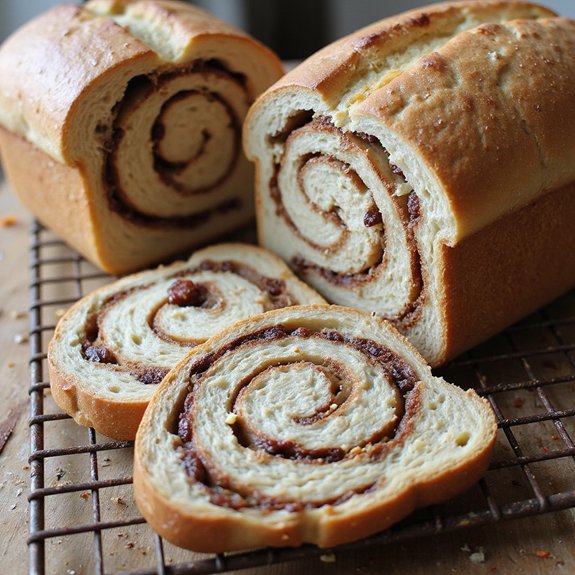
There’s something about slicing into a loaf of cinnamon swirl sourdough and seeing that golden spiral of sugar and spice tucked inside.
The crust is deeply bronzed and crackly, giving way to a tender, chewy crumb laced with ribbons of cinnamon that smell like a bakery on a chilly morning.
This is a cozy, slow-risen bread—perfect for leisurely breakfasts, afternoon snacks, or a simple dessert—that mostly relies on hands-off time rather than effort.
It’s ideal for sourdough beginners and comfort seekers, and it’s a smart make-ahead option for busy families and avid brunch hosts.
I first baked this loaf after a long week, when I needed something calming to make and everyone needed something comforting to eat; we sliced it thick, toasted it, and suddenly the house felt softer and quieter. It shines at Sunday suppers, holiday mornings, or anytime a warm treat feels right.
Ready to bring this loaf to life?
Why You’ll Love It
- Delivers bold cinnamon-sugar flavor wrapped in tender, tangy sourdough crumb
- Elevates everyday sourdough into a stunning breakfast or dessert centerpiece
- Balances natural sweetness with warm spice—no cloying frosting required
- Rises overnight, making morning baking easy and low-effort
- Slices cleanly for picture-perfect swirls and ideal toast or French toast
Ingredients
- 120 g active sourdough starter, 100% hydration — use recently fed and bubbly for best rise
- 260 g water, room temperature — cool to the touch, not warm
- 400 g bread flour — higher protein for better structure
- 50 g whole wheat flour — adds flavor and a bit of nuttiness
- 8 g fine sea salt — evenly seasons and strengthens gluten
- 40 g granulated sugar — lightly sweetens the dough itself
- 40 g unsalted butter, softened — leave at room temp until easily spreadable
- 50 g unsalted butter, melted — divided for filling and brushing after baking
- 90 g brown sugar, packed — use fresh, soft sugar to avoid lumps
- 2 tbsp ground cinnamon — choose a fragrant, fresh jar for strong flavor
- 1 tsp vanilla extract — real vanilla deepens the filling’s aroma
- 1 large egg, beaten — optional, for a glossy egg wash top
Step-by-Step Method
Mix the Starter and Water
Whisk the active sourdough starter and room-temperature water in a large mixing bowl. Stir until the starter mostly dissolves and the mixture looks milky and frothy. This helps distribute the natural yeast evenly.
Scrape down the sides of the bowl so nothing dries out and the starter-water mixture is ready for the flour.
Form a Shaggy Dough
Add the bread flour, whole wheat flour, granulated sugar, and fine sea salt to the bowl. Mix with your hand or a sturdy spoon until no dry patches remain. The dough will look rough and scrappy.
Make certain all flour is hydrated, but don’t worry about smoothness yet. Scrape the bowl’s sides to keep everything together.
Knead Until Smooth and Tacky
Add the softened butter to the dough. Knead by hand or with a mixer fitted with a dough hook.
Work the dough until it becomes smooth, elastic, and slightly tacky, about 8–10 minutes. Resist adding extra flour unless absolutely necessary. A slightly sticky dough will bake into a softer, more tender crumb.
Rest the Dough Briefly
Cover the bowl with a clean kitchen towel or plastic wrap. Let the dough rest for about 30 minutes at room temperature.
Allow the gluten to relax and the flour to fully hydrate. This rest makes the dough easier to stretch and fold later. Keep it away from drafts so the surface doesn’t dry out.
Stretch and Fold to Build Strength
Perform 2–3 sets of stretch-and-folds, spaced 30 minutes apart. For each set, gently stretch one side of the dough up and fold it over itself.
Repeat around the dough. Cover between sets. This strengthens the gluten structure without intensive kneading.
Stop once the dough feels smoother, more elastic, and slightly puffy.
Bulk Ferment Until Puffy and Doubled
Let the dough rise at room temperature, covered, until doubled in size and visibly airy, about 4–6 hours. Look for a domed surface and a gentle jiggle when you move the bowl.
Temperature and starter strength affect timing, so trust visual cues. Avoid over-proofing; the dough should still feel resilient when lightly pressed.
Mix the Cinnamon Filling
In a medium mixing bowl, combine the brown sugar and ground cinnamon. Stir in 40 grams melted butter and the vanilla extract.
Mix until a thick, spreadable paste forms. Make sure no dry sugar pockets remain. Adjust by adding a tiny bit more melted butter if needed. Set the filling aside while the dough finishes rising.
Roll the Dough into a Rectangle
Turn the risen dough onto a lightly floured surface. Gently pat it into a rough rectangle with your hands, pressing out large air bubbles.
Use a rolling pin to roll it to about 9 inches wide and 16–18 inches long. Keep the thickness even. Lightly dust with flour only if sticking, to avoid toughening the dough.
Spread the Cinnamon Filling Evenly
Spoon the cinnamon-sugar filling onto the rolled dough. Spread it into a thin, even layer with an offset spatula or the back of a spoon.
Leave a 1-inch clean border on one short end. Keep the filling away from the edges to reduce leaks. Be certain of consistent coverage for a uniform swirl in every slice.
Roll the Dough into a Tight Log
Start rolling from the short end opposite the clean border. Roll the dough tightly but gently, keeping the log even.
Avoid stretching the dough too hard. When you reach the clean edge, pinch the seam firmly to seal. Tuck the ends under slightly to prevent the filling from escaping during proofing and baking.
Pan the Loaf and Begin Proofing
Lightly grease a 9×5 inch loaf pan. Place the dough log seam-side down into the pan. Center it so it rises evenly.
Cover loosely with a kitchen towel or plastic wrap. Let it proof at room temperature for 1–2 hours. Watch for slight puffiness and a softer feel, but avoid letting it overflow the pan.
Cold-Proof in the Refrigerator
Transfer the covered loaf pan to the refrigerator for 8–12 hours. Allow the dough to rise slowly and develop deeper flavor.
Check that it looks well risen, rounded, and nearly reaching the top edge of the pan. The cold-proof also firms the butter-rich filling, helping maintain a neat spiral during baking and slicing.
Warm the Dough and Preheat the Oven
Remove the loaf from the refrigerator. Let it sit at room temperature while you preheat the oven to 375°F (190°C).
Give the dough a short time to lose its chill, about 30–45 minutes if your kitchen is cool. This helps ensure even oven spring and more consistent baking from edge to center.
Brush the Top for a Glossy Finish
Prepare a beaten egg if using egg wash, or melt a little extra butter. Gently brush the top of the loaf with your chosen wash.
Coat evenly without soaking the dough. The egg wash gives a shiny, golden crust, while butter produces a softer sheen. This step is optional but makes the loaf more attractive.
Bake Until Deeply Golden
Place the pan in the preheated oven. Bake for 35–40 minutes, rotating the pan halfway if needed.
Watch the color; tent loosely with foil if the top browns too quickly. The loaf is done when deeply golden and sounds hollow when tapped, or when an instant-read thermometer reads about 200–205°F (93–96°C).
Cool, Brush, and Slice
Remove the loaf from the oven and, if desired, brush the top with the remaining melted butter. Let it cool in the pan for 10 minutes to set the structure.
Transfer carefully to a wire cooling rack. Allow it to cool completely before slicing to preserve the spiral. Once cool, slice into even pieces and serve.
Ingredient Swaps
– Flour: Substitute bread flour with all-purpose; expect a slightly softer, less chewy crumb.
Replace whole wheat with rye or spelt for a heartier flavor, or use all white flour if that’s what you have.
- Butter & dairy-free: Swap butter with vegan butter or neutral oil (use 10–15% less oil by weight than butter); flavor will be a bit less rich but still tender.
- Sugar: Use all white sugar if you don’t have brown; add 1–2 tsp molasses if available to mimic brown sugar depth.
Coconut sugar also works in the filling for a less refined option.
- Egg wash: Skip the egg for egg-free; use milk, cream, or plant milk with a bit of sugar or oil brushed on top for color and slight shine.
- Flavor boosts: Add cardamom, nutmeg, or orange zest to the filling for variation; swap vanilla with almond extract (use half the amount, it’s stronger).
You Must Know
– Scale • When doubling or halving the recipe: Keep all ingredients proportional by weight (e.g., ×0.5 for a smaller loaf, ×2 for two pans), but watch fermentation visually, not by the clock—dough should be about doubled, domed, and jiggly even if that takes an extra 1–2 hours with a larger batch.
Serving Tips
- Serve warm slices with softened butter or cream cheese for a cozy dessert.
- Pair with hot coffee, chai, or spiced apple cider for a comforting treat.
- Turn thick slices into decadent French toast, topped with maple syrup and berries.
- Toast and spread with mascarpone or ricotta, then drizzle with honey.
- Cube leftovers for a cinnamon swirl bread pudding or sweet breakfast strata.
Storage & Make-Ahead
This bread keeps wrapped at room temperature 2–3 days.
In the fridge, up to 5–6 days, though it dries faster.
For best make-ahead, freeze tightly wrapped (whole or sliced) up to 2 months.
Thaw at room temperature, then refresh with a brief toast to restore softness and aroma.
Reheating
Reheat slices gently: in a 300°F (150°C) oven for 8–10 minutes.
In a covered skillet over low heat.
Or briefly in the microwave at 50% power to avoid drying.
Cinnamon Swirl in Culture
From the moment cinnamon hits the warmth of the oven, I tap into a tradition that stretches from old-world spice caravans to modern American kitchens.
I picture dusty spice markets, brass scoops sinking into curled bark, then leap forward to chrome mixers and humming refrigerators, yet the scent feels the same—sweet, woody, a little mysterious.
When I slice into a cinnamon swirl sourdough loaf, I see more than spirals; I see fingerprints of so many cultures.
There’s the Scandinavian love of cardamom and cinnamon buns, the American diner cinnamon roll, the holiday babka on crowded tables.
You and I carry those stories into our own kitchens, baking memories into each coil and letting the aroma speak a shared language.
Final Thoughts
Give this cinnamon swirl sourdough a try and enjoy how it fills your kitchen with the coziest aroma.
Once you’ve baked it once, don’t hesitate to tweak the spices, sweetness, or flours to make it your own signature loaf.
Frequently Asked Questions
Can I Convert This Cinnamon Swirl Sourdough Into a Vegan-Friendly Recipe?
Yes, you can. I’d swap butter for vegan butter, egg wash for plant milk, and make certain sugar’s vegan. Imagine warm spirals, crackling crust, and spiced sweetness rising from your oven, utterly dairy‑free, perfectly cozy.
How Do I Scale the Recipe for Mini Loaves or Gift-Sized Portions?
You can scale to mini loaves by dividing everything by 2 or 4, then splitting the dough among small pans. I’d bake 10–20 minutes less, watching for deep golden tops and a fragrant, buttery aroma.
What Are Common Mistakes That Cause Tunnels or Gaps in the Swirl?
Tunnels usually come from loose rolling, under‑proofing, or too much flour on the dough. I roll snugly, press out big bubbles, and proof until softly jiggly, so each slice reveals a tight, fragrant cinnamon ribbon.
How Can I Adapt This Recipe for a Gluten-Sensitive (Not Celiac) Diet?
You can swap in high‑quality spelt or einkorn flour, add psyllium husk for tenderness, and shorten fermentation. I’d watch the dough closely, seeking a soft, pillowy feel and warm, nutty aroma before baking.
Which Tools or Gadgets Make Shaping and Swirling Significantly Easier for Beginners?
You’ll shape more easily with a silicone mat, French rolling pin, and metal bench scraper. I also love a small offset spatula for spreading filling and a loaf pan lined with parchment, cradling the dough like a warm hug.
Cinnamon Swirl Sourdough Bread
Equipment
- 1 large mixing bowl
- 1 medium mixing bowl
- 1 digital kitchen scale
- 1 measuring spoon set
- 1 Dough scraper
- 1 Rolling Pin
- 1 9×5-inch loaf pan
- 1 Small saucepan
- 1 pastry brush
- 1 wire cooling rack
- 1 clean kitchen towel or plastic wrap
Ingredients
- 120 gram active sourdough starter 100% hydration
- 260 gram water room temperature
- 400 gram bread flour
- 50 gram whole wheat flour
- 8 gram fine sea salt
- 40 gram granulated sugar
- 40 gram unsalted butter softened
- 50 gram unsalted butter for filling and brushing; melted
- 90 gram brown sugar packed
- 2 tablespoon ground cinnamon
- 1 teaspoon vanilla extract
- 1 large egg for egg wash, optional; beaten
Instructions
- In a large mixing bowl whisk together the active sourdough starter and water until mostly dissolved.
- Add the bread flour, whole wheat flour, sugar, and salt to the bowl and mix until a shaggy dough forms.
- Add the softened butter and knead by hand or with a mixer until the dough is smooth and slightly tacky, about 8–10 minutes.
- Cover the bowl with a kitchen towel or plastic wrap and let the dough rest for 30 minutes at room temperature.
- Perform 2–3 sets of stretch-and-folds every 30 minutes, then cover and let the dough bulk ferment at room temperature until doubled and puffy, 4–6 hours.
- In a medium mixing bowl combine the brown sugar and cinnamon, then stir in 40 g melted butter and vanilla extract to form a spreadable paste.
- Turn the risen dough onto a lightly floured surface and gently shape it into a rough rectangle with your hands.
- Use a rolling pin to roll the dough into a rectangle about 9 inches wide and 16–18 inches long.
- Spread the cinnamon-sugar filling evenly over the surface of the dough, leaving a 1-inch border on one short end.
- Starting from the short end opposite the clean border, roll the dough tightly into a log, pinching the seam to seal.
- Tuck the ends under slightly, then place the log seam-side down into the greased 9×5 inch loaf pan.
- Cover the pan loosely and proof at room temperature for 1–2 hours, then transfer to the refrigerator to cold-proof 8–12 hours or until well risen.
- When ready to bake, remove the loaf from the refrigerator and let it sit at room temperature while you preheat the oven to 375°F (190°C).
- Optional: brush the top of the loaf with beaten egg or melted butter for a glossy finish.
- Bake the bread for 35–40 minutes, tenting loosely with foil if the top browns too quickly.
- Remove the loaf from the oven and brush the top with the remaining melted butter if desired.
- Let the bread cool in the pan for 10 minutes, then transfer to a wire cooling rack to cool completely before slicing.
Notes

Cynthia Weatherford is a seasoned chef and culinary enthusiast who serves as the Recipe creator of Somonday. With decades of experience in the kitchen and a passion for exploring diverse cuisines, Cynthia brings a blend of creativity and technique to every dish. Known for transforming simple ingredients into show-stopping meals, Cynthia believes that cooking is an art form anyone can master. Dedicated to inspiring home cooks, Cynthia shares approachable recipes, pro tips, and culinary wisdom to make every meal memorable.


