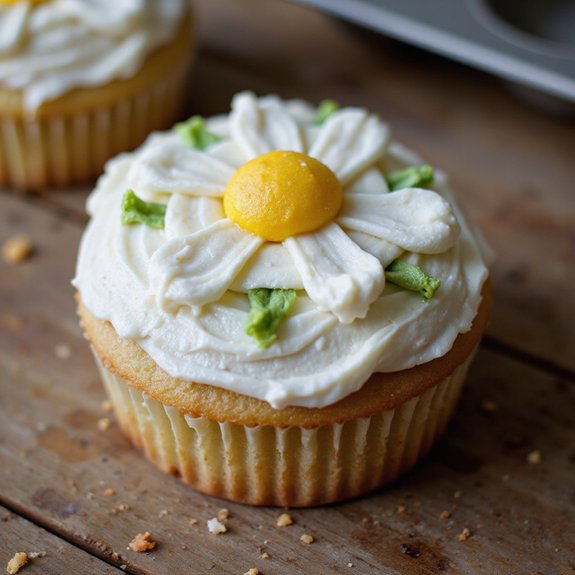
Picture a plate lined with sunny little blossoms—golden cupcakes crowned with white “petals” of buttercream and tiny yellow centers that look just like fresh daisies.
These daisy cupcakes are a cozy, cheerful dessert, light and tender with a hint of vanilla, and simple enough to have frosted and ready in under an hour.
They’re perfect for sweet-tooth fans, beginner bakers, and anyone who needs a quick but charming treat for gatherings or last-minute cravings.
I still remember a rainy Sunday when friends dropped by unexpectedly; I’d very little on hand except pantry staples. A quick batch of these cupcakes, decorated with simple daisy swirls, turned an ordinary afternoon into something quietly special.
They work beautifully for spring parties, baby showers, easy entertaining, or as a bright surprise in lunchboxes during a busy week.
Ready to bring this batch of edible daisies to life?
Why You’ll Love It
- Delivers soft, tender vanilla cupcakes with rich, buttery crumb
- Creates stunning daisy designs without advanced decorating skills
- Uses simple pantry ingredients and basic baking equipment
- Adapts easily for birthdays, showers, and spring celebrations
- Holds shape well, so piped petals stay neat and defined
Ingredients
- 190 g all-purpose flour, sifted — measure after sifting for accuracy
- 8 g baking powder — guarantees a light, fluffy crumb
- 2 g fine sea salt — balances sweetness and enhances flavor
- 120 g unsalted butter, softened — leave at room temp until easily indented
- 200 g granulated sugar — standard white sugar works best here
- 2 large eggs, room temperature — mix more evenly into the batter
- 5 ml vanilla extract — use pure vanilla for better flavor
- 180 ml whole milk, room temperature — fat content keeps cupcakes tender
- 170 g unsalted butter, softened (for frosting) — the base of a smooth buttercream
- 300 g powdered sugar, sifted (for frosting) — sifting prevents lumpy frosting
- 10 ml vanilla extract (for frosting) — adds warm, sweet aroma
- 30–40 ml heavy cream or milk (for frosting) — adjust to reach piping consistency
- 1–2 drops yellow gel food coloring — colors the daisy centers vividly
- 2–3 drops white gel food coloring, optional — brightens the white petals
- 1–2 drops green gel food coloring, optional — for decorative leaves
- 1 pinch fine sea salt (for frosting) — cuts sweetness and rounds flavor
Step-by-Step Method
Preheat & Prepare the Pan
Preheat the oven to 175°C. Line a standard 12-cup muffin tin with paper cupcake liners. Ensure the rack is in the center of the oven for even baking.
Set out all equipment and ingredients. Let butter, eggs, and milk come fully to room temperature so the batter mixes smoothly and the cupcakes bake evenly.
Whisk the Dry Ingredients
Measure and sift the flour into a medium bowl. Add the baking powder and fine sea salt. Whisk thoroughly until everything is evenly combined.
This distributes the leavening and salt, helping the cupcakes rise uniformly. Set this dry mixture aside so it’s ready to add in stages to the wet ingredients.
Cream Butter & Sugar
Place the softened butter and granulated sugar in a separate medium bowl. Beat with an electric mixer on medium speed until light and fluffy, about 2–3 minutes.
Scrape down the bowl once or twice. Proper creaming incorporates air, which helps create a tender, well-risen cupcake crumb when baked.
Add Eggs & Vanilla
Crack the eggs into a small bowl to check for shells, then add them to the butter mixture one at a time. Beat well after each addition until fully incorporated.
Mix in the vanilla extract until smooth. Scrape the bowl again to ensure no streaks of egg or butter remain before adding the dry ingredients.
Alternate Dry Ingredients & Milk
Reduce the mixer speed to low. Add half of the dry ingredients to the butter mixture and mix just until combined. Pour in half of the milk and mix briefly.
Repeat with the remaining dry ingredients and milk, ending with the dry mixture. Avoid over-mixing to keep the cupcakes light and tender.
Fold & Portion the Batter
Use a rubber spatula to gently fold the batter, scraping the sides and bottom of the bowl. Ensure there are no pockets of flour.
Divide the batter evenly among the 12 cupcake liners, filling each about two-thirds full. This helps them rise nicely without overflowing during baking in the oven.
Bake & Cool the Cupcakes
Place the muffin tin on the center rack. Bake for 16–18 minutes, or until a toothpick inserted into a cupcake’s center comes out clean or with a few moist crumbs.
Remove the pan from the oven. Let cupcakes cool in the tin for 5 minutes, then transfer them to a wire rack to cool completely.
Beat the Butter for Frosting
Place the softened butter for the frosting in a clean medium bowl. Beat with an electric mixer on medium speed until creamy and pale, about 2 minutes.
Scrape the sides and bottom of the bowl. Properly whipped butter forms the base of a fluffy, smooth buttercream that holds its shape while piping.
Add Sugar, Vanilla & Cream
Gradually add the powdered sugar, about 75 g at a time, mixing on low to avoid a sugar cloud. Increase speed to medium once incorporated.
Mix in vanilla extract and a pinch of salt. Add 30 ml of cream or milk and beat until light and fluffy. Adjust with 5–10 ml more liquid if needed.
Tint & Bag the Frosting
Scoop a small portion of frosting into a separate bowl and tint it green for leaves. Place it in a piping bag fitted with a leaf or petal tip.
Tint the remaining frosting white, adding white gel if using, and transfer most to a piping bag with a small round tip. Tint 2–3 tablespoons yellow for daisy centers.
Base-Frost the Cupcakes
Ensure cupcakes are completely cool to prevent melting. Use an offset spatula or butter knife to spread a thin, even layer of white frosting over each cupcake top.
This creates a smooth base for piping petals and helps them adhere. Work gently to avoid tearing the cupcake surface while spreading.
Pipe Petals, Centers & Leaves
Pipe small white dots around the cupcake edge, dragging each inward slightly to form daisy petals. Continue in a circle, adding a second inner ring if desired.
Pipe a neat yellow dot in the center to finish the flower. Use the green frosting to add one or two small leaves. Let cupcakes sit to set.
Ingredient Swaps
- Use cake flour instead of all-purpose for a softer crumb, or swap up to ½ the flour with finely ground almond flour for a nutty flavor (reduce milk slightly if batter seems thin).
- Replace whole milk with buttermilk or a 50/50 mix of milk and yogurt for extra tenderness; non-dairy milks (oat, soy, almond) also work.
- For dairy-free cupcakes and frosting, use vegan butter sticks and plant milk; for egg-free, substitute each egg with 60 g unsweetened applesauce or a commercial egg replacer.
- If you don’t have gel colors, use liquid food coloring sparingly (you may need a bit more powdered sugar if the frosting gets too loose).
You Must Know
– Flavor Boost • For a more complex vanilla note, swap half the milk (about 90 ml) with buttermilk or add 2–3 ml almond extract along with the 5 ml vanilla; this adds a slight tang or nutty aroma without changing texture when baked 16–18 minutes.
Serving Tips
- Arrange cupcakes on a white platter to highlight the daisy design and colors.
- Serve with lemonade, iced tea, or light herbal tea for a springtime feel.
- Add fresh (non-toxic) flowers or greenery around the platter for decoration only.
- Pair with vanilla ice cream or lemon sorbet for a simple, invigorating dessert.
- Place each cupcake in a decorative wrapper or stand for individual party servings.
Storage & Make-Ahead
Store decorated Daisy Cupcakes in an airtight container in the fridge for up to 4 days.
Bring to room temperature before serving for best texture.
Cupcakes (unfrosted) freeze well for up to 2 months—wrap individually.
Then thaw at room temperature and frost fresh for prettiest daisies.
Reheating
Reheat cupcakes gently to avoid drying.
Use a microwave at 50% power for 10–15 seconds, or warm in a 150°C oven for 5–7 minutes.
Avoid stovetop reheating.
Daisy Cupcakes in Pop Culture
Springtime episodes of my favorite shows always seem to sneak in a tray of daisy-topped cupcakes, as if the props department knows I’m watching with a sweet tooth and a soft spot for little details. I always pause the screen, studying the petals, wondering if they’re buttercream like mine or some studio-sturdy imposter.
I notice them in rom-coms too—carefully placed on bakery counters during a “meet cute,” or cradled in pastel boxes in coming-of-age movies. They’re shorthand for fresh starts: first dates, first apartments, first brave yeses.
When I bake my own, I feel strangely connected to those fictional kitchens, as if I’m slipping a cameo into my life, frosting my small, hopeful moments with petals.
Final Thoughts
Now that you know the basics, it’s your turn to bake a batch of Daisy Cupcakes and make them your own—play with colors, add sprinkles, or try different flavors in the frosting.
Have fun decorating, and enjoy sharing these cheerful little treats!
Frequently Asked Questions
Can I Make These Daisy Cupcakes Without an Electric Mixer?
Yes, you can. I’d whisk the batter by hand, like slow Sunday mornings at my grandma’s table, then beat the frosting until my arm aches pleasantly, watching it turn glossy, pillowy, and ready to bloom.
How Can I Adapt This Recipe for a Two-Layer Cake?
You can double the batter, bake it in two 8‑inch pans about 25 minutes, then frost between and on top. I picture you slicing a tender, flower‑topped cake, crumbs soft as Sunday afternoon light.
Are There Kid-Friendly Decorating Shortcuts for Beginners?
You can absolutely simplify decorating: I’d swirl frosting with a spoon, shower sprinkles, and press on candy “flowers.” When my nieces bake, we use mini marshmallows as petals—tiny hands, big smiles, very little piping.
What Drink Pairings Go Best With Daisy Cupcakes?
I’d pour cold milk or chamomile tea beside them; both soften the sweetness. On rainy afternoons, I love pairing them with Earl Grey—its citrus notes wrap around each bite like a worn, beloved cardigan.
How Do I Safely Transport Decorated Cupcakes to Events?
I nestle cupcakes in a lidded carrier, each in its own well, then tuck a towel underneath for cushioning. I drive like I’m carrying tiny lanterns, avoiding sharp turns so every frosted petal arrives perfect.
Daisy Cupcakes
Equipment
- 1 standard 12-cup muffin tin
- 12 paper cupcake liners
- 2 medium mixing bowls
- 1 Small mixing bowl
- 1 electric hand mixer or stand mixer
- 1 Whisk
- 1 Rubber spatula
- 1 measuring cup set
- 1 measuring spoon set
- 1 wire cooling rack
- 2 piping bags
- 1 small round piping tip
- 1 small petal or leaf piping tip
- 1 offset spatula or butter knife
Ingredients
- 190 gram all-purpose flour sifted
- 8 gram baking powder
- 2 gram fine sea salt
- 120 gram unsalted butter softened
- 200 gram granulated sugar
- 2 large eggs room temperature
- 5 milliliter vanilla extract
- 180 milliliter whole milk room temperature
- 170 gram unsalted butter for frosting; softened
- 300 gram powdered sugar for frosting; sifted
- 10 milliliter vanilla extract for frosting
- 1 30–40 ml heavy cream or milk for frosting, plus more as needed
- 1 1–2 drops yellow gel food coloring
- 1 2–3 drops white gel food coloring optional, to brighten
- 1 1–2 drops green gel food coloring for leaves, optional
- 1 pinch fine sea salt for frosting
Instructions
- Preheat the oven to 175°C and line the muffin tin with paper cupcake liners.
- In a medium bowl whisk together flour, baking powder, and salt until well combined.
- In a separate bowl beat the softened butter and granulated sugar with an electric mixer until light and fluffy, about 2–3 minutes.
- Add the eggs to the butter mixture one at a time, beating well after each addition, then mix in the vanilla extract.
- Add the dry ingredients to the wet mixture in two additions, alternating with the milk, beginning and ending with dry ingredients, mixing on low just until combined.
- Scrape down the sides of the bowl and gently fold the batter with a spatula to ensure everything is evenly incorporated.
- Divide the batter evenly among the 12 cupcake liners, filling each about two-thirds full.
- Bake the cupcakes for 16–18 minutes, or until a toothpick inserted in the center comes out clean or with a few moist crumbs.
- Remove the pan from the oven and let the cupcakes cool in the tin for 5 minutes.
- Transfer the cupcakes to a wire rack and let them cool completely for about 25 minutes before frosting.
- To make the frosting, beat the softened butter in a medium bowl until creamy and pale, about 2 minutes.
- Gradually add the powdered sugar, about 75 g at a time, mixing on low until incorporated, then increasing to medium speed.
- Mix in the vanilla extract and pinch of salt, then add 30 ml of cream or milk and beat until smooth and fluffy, adding an extra 5–10 ml of cream if needed to reach piping consistency.
- Divide a small portion of frosting into a separate bowl and tint it green with gel food coloring for leaves, then transfer to a piping bag fitted with a leaf or petal tip.
- Tint the remaining larger portion of frosting white with a tiny touch of white gel (if using) and place most of it in a piping bag fitted with a small round tip, reserving 2–3 tablespoons in a small bowl.
- Tint the reserved 2–3 tablespoons of frosting yellow with gel coloring and place it in a piping bag fitted with a small round tip or simply use the corner of a small plastic bag.
- Once the cupcakes are completely cool, spread a thin, even layer of white frosting over the top of each cupcake with an offset spatula or butter knife.
- Pipe small white petals around the edge of each cupcake by squeezing small dots and slightly dragging them inward to form daisy petals, working in a circle.
- After completing a full ring of petals, add a second inner ring if desired to make the daisy fuller.
- Pipe a neat yellow dot in the center of each daisy to form the flower’s middle.
- Use the green frosting to pipe one or two small leaves on the edge or side of the daisy for a finishing touch.
- Allow the frosted cupcakes to sit at room temperature for 15–20 minutes to let the frosting set slightly before serving.
Notes
Cynthia Weatherford is a seasoned chef and culinary enthusiast who serves as the Recipe creator of Somonday. With decades of experience in the kitchen and a passion for exploring diverse cuisines, Cynthia brings a blend of creativity and technique to every dish. Known for transforming simple ingredients into show-stopping meals, Cynthia believes that cooking is an art form anyone can master. Dedicated to inspiring home cooks, Cynthia shares approachable recipes, pro tips, and culinary wisdom to make every meal memorable.