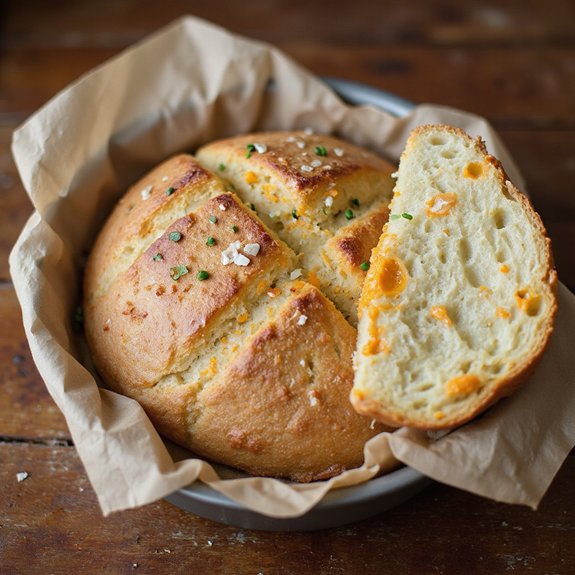
There’s something about the smell of freshly baked sourdough sandwich bread that makes a kitchen feel like home.
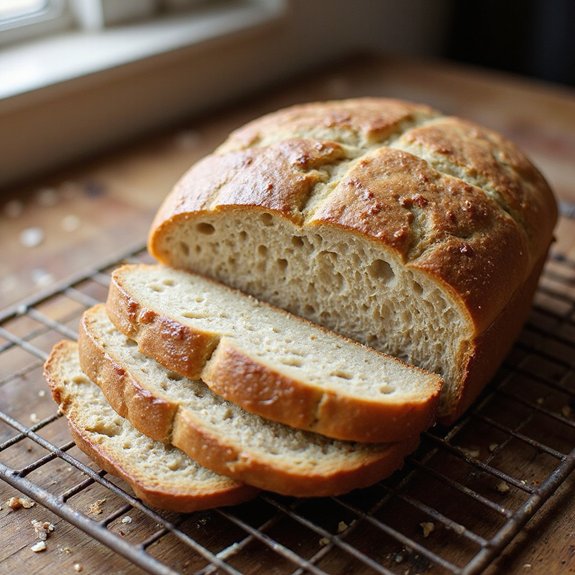
Picture a golden, gently blistered loaf cooling on the counter, its crust softly crackling as it settles, and a warm, tangy aroma filling the air.
This is everyday bread at its best—soft, sliceable, and perfect for everything from quick grilled cheese to hearty lunch sandwiches—without taking over your entire day.
This loaf is ideal for busy families, lunch-packers, beginners ready to move beyond store-bought bread, and anyone who loves real sourdough flavor in a practical, everyday form.
I still remember pulling a loaf like this from the oven on a hectic school morning, slicing it while it was just barely warm, and watching simple toast suddenly turn breakfast around.
It’s wonderful for Sunday meal prep, easy weeknight dinners, and effortless entertaining. Ready to bring this loaf into your kitchen?
Why You’ll Love It
- Delivers rich, tangy sourdough flavor in a soft sandwich-style loaf
- Fits busy schedules with one-day rise and simple shaping steps
- Uses basic pantry ingredients plus starter—no commercial yeast required
- Stays soft and sliceable, perfect for toast, lunches, and grilled cheese
- Freezes beautifully, so you can bake once and enjoy all week
Ingredients
- 120 g active sourdough starter — 100% hydration and recently fed for best rise
- 250 g warm water — about 80–85°F to keep yeast happy
- 30 g granulated sugar — adds tenderness and mild sweetness
- 40 g unsalted butter, melted and cooled — enriches crumb and flavor
- 400 g bread flour — higher protein for structure and chew
- 50 g whole wheat flour — adds flavor and slight nuttiness
- 9 g fine sea salt — balances flavor and strengthens gluten
- 15 g olive oil — for greasing bowl and pan to prevent sticking
Step-by-Step Method
Mix the Starter and Liquids
Whisk the active sourdough starter, warm water, sugar, and melted, cooled butter in a medium bowl.
Mix until mostly smooth with only a few streaks of starter remaining. Assure the water is warm, not hot, so it doesn’t harm the yeast.
Set aside briefly while you prepare the dry ingredients.
Combine Dry Ingredients and Form a Shaggy Dough
Add the bread flour, whole wheat flour, and salt directly to the bowl with the wet mixture.
Stir with a spatula or dough hook until no dry pockets remain.
Aim for a rough, shaggy dough; it will look messy and uneven. Scrape the bowl sides so all flour is incorporated before kneading.
Knead Until Smooth and Elastic
Transfer the dough to a lightly floured surface or keep it in the mixer. Knead by hand or on low speed for 8–10 minutes.
Watch for a smooth, elastic texture that feels slightly tacky but not sticky. If needed, add a teaspoon of flour or a few drops of water to fine-tune consistency.
Oil the Bowl and Coat the Dough
Lightly grease a clean bowl with some of the olive oil. Shape the dough into a ball and place it inside.
Turn the dough once or twice so all sides are lightly coated with oil.
This prevents sticking, keeps the surface from drying out, and helps with easy removal after the first rise.
Let the Dough Rise Until Puffy
Cover the bowl with plastic wrap or a damp kitchen towel. Leave it at warm room temperature for 3–4 hours.
Wait until the dough is nearly doubled, soft, and puffy when gently pressed.
If your kitchen is cool, allow extra time. Trust the dough’s appearance more than the clock.
Deflate and Shape into a Rectangle
Gently turn the risen dough onto a lightly floured surface. Press out excess gas with your fingertips, handling it softly to preserve some air.
Pat the dough into a rectangle roughly the length of your 9×5-inch loaf pan. Aim for even thickness to ensure a uniform final loaf.
Roll Into a Tight Log
Starting from a short side, roll the rectangle up tightly into a log. Press firmly as you roll to build surface tension.
Pinch the seam closed along the bottom and tuck the ends under.
This tight shaping helps the loaf rise upward, not outward, and promotes an even crumb.
Grease the Loaf Pan and Place Dough
Lightly oil the inside of the 9×5-inch loaf pan with the remaining olive oil. Make sure the corners and sides are coated.
Place the shaped log seam-side down in the pan. Center it so the loaf bakes evenly. Gently adjust the dough so it sits level from end to end.
Proof Until Domed Above the Rim
Cover the pan loosely with plastic wrap or a towel. Let the dough proof at room temperature for 2–3 hours.
Wait until the top rises 1–2 inches above the rim and slowly springs back when gently pressed. If it lags, extend proofing time or move to a slightly warmer spot.
Preheat the Oven for Baking
About 30 minutes before baking, preheat the oven to 375°F (190°C). Position a rack in the center of the oven for even heat circulation.
Assure the oven actually reaches temperature before you bake.
This helps achieve good oven spring and consistent browning on the crust.
Score the Loaf Before It Goes In
Uncover the proofed loaf and inspect the surface; it should look smooth and domed.
Use a sharp knife or lame to cut one long, shallow slash down the center.
Score at a slight angle. This controlled cut directs expansion in the oven and prevents random splitting along the sides.
Bake Until Golden and Fully Cooked
Place the loaf pan on the center rack. Bake for 30–35 minutes.
Check for a deep golden top and firm sides. If available, use an instant-read thermometer; aim for 200–205°F (93–96°C) internally.
If the crust browns too quickly, tent loosely with foil for the final minutes.
Cool in the Pan Briefly
Remove the pan from the oven and set it on a cooling rack. Let the bread rest in the pan for about 10 minutes.
This short cooling time allows the crumb to set slightly. It also makes the loaf easier to remove without tearing or compressing the sides or bottom.
Turn Out and Cool Completely
Carefully loosen the edges if needed and turn the loaf out onto the wire rack. Cool for at least 1 hour before slicing.
Resist cutting early; hot bread compresses and turns gummy. Once fully cooled, slice with a sharp serrated knife for neat sandwich-ready pieces.
Ingredient Swaps
- Use all-purpose flour in place of bread flour if needed; the loaf will be slightly less chewy but still soft.
- Swap the whole wheat flour with more bread (or all-purpose) flour if you don’t have it, or use spelt or rye for a heartier flavor (you may need a spoonful more water).
- Replace butter with an equal amount of neutral oil or vegan butter for a dairy-free loaf; coconut oil works too but adds mild flavor.
- Use brown sugar, honey, or maple syrup instead of granulated sugar (same weight), keeping in mind liquid sweeteners make the dough slightly stickier.
- If your starter is less active, reduce the water by 15–20 g and add 3–4 g (about 1 tsp) of instant yeast to help the dough rise more reliably.
You Must Know
– Scale • To make two loaves, double every ingredient to 2× grams but keep the same temperatures and target visual cues (nearly doubled in bulk, 1–2 inches above pan rim before the oven); fermentation times may lengthen by about 15–30 minutes because more dough mass warms more slowly.
Serving Tips
- Serve slightly warm with salted butter for a simple, cozy side to soups.
- Layer into grilled cheese; its tangy crumb balances sharp cheddar beautifully.
- Use for breakfast toast topped with avocado, fried eggs, or jam.
- Build hearty deli-style sandwiches with turkey, crisp lettuce, tomato, and mustard.
- Cube and toast for flavorful croutons on salads or creamy tomato soup.
Storage & Make-Ahead
Store cooled slices in an airtight container or bag in the fridge for up to 5–6 days.
For make-ahead, slice and freeze in a zip-top bag for 2–3 months, separating layers with parchment if you like.
Toast slices straight from frozen or thaw at room temperature.
Reheating
Reheat slices gently: in a microwave at 50% power for 10–20 seconds.
In a 300°F oven wrapped in foil for 8–10 minutes.
Or on a covered skillet over low heat.
Sourdough in American Lunchboxes
Even before lunchtime rolls around, a thick slice of sourdough sandwich bread wrapped in wax paper promises something cozy and real in an American lunchbox.
I imagine you packing it in the morning: the loaf’s crust faintly crackling as you slice, the tender crumb giving way under the knife, a soft tang rising with the steam.
I love how this bread makes even the simplest fillings feel special.
Turkey and cheddar, peanut butter and jam, leftover roast chicken—each one soaks into the sourdough’s gentle chew without turning soggy.
By noon, the edges are slightly buttery, the interior still moist, the aroma quietly sour and sweet.
It tastes like something made for you, not just made for convenience.
Final Thoughts
Give this sourdough sandwich bread a try and see how much better homemade loaves taste in your everyday lunches and toast.
Once you’ve made it once, have fun tweaking the flours, sweetness, or crust to make it your own house favorite.
Frequently Asked Questions
How Do I Troubleshoot a Dense or Gummy Sandwich Bread Crumb?
I’d fix dense or gummy crumb by fermenting longer, proofing until the dough feels airy, and baking fully to 205°F. You’ll feel a lighter loaf, hear a hollow thump, and slice tender, non-sticky pieces.
What Type of Loaf Pan Material Gives the Best Rise and Crust?
I get my highest, most tender loaves in a light-colored aluminum pan. It heats quickly yet gently, so your bread lifts tall, with a softly burnished crust that crackles delicately when you slice into it.
How Can I Scale This Recipe for Multiple Loaves or Bakery Production?
You can scale it linearly by loaf: I’d multiply every ingredient by your loaf count, keep hydration percentages, then stagger mixing, bulk, and proof so each pan hits the oven at peak, softly domed and jiggly.
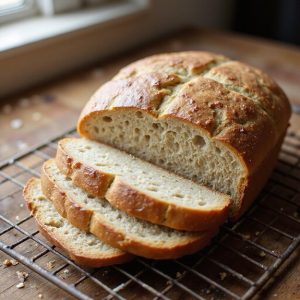
Easy Sourdough Sandwich Bread
Equipment
- 1 digital kitchen scale
- 2 medium mixing bowls
- 1 dough scraper or spatula
- 1 stand mixer with dough hook (optional)
- 1 9×5-inch loaf pan
- 1 plastic wrap or clean kitchen towel
- 1 wire cooling rack
- 1 sharp knife or lame
Ingredients
- 120 gram active sourdough starter 100% hydration
- 250 gram warm water about 80–85°F
- 30 gram granulated sugar
- 40 gram unsalted butter melted and cooled
- 400 gram bread flour
- 50 gram whole wheat flour
- 9 gram fine sea salt
- 15 gram olive oil for greasing pan and bowl
Instructions
- In a mixing bowl, whisk together the active sourdough starter, warm water, sugar, and melted butter until mostly smooth.
- Add the bread flour, whole wheat flour, and salt to the bowl and mix with a spatula or dough hook until a rough, shaggy dough forms.
- Knead the dough by hand on a lightly floured surface or in a stand mixer on low speed for 8–10 minutes until smooth, elastic, and only slightly tacky.
- Lightly oil a clean bowl with olive oil, place the dough inside, and turn it once to coat all sides.
- Cover the bowl with plastic wrap or a damp towel and let the dough rise at warm room temperature for 3–4 hours, or until nearly doubled and puffy.
- Gently deflate the dough, turn it onto a lightly floured surface, and pat it into a rectangle roughly the length of your loaf pan.
- Roll the rectangle up tightly from the short side into a log, pinching the seam and tucking the ends under to create surface tension.
- Lightly oil the loaf pan with olive oil and place the shaped dough seam-side down into the pan.
- Cover the pan loosely with plastic wrap or a towel and let the dough proof at room temperature for 2–3 hours, or until it rises 1–2 inches above the rim of the pan and springs back slowly when gently pressed.
- About 30 minutes before baking, preheat the oven to 375°F (190°C) with a rack in the center position.
- Just before baking, use a sharp knife or lame to score one long shallow slash down the center of the loaf.
- Place the loaf pan in the oven and bake for 30–35 minutes, or until the top is deep golden and the internal temperature reaches about 200–205°F (93–96°C).
- Remove the pan from the oven, let the bread cool in the pan for 10 minutes, then carefully turn it out onto a wire rack.
- Allow the loaf to cool completely for at least 1 hour before slicing to set the crumb and keep slices from squashing.
Notes

Cynthia Weatherford is a seasoned chef and culinary enthusiast who serves as the Recipe creator of Somonday. With decades of experience in the kitchen and a passion for exploring diverse cuisines, Cynthia brings a blend of creativity and technique to every dish. Known for transforming simple ingredients into show-stopping meals, Cynthia believes that cooking is an art form anyone can master. Dedicated to inspiring home cooks, Cynthia shares approachable recipes, pro tips, and culinary wisdom to make every meal memorable.