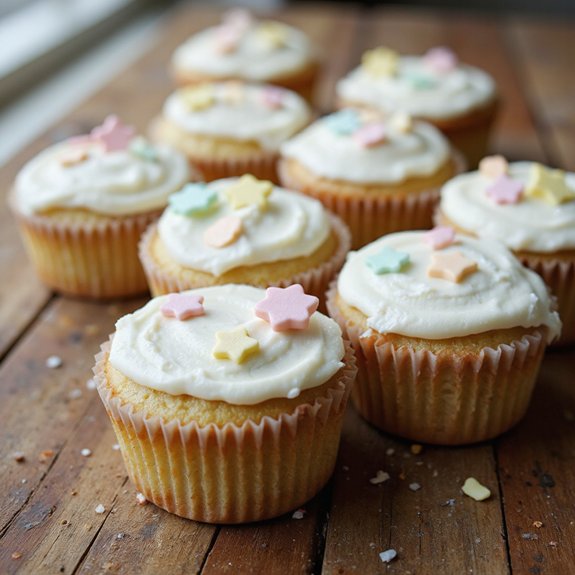
There’s something about a tray of fondant cupcakes that can stop conversation in its tracks. Picture smooth, pastel domes—soft pinks, mint greens, ivory whites—each one gleaming like porcelain and hiding a tender, vanilla-scented crumb beneath.
This is a cozy dessert with a polished, bakery-style finish, yet it’s surprisingly manageable and can be ready in under an afternoon, decorating included.
It’s ideal for sweet-tooth fans, beginners who want to try decorating without diving into tiered cakes, and anyone who loves making celebrations feel a bit more special.
I still remember a rainy Sunday when a simple batch of fondant cupcakes turned my niece’s “just us” birthday into something magical—her eyes lit up as she chose the cupcake with the tiny fondant bow.
These shine at baby showers, afternoon teas, last-minute celebrations, or when you simply need a pretty treat to brighten a long week. Ready to bring this dessert to life?
Why You’ll Love It
- Delivers a bakery-style finish right from your home kitchen
- Uses simple, familiar ingredients for both cake and frosting
- Decorates beautifully with smooth fondant and customizable shapes or colors
- Holds shape well for parties, gifting, or transport
- Offers make-ahead flexibility with fondant that sets and protects cupcakes
Ingredients
- 150 g all-purpose flour — use fresh, unbleached flour for best texture
- 1.5 tsp baking powder — check it’s within date so cupcakes rise properly
- 0.25 tsp fine salt — fine grain blends more evenly into the batter
- 120 g unsalted butter, softened — room temperature for easy creaming
- 150 g granulated sugar — standard white sugar for light, sweet crumb
- 2 large eggs, room temperature — room temp helps batter emulsify smoothly
- 1 tsp vanilla extract — pure extract gives better flavor than imitation
- 120 ml whole milk, room temperature — full-fat milk keeps cupcakes moist
- 120 g unsalted butter, softened (for buttercream) — soft but not greasy to touch
- 240 g powdered sugar, sifted (for buttercream) — sifting prevents lumpy frosting
- 1 tsp vanilla extract (for buttercream) — flavors and softens any sugar edge
- 1–2 tbsp milk, as needed (for buttercream) — add gradually to adjust consistency
- 400 g ready-to-roll fondant, white or colored — pliable fondant rolls without cracking
- Cornstarch or powdered sugar, for dusting work surface — use sparingly to avoid drying fondant
- Food coloring gel, assorted (optional) — gels tint fondant without making it sticky
Step-by-Step Method
Preheat & Prepare Pan
Preheat the oven to 180°C (350°F). Line a standard 12-cup muffin tin with paper cupcake liners. Make certain the rack is in the center of the oven for even baking.
Set the prepared tin aside while you mix the batter. Having everything ready helps the cupcakes bake evenly and prevents overmixing.
Combine Dry Ingredients
Measure the flour, baking powder, and salt into a medium mixing bowl. Whisk them together until fully combined and lump-free.
This distributes the leavening evenly and helps the cupcakes rise uniformly. Set the dry mixture aside so it’s ready to add in two stages to the wet ingredients later.
Cream Butter & Sugar
Place the softened butter and granulated sugar in another medium bowl. Beat with an electric mixer on medium speed for about 3 minutes.
Mix until the mixture is light, pale, and fluffy. Proper creaming incorporates air into the batter, creating a tender crumb. Scrape down the bowl as needed.
Add Eggs & Vanilla
Crack the eggs into a small bowl to check for shells, then add them to the butter mixture one at a time. Beat well after each addition until fully incorporated.
Mix in the vanilla extract until evenly blended. Avoid overbeating once the eggs are in to prevent a dense, tough cupcake texture.
Alternate Dry Ingredients & Milk
Add half of the dry ingredients to the butter-egg mixture. Mix on low speed just until combined.
Pour in the milk and mix again gently. Add the remaining dry ingredients and mix only until the batter is smooth and no dry streaks remain. Overmixing at this stage can create chewy cupcakes.
Fill Liners & Bake
Divide the batter evenly among the 12 prepared liners, filling each about two-thirds full. Use a spoon or small scoop for accuracy.
Place the tin in the preheated oven and bake for 16–18 minutes. Check doneness with a toothpick inserted in the center; it should come out clean or with a few moist crumbs.
Cool Cupcakes Completely
Remove the baked cupcakes from the oven and let them cool in the pan for 5 minutes. Carefully transfer them to a wire cooling rack.
Allow them to cool completely before decorating. Warm cupcakes will melt buttercream and soften fondant, leading to slipping and uneven surfaces on the finished treats.
Beat Butter for Buttercream
Place the softened butter for the buttercream in a clean bowl. Beat it with an electric mixer until creamy and smooth.
This step should take a couple of minutes. Creaming the butter first ensures a lighter texture. Scrape down the sides of the bowl to avoid lumps and uneven mixing.
Add Sugar, Vanilla & Milk
Gradually add the sifted powdered sugar to the butter while mixing on low. Once most is incorporated, add the vanilla extract.
Increase speed to medium and beat until fluffy. Add 1–2 tablespoons of milk as needed to reach a smooth, spreadable consistency. The buttercream should be soft but not runny.
Spread Thin Buttercream Layer
Make certain the cupcakes are completely cool. Use a small spatula or knife to spread a thin, even layer of buttercream on top of each one.
Aim for a smooth, level surface without thick swirls. This acts as glue for the fondant and helps create a flawless, professional-looking finish under the fondant circles.
Knead & Roll Fondant
Lightly dust your work surface and rolling pin with cornstarch or powdered sugar. Knead the fondant until soft and pliable, warming it with your hands.
Roll it out to about 3 mm (1/8 inch) thickness. Rotate and lift the fondant occasionally to prevent sticking. Keep unused fondant covered to avoid drying.
Cut & Apply Fondant Circles
Use a round cutter slightly larger than the top of your cupcakes to cut fondant circles. Lift each circle carefully and place it over a buttercream-topped cupcake.
Gently smooth from the center outward with your hands, shaping it over the dome. Press lightly around the edges to secure and remove air bubbles.
Create Decorative Shapes
Gather fondant scraps and re-roll them to the same thickness. Use small cutters or a sharp knife to cut shapes like hearts, flowers, or stars.
If desired, tint portions of fondant with food coloring gel and knead until evenly colored. Keep decorations simple for a clean look, or mix colors for playful designs.
Attach Decorations & Rest
Lightly brush the back of each fondant decoration with a tiny bit of water to help it stick. Press decorations gently onto the fondant-covered cupcakes.
Arrange them symmetrically or in playful clusters. Let the decorated cupcakes rest at room temperature for about 30 minutes so the fondant can firm before serving.
Ingredient Swaps
- Flour: Swap all-purpose flour with a 1:1 gluten-free baking blend for gluten-free cupcakes.
- Butter: Use dairy-free margarine or vegan butter for both batter and buttercream to make them dairy-free; use shortening for a more heat-stable frosting.
- Milk: Replace whole milk with any unsweetened plant milk (soy, oat, almond) without changing quantities.
- Eggs: For egg-free cupcakes, use 2 “flax eggs” (2 tbsp ground flax + 6 tbsp water, rested) or commercial egg replacer for 2 eggs.
- Fondant: Choose vegan fondant (gelatin-free) if needed, or use modeling chocolate if fondant is hard to find regionally.
You Must Know
– Doneness • If your cupcakes look pale and soft in the center: Leave them in the oven 2–4 minutes longer until the tops spring back lightly to a finger tap and a toothpick comes out with just a few moist crumbs, not wet batter.
This prevents sunken centers once they cool.
– Troubleshoot • If your cupcakes sink or feel dense: Check that your baking powder is within 6–9 months of opening and that your oven is truly around 180°C (350°F) with an oven thermometer.
Weak leavening or a cooler oven often shows up as a low rise and gummy texture.
– Avoid • To keep fondant from cracking or tearing: Warm it slightly in your hands for 1–2 minutes and aim for about 3 mm thickness; too thin tears, too thick can slump.
If cracks appear, knead in a pea-sized amount of shortening per 100 g until smooth.
– Flavor Boost • For more interesting vanilla flavor: Swap half the milk (60 ml) for buttermilk and add an extra ½ tsp vanilla or ¼ tsp almond extract.
The mild acidity from buttermilk gives a softer crumb and a subtle tang that stands out under the sweet fondant.
– Make-Ahead • When preparing in advance: Bake cupcakes up to 24 hours ahead, cool completely, then cover tightly at room temperature.
Fondant-covered cupcakes keep best 1–2 days in an airtight container in a cool, dry spot (around 18–22°C); avoid the fridge to prevent condensation making the fondant sticky.
Serving Tips
- Arrange cupcakes on a tiered stand with varied fondant colors for height and impact.
- Pair with coffee, black tea, or champagne to balance the cupcakes’ sweetness.
- Personalize each cupcake with initials or numbers for birthdays, weddings, or showers.
- Plate individually with a drizzle of raspberry coulis and a few fresh berries.
- Wrap each cupcake in clear cellophane with ribbon for easy, elegant party favors.
Storage & Make-Ahead
Fondant cupcakes keep 2–3 days in an airtight container at cool room temperature.
In the fridge, up to 4–5 days, but condensation may spot the fondant.
For best make-ahead results, freeze undecorated cupcakes up to 2 months.
Then thaw, add buttercream, and apply fondant decorations the same day.
Reheating
Reheat fondant cupcakes gently: briefly microwave at low power, or warm in a 150°C (300°F) oven for a few minutes.
Avoid direct stovetop heat to prevent buttercream and fondant from melting.
Cupcakes in Wedding Culture
When I picture fondant cupcakes at a wedding, I see a cluster of tiny, perfect canvases—softly domed, dressed in smooth pastel icing, and scattered with delicate blossoms that look like they’ve been plucked from the bouquet.
I love how they invite guests to linger, to choose “the one that feels like me” instead of accepting a preset slice.
I still remember standing by a cupcake tower at my friend’s garden wedding, watching grandparents reach for lemon fondant blooms while kids hunted for hidden sugar pearls.
No one worried about cutting straight slices or saving the top tier; each cupcake felt like a small, edible favor. They turned dessert into a relaxed, shared moment instead of a single, formal ceremony.
Final Thoughts
Give these fondant cupcakes a try and have fun making them your own with different colors, shapes, and designs.
Don’t be afraid to experiment—each batch is a chance to tweak the flavors and decorations to match any celebration.
Frequently Asked Questions
How Can I Price Fondant Cupcakes for Selling at Markets or Home Bakeries?
I’d total ingredient and packaging costs, add hourly labor, then include 20–40% profit. When I underpriced, my evenings vanished; now my cozy, ribboned boxes feel worth every gently rolled, hand‑smoothed swirl.
What Are Some Kid-Friendly Themes for Decorating Fondant Cupcakes?
You could try animals, rainbows, outer space, storybook characters, or garden bugs. I picture tiny stars, sleepy bears, and pastel rainbows—kids’ eyes always widen when I unwrap a tray of those soft, dreamy designs.
How Do I Color Fondant Naturally Without Synthetic Food Dyes?
I tint fondant with beet or hibiscus for pink, matcha or spinach for green, turmeric for yellow, cocoa for brown, and blueberry powder for purple. I knead tiny amounts in, like gently warming clay by candlelight.
Can Fondant Cupcakes Be Shipped, and How Should I Package Them Safely?
Yes, you can ship them if you keep them cool and snug. I’d box each one in a cupcake insert, wrap the box in bubble wrap, then nestle it in a sturdy, well-padded shipping carton.
How Do Altitude or Humidity Changes Affect Baking and Decorating Fondant Cupcakes?
Altitude makes your cakes rise faster and dry out; humidity turns fondant sticky or dull. I tweak leavening, add moisture, dust surfaces generously, and work under a fan—like baking in a little weather‑proofed kitchen cocoon.
Fondant Cupcakes
Equipment
- 1 standard 12-cup muffin tin
- 12 paper cupcake liners
- 2 medium mixing bowls
- 1 Small mixing bowl
- 1 Electric mixer or whisk
- 1 Rubber spatula
- 1 measuring cup set
- 1 measuring spoon set
- 1 wire cooling rack
- 1 rolling pin (for fondant)
- 1 3–4 small fondant cutters or sharp knife
- 1 cupcake corer or small knife (optional)
Ingredients
- 150 gram all-purpose flour
- 3/2 teaspoon baking powder
- 1/4 teaspoon fine salt
- 120 gram unsalted butter softened
- 150 gram granulated sugar
- 2 large eggs room temperature
- 1 teaspoon vanilla extract
- 120 milliliter whole milk room temperature
- 120 gram unsalted butter for buttercream; softened
- 240 gram powdered sugar for buttercream; sifted
- 1 teaspoon vanilla extract for buttercream
- 1 1–2 tbsp milk for buttercream; as needed
- 400 gram ready-to-roll fondant white or colored
- 1 Cornstarch or powdered sugar for dusting work surface
- 1 Food coloring gel optional; assorted
Instructions
- Preheat the oven to 180°C (350°F) and line the muffin tin with paper cupcake liners.
- In a medium bowl whisk together the flour, baking powder, and salt, then set aside.
- In another bowl beat the softened butter and granulated sugar with an electric mixer until light and fluffy, about 3 minutes.
- Add the eggs to the butter mixture one at a time, beating well after each addition, then mix in the vanilla extract.
- Add half of the dry ingredients to the wet mixture, mix on low until just combined, then mix in the milk.
- Add the remaining dry ingredients and mix only until the batter is smooth and no dry streaks remain.
- Divide the batter evenly among the 12 liners, filling each about two-thirds full.
- Bake the cupcakes for 16–18 minutes, or until a toothpick inserted in the center comes out clean.
- Remove the cupcakes from the oven and let them cool in the pan for 5 minutes, then transfer to a wire rack to cool completely.
- While the cupcakes cool, beat the softened butter for buttercream until creamy, then gradually add powdered sugar and vanilla.
- Add 1–2 tablespoons of milk to the buttercream, beating until smooth and spreadable.
- Once the cupcakes are completely cool, spread a thin, even layer of buttercream on top of each cupcake to act as a base for the fondant.
- Lightly dust your work surface and rolling pin with cornstarch or powdered sugar.
- Knead the fondant until soft and pliable, then roll it out to about 3 mm (1/8 inch) thickness.
- Use a round cutter slightly larger than the top of your cupcakes to cut fondant circles.
- Place a fondant circle over each buttercream-topped cupcake and gently smooth it over the surface with your hands.
- Re-roll fondant scraps and cut out small shapes or decorations using cutters or a knife, tinting portions of fondant with food coloring if desired.
- Attach fondant decorations to the tops of the cupcakes, lightly brushing the back with a tiny bit of water if needed to help them stick.
- Let the decorated cupcakes rest at room temperature for about 30 minutes so the fondant can firm up slightly before serving.
Notes
Cynthia Weatherford is a seasoned chef and culinary enthusiast who serves as the Recipe creator of Somonday. With decades of experience in the kitchen and a passion for exploring diverse cuisines, Cynthia brings a blend of creativity and technique to every dish. Known for transforming simple ingredients into show-stopping meals, Cynthia believes that cooking is an art form anyone can master. Dedicated to inspiring home cooks, Cynthia shares approachable recipes, pro tips, and culinary wisdom to make every meal memorable.