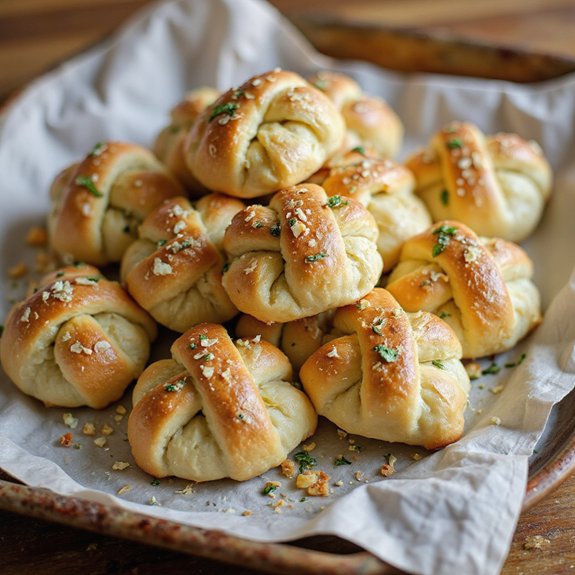
There’s something about a basket of warm garlic knots that makes the whole kitchen feel like your favorite neighborhood pizzeria.
Picture golden, twisted rolls arriving at the table, their soft, pillowy centers wrapped in a delicate crust, glistening with melted butter and speckled with bright green parsley.
The aroma of fresh garlic, toasted flour, and a hint of Parmesan pulls everyone closer before they’ve even cooled.
These garlic knots are a cozy, shareable side that comes together faster than a full loaf of bread, perfect for busy weeknights, family dinners, or beginner bakers testing the waters with yeast.
I still remember a rainy Sunday when a last-minute batch of these knots turned a simple pot of tomato soup into a “special dinner” my kids still talk about.
They shine at casual gatherings, Friday pizza nights, and those late-night carb cravings. Ready to bring this dish to life?
Why You’ll Love It
- Delivers bold garlicky, buttery flavor in every soft, chewy bite
- Uses simple pantry ingredients you probably already have on hand
- Works as an easy make-ahead appetizer or side for any meal
- Bakes quickly, so fresh warm knots are ready in under 90 minutes
- Adapts easily with herbs, chili flakes, or extra Parmesan on top
Ingredients
- 1 cup warm water (about 43°C / 110°F) — comfortably warm to the touch so yeast activates, not kills
- 2 1/4 teaspoons active dry yeast — standard one yeast packet for easy measuring
- 1 tablespoon granulated sugar — feeds the yeast for a strong, quick bloom
- 2 1/2 cups all-purpose flour — spoon and level for accurate measuring
- 1 teaspoon fine sea salt — distributes evenly for balanced flavor
- 2 tablespoons olive oil — adds tenderness and subtle richness to the dough
- 4 tablespoons unsalted butter, melted — control salt level in the garlic coating
- 3 tablespoons olive oil (for garlic butter) — helps garlic infuse without burning
- 5 cloves garlic, finely minced — fresh cloves for the best aroma and flavor
- 1/2 teaspoon salt (for topping) — seasons the surface so knots don’t taste flat
- 1/2 teaspoon freshly ground black pepper — grind fresh for more fragrance
- 2 tablespoons fresh parsley, finely chopped — adds color and a fresh herbal note
- 2 tablespoons grated Parmesan cheese, optional — freshly grated melts and sticks better
- 1 tablespoon semolina or cornmeal, optional, for dusting pan — helps prevent sticking and adds slight crunch
Step-by-Step Method
Proof the yeast
Combine warm water, sugar, and yeast in a mixing bowl. Stir briefly, then let the mixture sit for 5–10 minutes.
Watch for a foamy, creamy layer on top, which shows the yeast is active. If nothing happens, discard and start again with fresh yeast to guarantee a proper rise later.
Mix the dry ingredients
Whisk the flour and fine sea salt together in a large mixing bowl. Distribute the salt evenly throughout the flour.
This helps season the dough uniformly and prevents any salty pockets. Keep the bowl nearby, as you’ll soon add the proofed yeast mixture and olive oil directly into these dry ingredients.
Form the dough
Pour the olive oil and foamy yeast mixture into the flour-salt mixture. Stir with a wooden spoon until the ingredients come together.
Continue mixing until a rough, shaggy dough forms. Scrape down the sides of the bowl as needed so all the flour is incorporated and no dry patches remain at the bottom.
Knead until smooth
Transfer the rough dough to a lightly floured work surface. Knead by pressing and folding for 7–10 minutes.
Add only small sprinkles of flour if it sticks. Stop when the dough feels smooth, elastic, and slightly tacky.
A well-kneaded dough will stretch without tearing easily when gently pulled.
Let the dough rise
Lightly oil a clean bowl and place the dough inside, turning it once to coat all sides. Cover tightly with plastic wrap.
Set it in a warm, draft-free spot for about 1 hour. Allow the dough to rise until doubled in size.
This fermentation step develops both flavor and a light, airy texture.
Prepare the baking sheets
Line two baking sheets with parchment paper. If desired, dust the parchment lightly with semolina or cornmeal to add a bit of crunch to the bottoms.
This also helps prevent sticking. Set the prepared sheets aside so they’re ready as soon as the knots are shaped and need a place to rest.
Punch down and shape the rectangle
Gently punch down the risen dough to release excess gas. Turn it out onto a lightly floured surface.
Use your hands or a rolling pin to shape it into a rectangle about 12 by 8 inches. Aim for an even thickness of 1–1.5 centimeters so all knots bake at the same rate.
Cut and tie the knots
Use a sharp knife or bench scraper to cut the rectangle into 16 equal strips. Take each strip and gently roll it into a rope.
Tie the rope into a simple knot, then tuck the loose ends under. Handle the dough gently so you don’t squeeze out too much air from the ropes.
Arrange and rest the knots
Place each dough knot on the prepared baking sheets, leaving 2–3 centimeters between them so they can expand. Cover loosely with plastic wrap or a clean kitchen towel.
Let the knots rest for 15–20 minutes. During this short proof, preheat your oven to 200°C / 400°F for even baking.
Bake until golden
Remove the coverings and place the baking sheets in the preheated oven. Bake the knots for 12–15 minutes.
Watch for a light to medium golden color and a firm, set texture. Rotate the pans halfway through baking if your oven has hot spots.
Transfer baked knots to a cooling rack briefly.
Make the garlic butter
While the knots bake, combine melted butter, olive oil, minced garlic, salt, pepper, and chopped parsley in a small saucepan. Warm the mixture over low heat for 2–3 minutes.
Stir frequently and avoid browning the garlic, which can turn bitter. Remove from heat once the mixture smells fragrant.
Brush, garnish, and serve
Immediately brush the hot knots generously with the warm garlic butter using a pastry brush. Safeguard all sides are coated for maximum flavor.
Sprinkle with grated Parmesan, if using, while they’re still hot so it adheres well. Serve the garlic knots warm, either on their own or with marinara for dipping.
Ingredient Swaps
- Use instant yeast in place of active dry yeast (same amount); skip the initial blooming step and mix it directly with the flour.
- Substitute up to half the all-purpose flour with bread flour for chewier knots, or with whole‑wheat flour for a heartier, slightly denser version.
- For dairy-free knots, replace butter with olive oil or vegan butter and omit Parmesan or use a vegan hard “cheese.”
- If fresh parsley isn’t available, use 1–1½ teaspoons dried parsley or Italian seasoning.
- Garlic powder can stand in for fresh garlic (about ½ teaspoon per clove) in a pinch, added directly to the butter–oil mixture.
You Must Know
– Scale – To double the recipe for a crowd, multiply all ingredients by 2 but keep oven temperature the same (200°C / 400°F); rotate trays halfway through the 12–15 minute bake window so both sheets color evenly.
Serving Tips
- Serve piled in a warm basket lined with a cloth napkin.
- Pair with marinara, pesto, or warm Alfredo sauce for dipping.
- Plate alongside soup, salad, or pasta as a cozy side.
- Sprinkle extra Parmesan and parsley just before serving for color.
- Offer a chili-flake–infused olive oil for a spicy dipping option.
Storage & Make-Ahead
Garlic knots keep in the fridge for up to 3 days in an airtight container.
Reheat in a 300°F (150°C) oven until warm.
You can make the dough a day ahead and refrigerate it.
Baked knots also freeze well for about 1 month.
Thaw, then warm in the oven.
Reheating
Reheat garlic knots gently: in a 300°F (150°C) oven wrapped loosely in foil.
Briefly in the microwave covered with a damp towel.
Or on a covered skillet over low heat until warmed through.
Garlic Knots in Pizzerias
Once you’ve mastered warming up leftovers at home, it’s hard not to think about where most of us first met these buttery little knots: the corner pizzeria.
I still picture the glass counter, fogged from the heat, with a metal tray piled high—knots glistening, edges just browned, garlic scent drifting every time the oven door slammed.
For me, garlic knots were the gentle upsell that felt like a gift. While the pizza baked, the person behind the counter would slide over a paper plate, a few knots slick with oil, speckled with parsley, maybe a snow of Parmesan if they were feeling generous. I’d tear one open and watch the steam curl up, impatient, burning my fingers a little—and never minding.
Final Thoughts
Give these homemade garlic knots a try—you’ll be amazed how quickly they disappear from the table.
Feel free to tweak the toppings with extra Parmesan, chili flakes, or your favorite herbs to make them your own.
Frequently Asked Questions
Can I Make Garlic Knots Without Yeast or With Baking Powder Instead?
You can, and I’ve done it on lazy evenings—use a biscuit-style dough with baking powder. The knots bake up softer, less chewy than yeasted ones, but they’re still buttery, garlicky, and wonderfully comforting alongside dinner.
How Do I Make This Garlic Knots Recipe Gluten-Free?
You can, and I’d swap the flour for a 1:1 gluten‑free blend with xanthan gum. I mix gently, expect a softer dough, shape with floured hands, then bake just until golden for tender, fragrant knots.
Are These Garlic Knots Suitable for Vegan or Dairy-Free Diets?
They aren’t vegan or dairy-free as written, but I’d simply swap the butter and Parmesan for your favorite vegan versions. I’ve done that on chilly evenings, and the kitchen still fills with the same irresistible aroma.
Can I Freeze Unbaked Garlic Knots and Bake Them From Frozen?
Yes, you can freeze them unbaked and bake from frozen. I’d shape the knots, freeze on a tray, then bag them. Bake straight from frozen, adding a few extra minutes until deeply golden and fragrant.
How Can I Scale This Recipe for a Large Party or Catering?
You can comfortably triple or quadruple the batch; I mix separate bowls so the dough doesn’t overwhelm you. Stagger rising times, bake in rotating trays, and keep finished knots warm, tented, on low heat.
Garlic Knots
Equipment
- 2 Mixing bowls
- 1 Measuring cups set
- 1 Measuring spoons set
- 1 Whisk
- 1 Wooden spoon
- 1 plastic wrap roll
- 1 Rolling Pin
- 2 baking sheets
- 2 parchment paper sheets
- 1 pastry brush
- 1 Small saucepan
- 1 sharp knife or bench scraper
- 1 Cooling rack
Ingredients
- 1 cup warm water about 43°C / 110°F
- 2 1/4 teaspoon active dry yeast
- 1 tablespoon granulated sugar
- 2 1/2 cup all-purpose flour
- 1 teaspoon fine sea salt
- 2 tablespoon olive oil
- 4 tablespoon unsalted butter melted
- 3 tablespoon olive oil for garlic butter
- 5 clove garlic finely minced
- 1/2 teaspoon salt for topping
- 1/2 teaspoon freshly ground black pepper
- 2 tablespoon fresh parsley finely chopped
- 2 tablespoon grated Parmesan cheese optional
- 1 tablespoon semolina or cornmeal optional for dusting pan
Instructions
- In a mixing bowl, combine warm water, sugar, and yeast, then let sit for 5–10 minutes until foamy.
- In a separate large bowl, whisk together flour and salt.
- Add the olive oil and yeast mixture to the flour mixture and stir with a wooden spoon until a rough dough forms.
- Transfer the dough to a lightly floured surface and knead for 7–10 minutes until smooth and elastic.
- Place the dough in a lightly oiled bowl, turn to coat, cover with plastic wrap, and let rise in a warm place for about 1 hour or until doubled in size.
- Line two baking sheets with parchment paper and lightly dust with semolina or cornmeal if using.
- Punch down the risen dough and transfer it to a lightly floured surface.
- Roll the dough into a rectangle about 12 x 8 inches and 1–1.5 cm thick.
- Using a sharp knife or bench scraper, cut the dough into 16 equal strips.
- Take each strip, roll it gently into a rope, and tie it into a simple knot, tucking the ends underneath.
- Place each knot on the prepared baking sheets, spacing them about 2–3 cm apart.
- Cover the knots loosely with plastic wrap or a clean towel and let rest for 15–20 minutes while you preheat the oven to 200°C / 400°F.
- Bake the knots for 12–15 minutes or until golden brown and cooked through.
- While the knots bake, combine melted butter, olive oil, minced garlic, salt, pepper, and parsley in a small saucepan.
- Warm the garlic butter mixture over low heat for 2–3 minutes until fragrant, then remove from heat.
- Immediately after the knots come out of the oven, brush them generously with the warm garlic butter.
- Sprinkle the hot knots with grated Parmesan, if using, and serve warm.
Notes

Cynthia Weatherford is a seasoned chef and culinary enthusiast who serves as the Recipe creator of Somonday. With decades of experience in the kitchen and a passion for exploring diverse cuisines, Cynthia brings a blend of creativity and technique to every dish. Known for transforming simple ingredients into show-stopping meals, Cynthia believes that cooking is an art form anyone can master. Dedicated to inspiring home cooks, Cynthia shares approachable recipes, pro tips, and culinary wisdom to make every meal memorable.