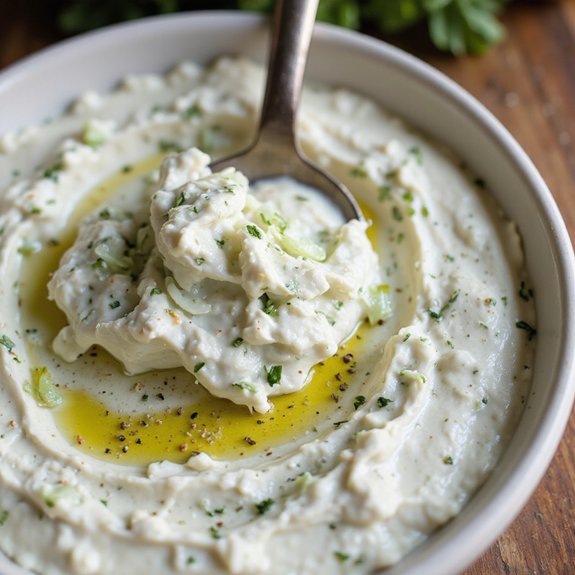
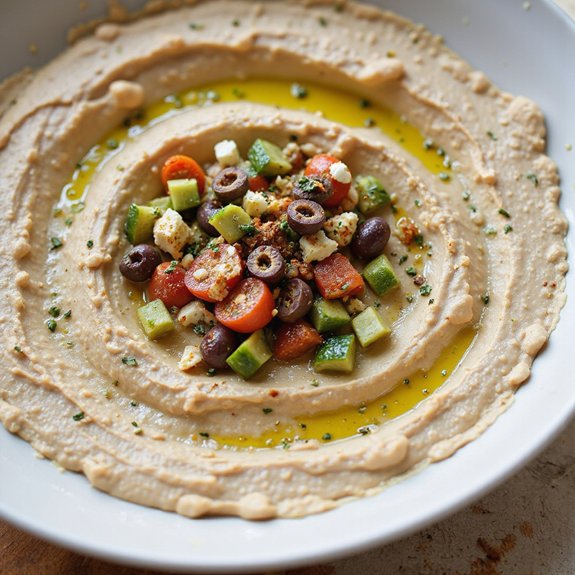
Picture a smooth, creamy bowl of hummus, swirled with golden olive oil, scattered with jewel-bright tomatoes, crisp cucumbers, briny olives, and crumbles of snowy feta.
This Greek hummus dip is a fresh, vibrant appetizer-meets-light-meal that comes together in about 15 minutes—no cooking, just simple assembly.
It’s perfect for busy weeknights, impromptu guests, beginners in the kitchen, and anyone who loves Mediterranean flavors without much fuss.
I first leaned on this dip during a hectic workweek when friends texted, “We’re nearby—can we stop in?”
I grabbed store-bought hummus, chopped a few veggies, sprinkled on feta and herbs, and suddenly my coffee table looked party-ready.
Paired with warm pita and crunchy veggies, it felt generous and homemade, even though it took almost no effort.
This dip shines at casual gatherings, game days, easy lunches, or last-minute entertaining. Ready to bring this dish to life?
Why You’ll Love It
- Delivers bright, tangy Mediterranean flavors in every creamy bite
- Whips up in minutes with simple pantry and fresh ingredients
- Packs protein, fiber, and healthy fats into a lighter appetizer
- Easily customizable with extra toppings, spices, or different vegetables
- Perfect make-ahead dip that tastes even better after resting
Ingredients
- 1 can (425 g) chickpeas, drained and rinsed — use good-quality canned for best flavor
- 60 ml water, cold — very cold helps create a lighter, creamier hummus
- 60 ml extra-virgin olive oil, plus more for drizzling — choose a mild, fruity oil
- 60 ml tahini, well-stirred — smooth, pourable tahini blends more evenly
- 2 tbsp lemon juice, freshly squeezed — bottled juice tastes noticeably flatter
- 1 small garlic clove, minced — fresh garlic gives brighter flavor than pre-minced
- 0.75 tsp fine salt — adjust to taste after blending
- 0.5 tsp ground cumin — adds warm, classic hummus aroma
- 2 tbsp Greek yogurt, plain full‑fat (optional) — makes the dip extra silky
- 2 tbsp cucumber, finely diced, seeded — seeding prevents watery topping
- 2 tbsp tomato, finely diced, seeded — use firm, ripe tomato for best texture
- 2 tbsp red onion, finely diced — soak briefly in cold water if you want milder bite
- 2 tbsp Kalamata olives, pitted and chopped — choose olives packed in brine, not oil
- 2 tbsp feta cheese, crumbled — a block of feta crumbles better than pre-crumbled
- 1 tbsp fresh parsley, finely chopped — flat-leaf parsley has better flavor
- 0.25 tsp smoked paprika — sprinkle lightly for color and subtle smokiness
Step-by-Step Method
Drain and Rinse the Chickpeas
Open the can of chickpeas and pour them into a fine-mesh strainer. Rinse thoroughly under cold running water to remove excess starch and brine.
Let them drain well to avoid watering down the hummus. Shake the strainer gently to remove excess moisture before transferring the chickpeas to the food processor bowl.
Add Base Ingredients to Processor
Place the drained chickpeas in the food processor. Add cold water, extra-virgin olive oil, tahini, lemon juice, minced garlic, salt, ground cumin, and Greek yogurt if using.
Make certain the tahini is well-stirred so it blends smoothly. Arrange ingredients evenly around the blades to encourage quick, even processing.
Blend Until Smooth and Creamy
Secure the lid and process the mixture for 1–2 minutes. Stop once or twice to scrape down the sides with a rubber spatula.
Continue blending until the hummus is very smooth, creamy, and slightly fluffy.
If the texture seems grainy, process longer. Cold water and sufficient blending help achieve a lighter consistency.
Adjust Seasoning to Taste
Taste the hummus directly from the processor. Add more salt for savoriness or extra lemon juice for brightness, as desired.
Blend again briefly to incorporate any adjustments. If the hummus is too thick, add a tablespoon of water or olive oil at a time and process until it reaches your preferred consistency.
Transfer and Shape the Hummus
Spoon the finished hummus into a serving bowl using a rubber spatula. Smooth the top with the back of a spoon.
Create a shallow well in the center to hold the toppings and olive oil drizzle.
Wipe any smears from the sides of the bowl for a neat presentation before adding the garnish mixture.
Mix the Greek Topping
Combine the finely diced cucumber, tomato, and red onion in a small bowl. Add chopped Kalamata olives, crumbled feta cheese, and finely chopped parsley.
Toss gently to avoid crushing the vegetables and cheese. Aim for an even distribution of ingredients, so each spoonful includes a bit of everything.
Spoon Toppings Over the Hummus
Carefully spoon the vegetable and olive mixture into the well at the center of the hummus.
Spread it out in an even layer, leaving a border of visible hummus around the edges.
Press down lightly so the topping adheres without sinking. This layered look adds color, texture, and visual appeal.
Drizzle Oil and Add Paprika
Drizzle a little extra-virgin olive oil over the hummus and topping, focusing on the center.
Sprinkle smoked paprika lightly across the surface for color and a subtle smoky note.
Avoid using too much paprika so it doesn’t overpower the flavors. Adjust the amount according to your taste preference.
Chill to Let Flavors Meld
Cover the serving bowl tightly with plastic wrap or a lid. Refrigerate for at least 30 minutes to allow the flavors to meld and the texture to set.
Let the hummus sit at room temperature for 5–10 minutes before serving. This resting period enhances both creaminess and flavor balance.
Serve with Pita and Vegetables
Uncover the hummus and give it a quick visual check, adding a final drizzle of olive oil if desired.
Serve with warm pita bread, pita chips, or crisp fresh vegetables such as cucumber slices, bell pepper strips, and carrot sticks.
Offer small plates so guests can easily scoop and enjoy the dip.
Ingredient Swaps
- Dairy-free: Omit Greek yogurt and feta; add 1–2 tbsp extra tahini or olive oil for creaminess, and top with extra olives and herbs instead of cheese.
- Nut- or sesame-free: Replace tahini with plain Greek yogurt or mashed white beans plus 1–2 tsp olive oil (flavor will be less traditional).
- Budget/availability: Use any mild oil if extra-virgin olive oil is pricey; swap Kalamata olives for any black olives; use regular onion instead of red, and any soft, crumbly cheese in place of feta.
- Fresh produce: Substitute cucumber/tomato with bell pepper, roasted red peppers, or finely chopped spinach if those are more available.
You Must Know
– Avoid – To prevent a harsh raw-garlic bite, don’t exceed 1 small clove unless you mellow it first by letting the hummus sit at least 1–2 hours; strong garlic flavor intensifies over time, especially noticeable the next day.
Serving Tips
- Serve in a shallow bowl, topping center with veggies, olives, and feta.
- Pair with warm pita wedges, pita chips, and crisp veggies like carrots and cucumbers.
- Offer as part of a mezze platter with dolmas, tzatziki, and marinated olives.
- Spoon into mini cups and top individually for easy party finger food.
- Drizzle extra olive oil and sprinkle paprika just before serving for color.
Storage & Make-Ahead
This Greek hummus dip keeps 3–4 days in an airtight container in the fridge.
Stir and add a fresh drizzle of olive oil before serving.
It’s ideal for making a day ahead so flavors meld.
The hummus base can be frozen up to 2 months.
Add fresh toppings after thawing.
Reheating
Reheat hummus gently: in the microwave at 50% power, stirring every 15–20 seconds.
In the oven, covered at low heat.
Or on the stovetop over very low heat, stirring frequently.
Greek Mezze Platter Tradition
Although Greek hummus dip is delicious on its own, it truly comes alive as part of a traditional mezze platter—a shared table of small dishes meant for lingering, tasting, and talking.
I imagine you and me sitting down to a low table scattered with small plates: briny olives glistening with oil, curls of feta dusted with oregano, warm pita stacked like soft clouds.
I place the hummus in the center, its creamy surface swirled and jeweled with tomato, cucumber, and glossy Kalamata pieces.
Around it, there’s tangy tzatziki, grilled vegetables with smoky edges, maybe a few dolmades wrapped tight and fragrant.
You tear off a piece of pita, drag it through the hummus, and conversation slows as flavor takes over.
Final Thoughts
Give this Greek hummus dip a try and see how quickly it disappears at your next gathering.
Feel free to tweak the toppings and seasonings to make it your own—extra olives, more lemon, or a little extra spice all work beautifully.
Frequently Asked Questions
Can I Make This Greek Hummus Dip Without a Food Processor or Blender?
Yes, you can. I’d mash the chickpeas by hand, stirring in tahini, oil, lemon, and garlic until silky. It’s rustic, a little chunky, but still lush, fragrant, and perfect beneath those salty, juicy toppings.
How Can I Adjust the Dip if I Dislike Raw Garlic Flavor?
You can tame that sharp bite by roasting the garlic first, sautéing it gently in olive oil, or using just half a clove. I’d also add extra lemon and cumin to keep the flavor bright.
What Wines or Drinks Pair Best With This Greek Hummus Dip?
I’d pour a chilled Assyrtiko or Sauvignon Blanc; their citrus snap cuts the creaminess beautifully. If you prefer nonalcoholic, try sparkling water with lemon and cucumber—crisp bubbles, cool herbs, bright acidity mirroring the dip’s freshness.
Can I Safely Serve This Hummus at Room Temperature for a Party Buffet?
Yes, you can, but I’d keep it out no longer than 2 hours. I picture it silky and cool, shaded on the buffet with small bowls, refreshed often so it stays safe, creamy, and inviting.
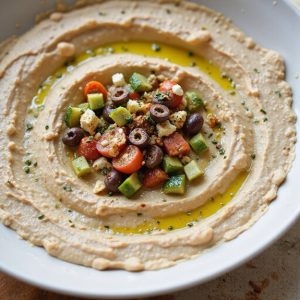
Greek Hummus Dip
Equipment
- 1 food processor or blender
- 1 can opener
- 1 fine-mesh strainer or colander
- 1 measuring cup
- 4 Measuring spoons tablespoon and teaspoon sizes
- 1 Rubber spatula
- 1 serving bowl
Ingredients
- 1 can chickpeas 425 g; drained and rinsed
- 60 milliliter water cold
- 60 milliliter extra-virgin olive oil plus more for drizzling
- 60 milliliter tahini well-stirred
- 2 tablespoon lemon juice freshly squeezed
- 1 small garlic clove minced
- 0.75 teaspoon salt fine
- 0.5 teaspoon ground cumin
- 2 tablespoon Greek yogurt optional, for extra creaminess; plain and full-fat
- 2 tablespoon cucumber finely diced; seeded
- 2 tablespoon tomato finely diced; seeded
- 2 tablespoon red onion finely diced
- 2 tablespoon Kalamata olives pitted and chopped
- 2 tablespoon feta cheese crumbled
- 1 tablespoon fresh parsley finely chopped
- 0.25 teaspoon smoked paprika for garnish
Instructions
- Drain and rinse the chickpeas in a fine-mesh strainer under cold running water.
- Add chickpeas, cold water, olive oil, tahini, lemon juice, garlic, salt, cumin, and Greek yogurt (if using) to the bowl of a food processor.
- Process the mixture for 1–2 minutes, stopping once or twice to scrape down the sides with a rubber spatula, until very smooth and creamy.
- Taste the hummus and adjust seasoning with more salt or lemon juice if desired, then process again briefly to combine.
- Transfer the hummus to a serving bowl and smooth the top with the back of a spoon, creating a shallow well in the center.
- In a small bowl, combine cucumber, tomato, red onion, Kalamata olives, feta cheese, and parsley, tossing gently to mix.
- Spoon the vegetable and olive mixture over the center of the hummus in an even layer.
- Drizzle a little extra-virgin olive oil over the top and sprinkle with smoked paprika for color.
- Cover the bowl and refrigerate the hummus for at least 30 minutes to allow the flavors to meld.
- Remove from the refrigerator, let sit at room temperature for 5–10 minutes, then serve with warm pita, pita chips, or fresh vegetables.
Notes

Cynthia Weatherford is a seasoned chef and culinary enthusiast who serves as the Recipe creator of Somonday. With decades of experience in the kitchen and a passion for exploring diverse cuisines, Cynthia brings a blend of creativity and technique to every dish. Known for transforming simple ingredients into show-stopping meals, Cynthia believes that cooking is an art form anyone can master. Dedicated to inspiring home cooks, Cynthia shares approachable recipes, pro tips, and culinary wisdom to make every meal memorable.