There’s something about a platter bursting with color that instantly lifts your mood.
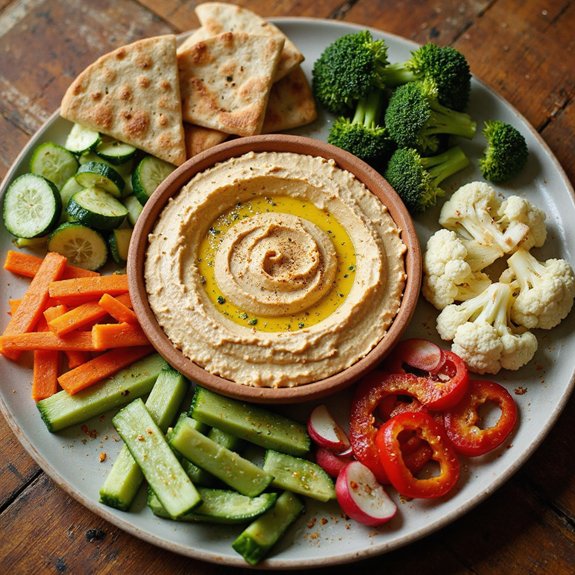
Picture creamy, pale-gold hummus swirled into a gentle whirlpool, drizzled with olive oil, sprinkled with paprika, and ringed with crisp cucumbers, juicy cherry tomatoes, crunchy carrots, and sweet bell pepper strips.
This is a fresh, no-cook snack-meal that comes together in minutes—perfect when you need something fast, wholesome, and truly satisfying.
It’s ideal for busy weeknights, light working lunches, easy entertaining, or anyone easing into healthier eating without much kitchen fuss.
I leaned on this platter during a hectic deadline week: I set it in the middle of the table, and my family grazed between tasks and homework instead of ordering takeout.
No one complained, cleanup was minimal, and I felt quietly triumphant.
It’s a small, colorful way to care for yourself and others.
Ready to bring this dish to life?
Why You’ll Love It
- Delivers bright, zesty flavor with ultra-creamy, restaurant-style hummus
- Packs in colorful veggies for fiber, vitamins, and satisfying crunch
- Uses simple pantry staples and fresh produce for easy, fast prep
- Fits many diets: vegetarian, dairy-free, and easily gluten-free
- Perfect for parties, snacks, or light lunches all week long
Ingredients
- 1 can (15 oz) chickpeas, drained and rinsed — use good-quality, low-sodium if possible
- 3 tbsp tahini — stir well so the oil is evenly distributed
- 2 tbsp fresh lemon juice — from about 1 medium lemon for best flavor
- 2 tbsp extra-virgin olive oil — choose a mild, fruity variety
- 2 tbsp cold water, plus more as needed — very cold helps create fluffier hummus
- 1 small clove garlic, minced — adjust to taste if you prefer milder garlic
- 1/2 tsp ground cumin — adds classic earthy, warm flavor
- 1/2 tsp fine sea salt, plus more to taste — season gradually and taste as you go
- 1/4 tsp smoked paprika — gives subtle smokiness and color
- 1 tbsp fresh parsley, chopped — for bright, fresh garnish
- 1 medium carrot, cut into sticks — peel if skin is tough
- 1 medium cucumber, sliced into rounds or sticks — seedless or Persian work best
- 1 red bell pepper, sliced into strips — choose a firm, glossy pepper
- 1 cup cherry tomatoes, whole or halved — use ripe, sweet tomatoes
- 1 cup broccoli florets, raw or lightly blanched — bite-size pieces for easy dipping
- 1 cup cauliflower florets, raw or lightly blanched — aim for similar size to broccoli
- 1/2 cup radishes, halved or sliced — rinse well to remove any grit
- 1 cup snap peas or green beans, trimmed — remove strings or stem ends
- 1 cup pita bread or pita chips, cut into wedges (optional) — warm pita briefly for softer texture
Step-by-Step Method
Gather and Prep Your Equipment
Lay out your food processor, knife, cutting board, serving platter, bowls, and measuring tools. Clear some counter space so you can chop and assemble easily. Plug in the food processor and set a rubber spatula nearby. Having everything within reach keeps the process smooth and prevents stopping mid-recipe to hunt for tools.
Combine Hummus Ingredients in Processor
Add chickpeas, tahini, lemon juice, olive oil, cold water, minced garlic, cumin, salt, and smoked paprika to the food processor bowl. Measure carefully for balanced flavor. Secure the lid tightly. This all-in-one step makes certain the flavors blend together evenly and creates a strong base before you adjust texture or seasoning later.
Blend Until Smooth and Creamy
Process the mixture on high until very smooth. Pause occasionally to scrape down the sides with a spatula so no chunky bits remain. Blend longer than you think you need.
The extra time helps break down chickpeas thoroughly, yielding a creamier hummus with a lighter, whipped texture that feels luxurious.
Adjust Consistency and Seasoning
Check the hummus thickness. If it seems too thick or stiff, add cold water one tablespoon at a time, blending after each addition. Taste and adjust seasoning with extra salt, lemon juice, or cumin as desired. Blend briefly again to incorporate changes.
Aim for a creamy, easily dippable texture that holds to veggies without running.
Transfer and Garnish the Hummus
Spoon the hummus into a serving bowl, using the spatula to get every bit. Smooth the surface with the back of a spoon, creating gentle swirls. Drizzle a little olive oil over the top.
Sprinkle with extra smoked paprika and chopped parsley. These simple garnishes add color, freshness, and a professional, inviting look.
Wash and Dry All Vegetables
Rinse all vegetables thoroughly under cool running water to remove dirt and residue. Pat them dry with a clean kitchen towel or paper towels.
Dry veggies help dips cling better and keep the platter from becoming watery. Take a moment to trim any stems, wilted leaves, or blemished spots before you start cutting.
Cut Vegetables into Dippable Pieces
Slice the carrot into sticks, and cut the cucumber into rounds or sticks. Core and seed the red bell pepper, then slice into strips. Break broccoli and cauliflower into bite-size florets.
Halve or slice radishes, and trim snap peas or green beans. Aim for uniform, easy-to-grab pieces that are comfortable to dip and eat.
Arrange Vegetables and Pita on Platter
Place the bowl of hummus at the center of a large serving platter. Arrange different vegetables in separate clusters around the bowl for a colorful, balanced look.
Add pita wedges or pita chips if using, tucking them in between veggie sections. Vary shapes and colors so the platter looks generous, fresh, and inviting.
Chill Briefly or Serve Immediately
Serve the hummus and veggies platter right away for the freshest texture. If preparing ahead, cover the hummus and vegetables separately and refrigerate for up to a few hours.
Assemble the platter just before serving to maintain crispness and visual appeal. Give the hummus a quick stir and final drizzle of olive oil, if desired.
Ingredient Swaps
- Use white beans or cooked lentils instead of chickpeas for a different flavor or if chickpeas are unavailable.
- Swap tahini with unsweetened peanut butter, almond butter, or sunflower seed butter (nut‑free) if needed.
- Replace olive oil with another neutral oil (like avocado or canola) for budget or availability.
- Use whatever fresh, crunchy veggies you have: celery, endive, zucchini sticks, fennel, or seasonal radishes; frozen and thawed green beans can also stand in.
- For gluten-free serving, skip pita and use only vegetables or gluten-free crackers.
You Must Know
– Troubleshoot • If the hummus tastes dull
Add 1–2 more teaspoons lemon juice and a pinch (about 1/8 teaspoon) of salt, then run the machine for 20–30 seconds more; brighter acid + salt will “wake up” the flavors and you should clearly smell lemon and garlic when you lift the lid.
– Doneness • When checking texture
Drag a spoon through the hummus: it should form a soft trough that slowly relaxes but doesn’t hold stiff peaks; if it looks gluey or clings in a thick clump, add cold water 1 tablespoon at a time until it looks light and fluffy.
– Avoid • For grainy or pasty hummus
Don’t stop processing as soon as everything is combined; keep the machine running for a full 2–3 minutes continuously, scraping once, so the chickpeas fully break down and you see a glossy, almost whipped surface.
– Scale • To serve a crowd
For 8 people, use 2 cans (30 ounces) chickpeas and multiply all other hummus ingredients by 2, but add water more cautiously (start with 3 tablespoons, then adjust); larger batches often need slightly less water per cup of chickpeas to stay thick enough for dipping.
– Make-Ahead • For prepping in advance
Keep hummus in an airtight container up to 3–4 days, and store cut veggies separately wrapped in damp paper towels inside containers; assemble the platter within 30–60 minutes of serving so the vegetables still look crisp and the hummus surface stays smooth (refresh with a quick swirl and drizzle of oil).
Serving Tips
- Serve hummus in a wide shallow bowl with an olive oil and paprika swirl.
- Arrange veggies by color in radiating sections for a bright, rainbow-style platter.
- Add small bowls of olives, feta, or nuts around the hummus for variety.
- Offer both raw and lightly blanched veggies to suit different textures and preferences.
- Warm pita wedges just before serving and tuck them upright between veggie clusters.
Storage & Make-Ahead
Store hummus in an airtight container in the fridge for up to 4–5 days.
Keep cut veggies separately for 2–3 days, wrapped or in containers with paper towels.
Assemble the platter just before serving.
Hummus alone freezes well for up to 3 months.
Thaw overnight in the fridge and stir.
Reheating
This platter is best served cold or at room temperature.
If desired, gently warm pita only: wrap in foil and heat briefly in a low oven, or microwave in short bursts until just warm.
Hummus in Middle Eastern Culture
Long before it became a trendy dip on grocery shelves, hummus sat at the heart of Middle Eastern tables as a humble, daily comfort.
I think of low metal trays crowded with small plates, warm pita stacked like soft pillows, and a generous bowl of hummus in the center, its surface glistening with olive oil and dusted with paprika.
When I scoop into it, I’m tasting more than chickpeas and tahini; I’m tasting hospitality.
In many homes, you don’t just “have” hummus—you share it, leaning in over the same bowl, tearing bread, dragging it through those creamy swirls.
It’s breakfast, lunch, or a late-night bite, a constant presence that turns any simple spread into a shared ritual.
Final Thoughts
Give this hummus and veggies platter a try and see how easy (and impressive!) a fresh, colorful spread can be.
Feel free to mix up the veggies or seasonings to make it your own—your perfect version is just a few tweaks away.
Frequently Asked Questions
Can I Make This Hummus Platter Oil-Free Without Losing Creaminess?
Yes, you can. I swap oil for ice-cold water and extra tahini, then blend longer. I sometimes add a spoon of unsweetened yogurt; the hummus turns cloud-light, silky, and still tastes luxuriously rich.
How Can I Adjust the Hummus for Low-Sodium or Heart-Healthy Diets?
You can lower sodium by rinsing chickpeas well, using no-salt spices, and squeezing in extra lemon. I’d swirl in tahini and garlic, then finish with fruity olive oil and fresh herbs instead of salt.
What Wine or Beverages Pair Best With a Hummus and Veggies Platter?
I’d pour a crisp Sauvignon Blanc or dry rosé; their citrusy lift cuts the hummus’s creaminess. For non-alcoholic, I’d hand you sparkling water with lemon or mint tea—bright, cool sips between crunchy, earthy bites.
Is This Platter Suitable for Kids, and How Can I Make It Fun?
Yes, it’s perfect for kids. I’d cut veggies into “rainbow wands,” serve hummus in little cups, add smiley faces with tomatoes and olives, and let them “paint” dips, turning snacking into playful finger‑food art.
How Do I Safely Serve This Platter at Outdoor Picnics or Parties?
I keep everything icy-cold in a cooler, nestling containers in ice packs, then set the platter in a shaded spot. I cover it lightly, refresh ice beneath, and toss leftovers sitting out over two hours.
Hummus And Veggies Platter
Equipment
- 1 food processor or blender
- 1 Chef's knife
- 1 Cutting board
- 1 large serving platter
- 2 small bowls (for garnish or extra toppings, optional)
- 1 measuring cup set
- 1 measuring spoon set
- 1 Rubber spatula
Ingredients
- 1 can chickpeas 15 ounces; drained and rinsed
- 3 tablespoon tahini
- 2 tablespoon fresh lemon juice
- 2 tablespoon extra-virgin olive oil plus more for drizzling
- 2 tablespoon cold water plus more as needed
- 1 small clove garlic minced
- 1/2 teaspoon ground cumin
- 1/2 teaspoon fine sea salt plus more to taste
- 1/4 teaspoon smoked paprika plus more for garnish
- 1 tablespoon chopped fresh parsley for garnish
- 1 medium carrot cut into sticks
- 1 medium cucumber sliced into rounds or sticks
- 1 red bell pepper sliced into strips
- 1 cup cherry tomatoes whole or halved
- 1 cup broccoli florets raw or lightly blanched
- 1 cup cauliflower florets raw or lightly blanched
- 1/2 cup radishes halved or sliced
- 1 cup snap peas or green beans trimmed
- 1 cup pita bread or pita chips optional; cut into wedges
Instructions
- Add the chickpeas, tahini, lemon juice, olive oil, water, garlic, cumin, salt, and smoked paprika to the bowl of a food processor.
- Blend the mixture until very smooth, pausing to scrape down the sides of the bowl with a spatula as needed.
- If the hummus is too thick, add 1 tablespoon of cold water at a time and blend until you reach a creamy, dippable consistency.
- Taste the hummus and adjust salt, lemon juice, or cumin to your preference, then blend again briefly.
- Transfer the hummus to a serving bowl, smoothing the top with the back of a spoon.
- Drizzle a little extra olive oil over the hummus and sprinkle with smoked paprika and chopped parsley.
- Wash and dry all the vegetables thoroughly.
- Cut the carrot into sticks, the cucumber into rounds or sticks, the bell pepper into strips, and trim or slice any remaining vegetables as desired for dipping.
- Arrange the vegetables and pita wedges (if using) neatly around the bowl of hummus on a large serving platter.
- Serve the hummus and veggies platter immediately or cover and refrigerate for up to a few hours before serving.
Notes

Cynthia Weatherford is a seasoned chef and culinary enthusiast who serves as the Recipe creator of Somonday. With decades of experience in the kitchen and a passion for exploring diverse cuisines, Cynthia brings a blend of creativity and technique to every dish. Known for transforming simple ingredients into show-stopping meals, Cynthia believes that cooking is an art form anyone can master. Dedicated to inspiring home cooks, Cynthia shares approachable recipes, pro tips, and culinary wisdom to make every meal memorable.