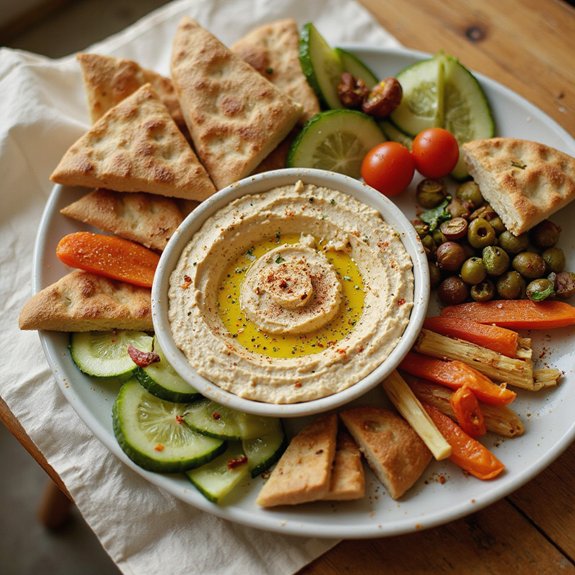
Picture a wide, shallow platter gleaming with creamy, pale-gold hummus, its surface swooped into silky waves and glistening with good olive oil.
Ruby paprika dusts the top, bright cucumber and tomato jewels ring the edge, and warm pita wedges wait at the side, soft and steamy.
This is an easy, no-cook, shareable meal—more of a vibrant grazing board than a single dish—ready in about 20 minutes, even less if you use store-bought hummus.
It’s perfect for busy weeknights, casual gatherings, beginner cooks, and anyone who loves to meal-prep healthy, grab-and-go bites.
I first leaned on a hummus platter when friends dropped by unannounced; in minutes, my fridge odds and ends turned into a colorful spread that felt thoughtful instead of thrown together.
It shines for Sunday suppers, last-minute cravings, light lunches, and easy entertaining. Ready to bring this dish to life?
Why You’ll Love It
- Delivers bright, garlicky, lemony flavor in every creamy bite
- Comes together quickly with zero cooking required
- Uses affordable pantry staples and fresh, colorful veggies
- Perfect for sharing as a crowd-pleasing, customizable appetizer
- Naturally vegan and dairy-free, yet feels rich and satisfying
Ingredients
- 1 can (425 g) chickpeas — drained and rinsed well
- 60 ml aquafaba — reserved chickpea liquid for creaminess
- 80 ml tahini — well-stirred, smooth sesame paste
- 60 ml lemon juice — freshly squeezed for bright flavor
- 1 clove garlic — roughly chopped, adjust to taste
- 30 ml extra-virgin olive oil — plus more for drizzling on top
- 1.25 ml ground cumin — adds warm, earthy depth
- 2.5 ml fine sea salt — more to taste after blending
- 30–45 ml cold water — add gradually for silky texture
- 1 pinch smoked paprika — for garnish and light smokiness
- 10 g fresh parsley — chopped, for fresh garnish
- 1 small cucumber — sliced into rounds for dipping
- 1 medium carrot — cut into sticks for crunch
- 1 small red bell pepper — sliced into strips for color
- 8–10 cherry tomatoes — halved, juicy and sweet
- 8–12 olives, mixed, pitted — use your favorite variety
- 2 pieces pita bread — warmed and cut into wedges
Step-by-Step Method
Prepare the Chickpeas
Drain the canned chickpeas in a sieve. Reserve about 60 ml of the can liquid (aquafaba).
Rinse the chickpeas thoroughly under cold water to remove excess starch and brine.
Optional: pinch off and discard the chickpea skins for a smoother hummus. Set the chickpeas and aquafaba aside while you organize the remaining ingredients.
Load the Food Processor
Add the rinsed chickpeas to the bowl of a food processor.
Spoon in the tahini and pour in the freshly squeezed lemon juice.
Add the roughly chopped garlic clove, extra-virgin olive oil, ground cumin, and fine sea salt.
Make sure the lid is secure before blending to avoid spills and uneven processing.
Blend Until Mostly Smooth
Process the mixture for 1–2 minutes.
Stop to scrape down the sides of the bowl with a rubber spatula as needed.
Continue blending until the hummus looks mostly smooth and thick.
Expect it to appear slightly pasty at this stage; additional liquid and more blending will create the final creamy texture.
Stream in Aquafaba and Water
With the processor running, slowly pour in the reserved aquafaba.
Let it fully incorporate before adding cold water, a tablespoon at a time.
Watch the texture closely and stop once it becomes very smooth, light, and creamy.
Avoid adding too much liquid at once, which can make the hummus runny instead of spreadable.
Taste and Adjust Seasoning
Pause the processor and taste a small spoonful of hummus.
Adjust the salt if needed, and add more lemon juice for extra brightness or acidity.
Blend again briefly to evenly distribute any adjustments.
Check the consistency once more, and add a splash of water if it still feels too thick or heavy on the palate.
Transfer and Garnish the Hummus
Spoon the finished hummus into a serving bowl, using the spatula to get every bit from the processor.
Smooth the surface with the back of a spoon and create a shallow well in the center.
Drizzle extra-virgin olive oil into the well.
Sprinkle smoked paprika and chopped fresh parsley evenly over the top.
Prep and Arrange the Vegetables
Slice the cucumber into neat rounds.
Cut the carrot into sticks and the red bell pepper into strips.
Halve the cherry tomatoes and place the mixed, pitted olives in a small bowl if desired.
Arrange all vegetables, olives, and warmed, sliced pita wedges around the hummus bowl on a serving platter.
Chill Briefly Before Serving
Cover the platter or at least the hummus bowl and place it in the refrigerator.
Let it rest for about 30 minutes so the flavors meld and the texture sets slightly.
If the hummus thickens too much, stir in a spoonful of water or lemon juice before serving.
Add extra herbs or toppings just before bringing to the table.
Ingredient Swaps
- Use white beans or cooked lentils instead of chickpeas if needed; sunflower-seed butter or plain yogurt can stand in for tahini (flavor will be milder).
- Swap lemon juice with lime juice or a splash of mild vinegar; use any neutral oil or light olive oil if extra-virgin isn’t available.
- For veggies, use whatever’s on hand (radishes, celery, snap peas, roasted veggies); serve with crackers, flatbread, or gluten-free chips instead of pita for gluten-free.
You Must Know
– Troubleshoot • If your hummus tastes “flat”
Add 5–10 ml more lemon juice and a pinch (0.5–1 ml) extra salt, then run the processor another 15–30 seconds; bright acidity and salt sharpen flavor and will be obvious when a small spoonful tastes lively, not dull.
– Flavor Boost • To get restaurant-level creaminess
Let the machine run a full 3–4 minutes and use very cold water (3–4 tbsp / 45–60 ml total), adding it slowly until the hummus forms soft peaks and leaves smooth ribbons on the surface—extra time and cold liquid emulsify the tahini and oil.
– Avoid • If the hummus feels pasty or chalky
Don’t just add more oil; instead, use 15–30 ml more aquafaba or water first—watch for the texture to shift from stiff to silky and spreadable, holding shape but no visible cracks; too much oil can make it greasy without fixing dryness.
– Scale • For a crowd platter (8–10 people)
Double all ingredients (2 cans chickpeas, 160 ml tahini, etc.) but increase lemon juice and salt gradually, tasting every 30–60 seconds of processing; larger batches often need slightly less seasoning per can than a straight 2x to avoid an overly sharp dip.
– Make-Ahead • For prepping 1–3 days in advance
Store hummus in an airtight container with a thin 5 mm layer of olive oil on top and add fresh garnishes (paprika, parsley, veggies) right before serving; oil limits oxidation so color stays pale and the surface doesn’t dry or crack in the fridge.
Serving Tips
- Serve hummus in a shallow bowl, topped with olive oil, paprika, and parsley.
- Arrange colorful veggies and pita wedges in radiating sections around the hummus bowl.
- Offer small bowls of extras: olives, pickles, feta, or roasted nuts for variety.
- Add a few lemon wedges on the platter for extra brightness and visual appeal.
- Serve alongside falafel, tabbouleh, or grilled meats to create a mezze-style spread.
Storage & Make-Ahead
Hummus keeps in an airtight container in the fridge for 4–5 days.
Store veggies separately in sealed containers with paper towel.
You can make the hummus 2–3 days ahead for best flavor.
Hummus also freezes well for up to 2 months.
Thaw overnight in the fridge and stir before serving.
Reheating
Reheat hummus gently: in a microwave at 50% power, stirring often.
In a low oven, covered, until just warm.
Or on the stovetop over low heat, thinning with water.
Hummus in Mezze Culture
When I set a bowl of hummus in the center of the table, it doesn’t feel like I’m just serving a dip—it feels like I’m opening the door to mezze culture, where small plates turn into long, lingering conversations.
I love how everyone leans in at once, tearing warm pita, dragging it through the creamy swirl, negotiating space with olives and bright vegetables.
To me, mezze is a gentle kind of hospitality—nobody’s locked into courses or portions.
You and I can graze, pause, tell a story, then go back for “just one more” bite.
Hummus anchors all of that. It’s familiar enough to feel comforting, yet versatile enough to welcome whatever else lands on the table that night.
Final Thoughts
Give this hummus platter a try and feel free to tweak the veggies, spices, and toppings to match your tastes or what’s in your fridge.
Once you’ve made it your own, it just might become your go-to appetizer for any gathering.
Frequently Asked Questions
Can I Make This Hummus Platter Completely Oil-Free?
Yes, you can. I’d swap the olive oil for extra aquafaba and cold water, then garnish with juicy tomatoes, crisp cucumbers, and warm pita; it’ll still feel indulgent, like sharing a secret picnic at home.
How Can I Adapt This Platter for a Low-Sodium Diet?
You can, and I often do: I skip added salt, rinse chickpeas extra well, lean on lemon, garlic, cumin, and smoked paprika, then pile on crisp vegetables so every bite tastes bright, fresh, quietly comforting.
Is This Hummus Platter Suitable for People With Sesame Allergies?
It isn’t safe as written because tahini’s pure sesame. I’d swap it for creamy white bean purée or sunflower seed butter, then swirl in lemon and garlic, so you still scoop something lush and inviting by candlelight.
What Drinks Pair Best With a Hummus Platter?
I’d pour crisp white wine, minty lemonade, or lightly sparkling water; when I share this with friends, those bright, cool sips cut through the creamy richness and make the vegetables taste impossibly fresh and sweet.
Can I Turn This Hummus Platter Into a Full Light Meal?
Yes, I often do. I’d add marinated feta, a pile of warm pita, more crisp veggies, and maybe roasted chickpeas—then linger over it, grazing slowly, like a lazy sunset picnic at your table.
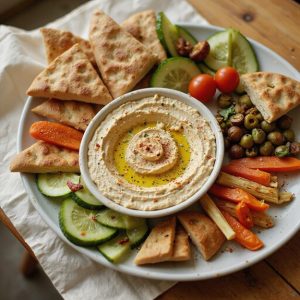
Hummus Platter
Equipment
- 1 food processor or high-speed blender
- 1 Cutting board
- 1 Chef's knife
- 1 Citrus juicer optional
- 1 Measuring cups set
- 1 Measuring spoons set
- 1 serving platter or large plate
- 1 3–4 small bowls for toppings and sides
- 1 Rubber spatula
Ingredients
- 1 can chickpeas 425 g; drained and rinsed
- 60 milliliter aquafaba reserved chickpea liquid
- 80 milliliter tahini well-stirred
- 60 milliliter lemon juice freshly squeezed
- 1 clove garlic roughly chopped
- 30 milliliter extra-virgin olive oil plus more for drizzling
- 1.25 milliliter ground cumin
- 2.5 milliliter fine sea salt plus more to taste
- 1 30–45 ml cold water as needed
- 1 pinch smoked paprika for garnish
- 10 gram fresh parsley chopped; for garnish
- 1 small cucumber sliced into rounds
- 1 medium carrot cut into sticks
- 1 small red bell pepper sliced
- 1 8–10 cherry tomatoes halved
- 1 8–12 olives mixed; pitted
- 2 piece pita bread warmed and cut into wedges
Instructions
- Drain the chickpeas, reserving about 60 ml of the can liquid (aquafaba), and rinse the chickpeas under cold water.
- Add chickpeas, tahini, lemon juice, garlic, olive oil, cumin, and salt to the bowl of a food processor.
- Blend the mixture for 1–2 minutes until it starts to become smooth, scraping down the sides as needed.
- With the processor running, slowly add aquafaba, then add cold water a little at a time until the hummus becomes very smooth and creamy.
- Taste the hummus and adjust salt and lemon juice to your preference, blending again briefly to combine.
- Transfer the hummus to a serving bowl, smoothing the top with the back of a spoon and creating a shallow well in the center.
- Drizzle extra-virgin olive oil into the well and sprinkle the top with smoked paprika and chopped parsley.
- Arrange cucumber slices, carrot sticks, bell pepper strips, cherry tomatoes, olives, and pita wedges around the hummus on a large serving platter.
- Let the hummus rest in the refrigerator for about 30 minutes to allow the flavors to meld before serving.
Notes

Cynthia Weatherford is a seasoned chef and culinary enthusiast who serves as the Recipe creator of Somonday. With decades of experience in the kitchen and a passion for exploring diverse cuisines, Cynthia brings a blend of creativity and technique to every dish. Known for transforming simple ingredients into show-stopping meals, Cynthia believes that cooking is an art form anyone can master. Dedicated to inspiring home cooks, Cynthia shares approachable recipes, pro tips, and culinary wisdom to make every meal memorable.