There’s something about a Mediterranean hummus platter that feels like an instant exhale.
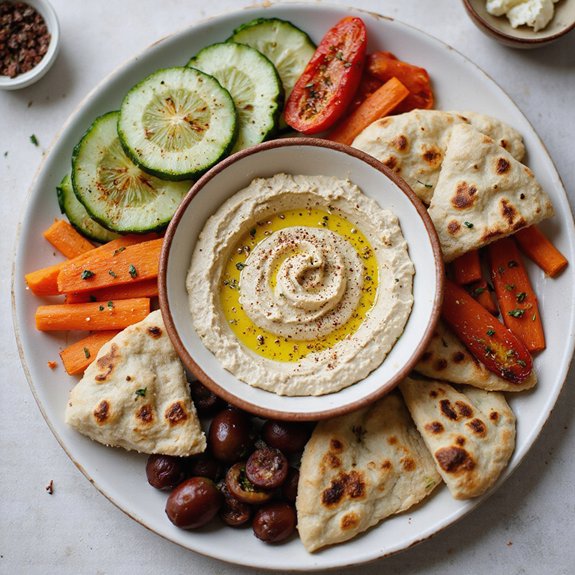
Picture a wide plate swirled with creamy, lemony hummus, glistening with good olive oil, dusted with paprika, and ringed with ruby tomatoes, crisp cucumbers, briny olives, and warm, toasty pita.
It’s a fresh, vibrant, no-cook meal that comes together in about 20 minutes, yet looks like you’ve spent the afternoon planning.
This platter is perfect for busy weeknights, relaxed family dinners, or anyone who loves to entertain without stress.
When a few friends once dropped by unannounced, I raided my fridge, layered hummus with whatever crunchy vegetables I had, added feta and nuts, and set it out.
Conversation immediately gathered around the plate, and no one guessed it was a “panic platter.”
It shines at casual gatherings, light Sunday suppers, and quick, satisfying lunches. Ready to bring this dish to life?
Why You’ll Love It
- Delivers bold, zesty flavor with creamy hummus and crisp veggies
- Serves as a stunning, shareable centerpiece for any gathering
- Adapts easily for vegetarians, gluten-free diets, and picky eaters
- Uses simple, mostly pantry ingredients and quick-prep fresh produce
- Preps ahead effortlessly; assemble platter right before serving for freshness
Ingredients
- 400 g canned chickpeas, drained and rinsed — choose low-sodium if possible
- 60 ml tahini, well-stirred — use a smooth, pourable brand
- 2 tbsp fresh lemon juice — from about 1 small lemon
- 1 small clove garlic, minced — adjust amount to taste
- 3 tbsp extra-virgin olive oil, divided — pick a fruity, peppery variety
- 60–90 ml cold water — ice-cold helps create a fluffier texture
- 1/2 tsp fine sea salt — add more at the end if needed
- 1/4 tsp ground cumin — lightly smoky and warm in flavor
- 1 pinch smoked paprika — for a touch of color and depth on top
- 1 tbsp fresh parsley, finely chopped — sprinkle over just before serving
- 1 small cucumber, sliced into rounds — choose firm, unwaxed cucumber
- 200 g cherry tomatoes, halved — use ripe, sweet tomatoes
- 1 small red bell pepper, sliced into strips — look for glossy, firm peppers
- 8–10 whole radishes, trimmed and halved — smaller radishes are milder
- 100 g Kalamata olives, drained — use pitted olives for easy eating
- 150 g feta cheese, cut into cubes — brined Greek-style feta has best flavor
- 2–3 pieces warm pita bread, cut into wedges — whole-wheat works well too
- 50 g carrot sticks — cut them thick enough for sturdy dipping
Step-by-Step Method
Blend the Hummus Base
Add chickpeas, tahini, lemon juice, garlic, 2 tablespoons olive oil, salt, and cumin to a food processor. Secure the lid and begin blending.
Pause to scrape down the sides so everything incorporates evenly.
Keep the mixture moving so the chickpeas fully break down and the tahini emulsifies for a creamy, unified base.
Stream in Cold Water
With the processor running, slowly drizzle in cold water. Add just a little at a time until the hummus becomes very smooth and light.
Watch the texture closely; it should look fluffy, not stiff. Stop and check the consistency with a spoon, then blend again if needed for extra silkiness.
Taste and Adjust Seasoning
Stop the processor and taste a small spoonful of hummus. Add more salt for savoriness or extra lemon juice for a brighter, tangier flavor.
Blend again briefly to incorporate any adjustments. Taste once more and fine-tune if necessary so the hummus is well-balanced and deeply flavorful.
Chill to Meld Flavors
Transfer the hummus to a bowl, smoothing the top with a spoon. Cover and refrigerate for about 10 minutes.
Letting it rest allows the flavors of garlic, lemon, and cumin to blend together. Use this time to prepare your vegetables and garnishes so assembling the platter is quick.
Wash and Slice the Vegetables
Rinse the cucumber, cherry tomatoes, bell pepper, and radishes under cool water. Pat them dry with a clean towel.
Slice the cucumber into rounds, halve the cherry tomatoes and radishes, and cut the bell pepper into even strips. Aim for bite-sized pieces that are easy to grab and dip.
Arrange the Platter Components
Place the sliced vegetables, Kalamata olives, feta cubes, carrot sticks, and warm pita wedges on a large serving platter. Group similar items together for a tidy look.
Leave space in the center or a clear area for the hummus bowl. Adjust portions so colors and shapes appear balanced.
Spoon and Garnish the Hummus
Spoon the chilled hummus into a shallow bowl or directly into the center of the platter. Use the back of a spoon to swirl and spread it slightly.
Drizzle the remaining tablespoon of olive oil over the surface. Sprinkle smoked paprika and finely chopped parsley evenly for color and aroma.
Assemble and Serve the Platter
Nestle the hummus bowl onto the platter if using a separate dish. Tuck vegetables, olives, feta, and pita closely around it, filling any gaps for an abundant look.
Serve immediately, or cover and refrigerate for a few hours. Bring to room temperature slightly before serving for the best flavor.
Ingredient Swaps
- Make it vegan: Omit the feta or swap for a plant-based feta or marinated tofu cubes.
- Dairy-free: Simply leave off the cheese; add roasted chickpeas or nuts for richness.
- Gluten-free: Replace pita with gluten-free flatbread, rice crackers, or extra veggie sticks.
- Budget-friendly: Use regular black or green olives instead of Kalamata; skip specialty herbs and use dried parsley or oregano.
- Regional/ingredient availability: Sub bell pepper with carrot or celery sticks, cherry tomatoes with regular tomatoes cut into wedges, and tahini with smooth peanut or sunflower seed butter (flavor will be different but still creamy).
You Must Know
- Flavor Boost – If the hummus tastes flat after chilling, add 1–2 tsp more lemon juice and a small pinch of salt, then run it in the processor for 30–60 seconds; acidity and salt “wake up” flavors that dull in the fridge.
- Troubleshoot – If the hummus is too thick or pasty, work in 1 tbsp cold water at a time until it looks like soft, glossy frosting that slowly levels out in the bowl; this texture gives the best “swoosh” and scoop.
- Avoid – Avoid using warm water or room‑temp chickpeas; use fridge‑cold water and chickpeas so the hummus looks pale and slightly fluffy rather than oily or dense.
- Make-Ahead – For serving later the same day, keep hummus and vegetables in separate covered containers up to 6–8 hours, then assemble the platter within 20–30 minutes of serving so the cut vegetables stay crisp and bright.
- Scale – For a party, doubling the recipe (800 g chickpeas, 120 ml tahini, etc.) fills a large platter; don’t exceed what comfortably fits in your processor—work in two batches if the bowl is under 8–10 cups to avoid grainy, uneven puree.
Serving Tips
- Serve hummus slightly chilled with warm pita for temperature and texture contrast.
- Add small bowls for olives, feta, and pickled vegetables to prevent flavors mingling.
- Garnish hummus center with olive oil, paprika, parsley, and a few whole chickpeas.
- Arrange vegetables by color around hummus for a vibrant, eye-catching platter.
- Include gluten-free crackers or endive leaves for guests avoiding bread.
Storage & Make-Ahead
Refrigerate hummus in an airtight container for up to 4–5 days.
Keep veggies, feta, and pita stored separately and assemble just before serving.
The hummus itself freezes well for up to 3 months.
Thaw overnight in the fridge and stir in a little fresh lemon juice and olive oil before serving.
Reheating
Reheat pita or flatbreads gently: wrap in foil and warm in a low oven, or briefly microwave covered with a damp towel.
Warm cooked veggies or fillings on low stovetop heat.
Hummus in Levantine Culture
I like to think of gently warmed pita as your boarding pass into a much older story, because in the Levant, hummus isn’t just a dip on a platter—it’s a way of gathering.
I still remember sitting at a small café in Beirut, watching the server spread hummus into a wide, sun-colored circle, then drag the back of his spoon through it like he was tracing rivers.
People didn’t order “for themselves.” They leaned in together, tore pita, and swept through the same silky pool of chickpeas, tahini, and lemon. Conversation rose and fell between bites.
Hummus filled the pauses when words ran out, a quiet language of sharing. When you set your platter down, you’re echoing that same everyday ritual.
Final Thoughts
Bring this Mediterranean Hummus Platter to your next gathering and watch it disappear in no time!
Feel free to mix and match your favorite veggies, cheeses, and extras to make it your own.
Frequently Asked Questions
Can I Make This Hummus Platter Without a Food Processor or Blender?
Yes, you can. I’d mash the chickpeas by hand with a fork until rustic and creamy, whisk in tahini, lemon, and oil, then pile it onto a platter surrounded by colorful, crunchy vegetables and warm bread.
What Wine or Beverages Pair Best With a Mediterranean Hummus Platter?
I’d pour crisp Sauvignon Blanc or dry rosé; they cut through the creamy, garlicky spread. Personally, I also love icy sparkling water with lemon—tiny bubbles and citrus perfume make every crunchy bite feel brighter.
How Can I Scale This Platter Recipe for a Large Party?
I’d multiply everything by 3–4 for a big crowd, then build several smaller, color-packed platters. I’ve found satellite platters prevent bottlenecks—people graze, chat, and the table feels like a bustling market stall.
Is It Safe to Leave the Hummus Platter Out at Room Temperature?
Yes, but only for about 2 hours at normal room temperature. I picture guests lingering, scooping creamy dips, so I set a timer, then swap in a fresh, chilled platter before anything feels warm or risky.
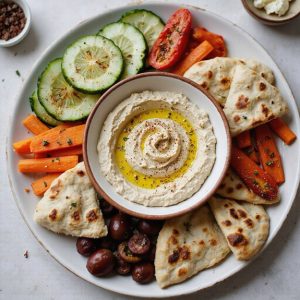
Mediterranean Hummus Platter
Equipment
- 1 food processor or high-speed blender
- 1 large serving platter
- 1 Small mixing bowl
- 1 Cutting board
- 1 Chef's knife
- 1 small spoon
- 1 measuring cup set
- 1 measuring spoon set
Ingredients
- 400 gram canned chickpeas drained and rinsed
- 60 milliliter tahini well-stirred
- 2 tablespoon fresh lemon juice
- 1 small clove garlic minced
- 3 tablespoon extra-virgin olive oil divided
- 1 60–90 ml cold water
- 1/2 teaspoon fine sea salt
- 1/4 teaspoon ground cumin
- 1 pinch smoked paprika for garnish
- 1 tablespoon fresh parsley finely chopped; for garnish
- 1 small cucumber sliced into rounds
- 200 gram cherry tomatoes halved
- 1 small red bell pepper sliced into strips
- 1 8–10 whole radishes trimmed and halved
- 100 gram Kalamata olives drained
- 150 gram feta cheese cut into cubes
- 1 2–3 pieces warm pita bread cut into wedges
- 50 gram carrot sticks for dipping
Instructions
- Add chickpeas, tahini, lemon juice, garlic, 2 tablespoons of olive oil, salt, and cumin to the bowl of a food processor.
- Blend the mixture, slowly adding cold water a little at a time until the hummus is very smooth and creamy.
- Taste the hummus and adjust seasoning with additional salt or lemon juice as needed.
- Let the hummus rest in the refrigerator for about 10 minutes to allow the flavors to meld.
- While the hummus rests, wash and slice the cucumber, cherry tomatoes, bell pepper, and radishes on a cutting board.
- Arrange the sliced vegetables, olives, feta cubes, carrot sticks, and pita wedges neatly on the large serving platter.
- Spoon the hummus into a shallow bowl or directly onto the center of the platter, spreading it slightly with the back of a spoon.
- Drizzle the remaining 1 tablespoon of olive oil over the hummus and sprinkle with smoked paprika and chopped parsley.
- Place the hummus bowl onto the platter and adjust the vegetables and accompaniments around it for an attractive presentation.
- Serve the Mediterranean hummus platter immediately, or cover and refrigerate for up to a few hours before serving.
Notes

Cynthia Weatherford is a seasoned chef and culinary enthusiast who serves as the Recipe creator of Somonday. With decades of experience in the kitchen and a passion for exploring diverse cuisines, Cynthia brings a blend of creativity and technique to every dish. Known for transforming simple ingredients into show-stopping meals, Cynthia believes that cooking is an art form anyone can master. Dedicated to inspiring home cooks, Cynthia shares approachable recipes, pro tips, and culinary wisdom to make every meal memorable.