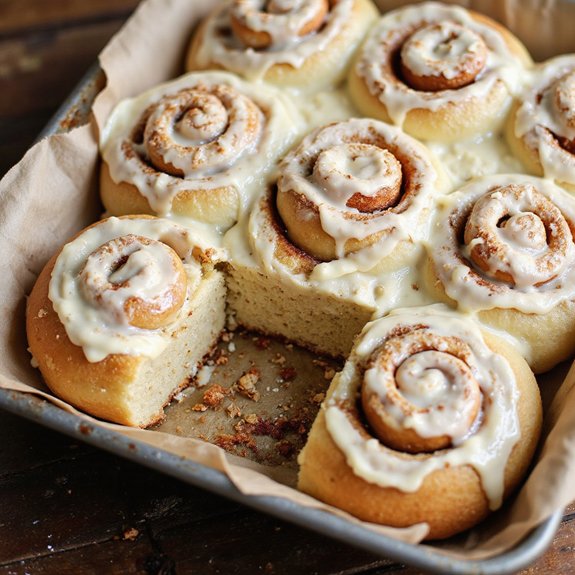
There’s something about waking up to the smell of butter, cinnamon, and caramelized sugar that makes the whole house feel softer around the edges.
These overnight sourdough cinnamon rolls are a cozy, bakery-style breakfast that’s surprisingly low-effort in the morning—just bake and glaze.
They’re perfect for sweet-tooth fans, slow-weekend lovers, and anyone who wants homemade comfort without a 5 a.m. wake-up call.
I first leaned on this recipe before an early road trip.
I mixed the dough the night before, tucked the pan into the fridge, and the next morning we’d warm, golden spirals on the table in under 30 minutes—no stress, no mess, just quiet happiness with coffee.
These rolls shine on lazy Sunday brunches, holiday mornings, sleepovers, or any time you need a make-ahead treat that feels special.
Ready to bring this pan of cinnamon-swirled comfort to life?
Why You’ll Love It
- Delivers incredibly fluffy, pull-apart layers with real sourdough character
- Develops deep, complex flavor from a long, slow overnight rise
- Simplifies mornings: assemble at night, just bake and frost next day
- Uses basic pantry ingredients plus your active sourdough starter
- Crowds-pleaser dessert that feels bakery-special with minimal hands-on time
Ingredients
- 120 g active sourdough starter, 100% hydration — use recently fed and bubbly
- 240 g whole milk, warm — around body temperature to avoid shocking starter
- 75 g granulated sugar — adds sweetness and tenderizes the dough
- 2 large eggs, room temperature — take out of fridge 30 minutes ahead
- 80 g unsalted butter, melted and cooled — should be lukewarm, not hot
- 500 g all-purpose flour — use a medium-protein, unbleached flour
- 8 g fine sea salt — enhances flavor and gluten strength
- 90 g unsalted butter, very soft — should be easily spreadable
- 150 g light brown sugar, packed — gently press into the cup for accuracy
- 12 g ground cinnamon — choose fresh, aromatic cinnamon for best flavor
- 2 g fine sea salt — balances the sweetness in the filling
- 115 g cream cheese, softened — full-fat for best texture
- 60 g unsalted butter, softened — room temperature for easy mixing
- 180 g powdered sugar, sifted — removes lumps for ultra-smooth frosting
- 3–5 g vanilla extract — adjust to taste for stronger vanilla flavor
- 10–20 g whole milk — add gradually to reach spreadable consistency
- 1 g fine sea salt — a pinch to round out the sweetness
Step-by-Step Method
Mix the Wet Ingredients
Whisk the active sourdough starter, warm milk, granulated sugar, eggs, and melted, cooled butter in the stand mixer bowl.
Blend until the mixture looks smooth and uniform with no streaks of egg or starter.
Scrape down the sides as needed so everything incorporates evenly before adding any dry ingredients.
Bring the Dough Together
Add the all-purpose flour and fine sea salt to the wet mixture.
Attach the dough hook and mix on low speed until a shaggy, rough dough forms.
Stop to scrape the bowl if dry flour pockets remain.
Aim for all flour to be hydrated, but don’t worry about smoothness yet at this stage.
Knead Until Smooth and Elastic
Increase the mixer speed to medium.
Knead the dough for 6–8 minutes until it becomes smooth, elastic, and slightly tacky but not sticky.
Check by gently pressing it with a fingertip; it should spring back slowly.
Avoid adding extra flour unless absolutely necessary to keep the dough soft.
Let the Dough Rise
Shape the dough into a smooth ball and place it in a lightly greased bowl.
Cover tightly with plastic wrap or a reusable cover.
Let it rise at room temperature for 4–6 hours until puffy and increased in volume by about 70%.
Adjust the time depending on your kitchen’s warmth.
Make the Cinnamon Filling
Combine the very soft butter, packed light brown sugar, ground cinnamon, and fine sea salt in a small bowl.
Mix with a spoon or spatula until a smooth, spreadable paste forms.
Ensure no lumps of butter remain.
Keep the filling at room temperature so it stays easy to spread once the dough is ready.
Roll Out the Dough
Lightly flour your work surface and gently turn the risen dough out, trying not to deflate it completely.
Dust the top very lightly with flour.
Use a rolling pin to roll the dough into a rectangle about 12×18 inches, with the long edge facing you.
Keep the thickness even for uniform baking.
Spread the Filling
Spread the cinnamon filling evenly over the dough using an offset spatula or the back of a spoon.
Leave a 1/2‑inch border along the top long edge to help seal the roll.
Make sure the filling reaches close to the side edges so every roll has a generous cinnamon swirl inside.
Roll into a Tight Log
Starting from the long edge closest to you, roll the dough up into a tight, even log.
Gently pull and tuck as you go to keep the spiral snug.
When you reach the top border, pinch the seam firmly to seal.
Turn the log seam-side down to help prevent unrolling.
Cut the Rolls
Trim the uneven ends if needed.
Mark the log into 12 equal sections, then slice with a sharp knife or unflavored dental floss for clean cuts.
Use gentle pressure to avoid squashing the spirals.
Aim for rolls of similar thickness so they bake evenly and rise at the same rate.
Arrange and Chill Overnight
Grease a 9×13-inch baking pan.
Arrange the rolls cut-side up, spacing them evenly across the pan.
Cover tightly with plastic wrap or a fitted lid.
Refrigerate overnight for 8–12 hours.
This slow, cold proof develops flavor and helps the rolls hold their shape for baking.
Proof the Rolls in the Morning
Remove the covered pan from the refrigerator and uncover.
Let the rolls sit at room temperature for 45–90 minutes until visibly puffy and nearly touching.
The timing depends on how warm your kitchen is.
Near the end of proofing, preheat your oven to 350°F (175°C).
Bake Until Lightly Golden
Place the pan in the preheated oven.
Bake the rolls for 22–28 minutes until lightly golden on top.
Check that the centers reach about 190°F for doneness.
If browning too quickly, tent loosely with foil.
Transfer the pan to a wire rack and cool for 10–15 minutes before frosting.
Make the Cream Cheese Frosting
While the rolls bake, beat softened cream cheese and butter together in a medium bowl until completely smooth and fluffy.
Add sifted powdered sugar, vanilla extract, and fine sea salt.
Beat again until thick and creamy.
Add whole milk a little at a time until the frosting is easily spreadable.
Frost and Serve Warm
Spread or drizzle the cream cheese frosting over the warm rolls in the pan, letting it melt slightly into the swirls.
Serve the cinnamon rolls warm for the softest texture.
Store any leftovers covered at room temperature for 1 day, or refrigerate for up to 3 days and gently rewarm before serving.
Ingredient Swaps
- Use whole or 2% milk for best texture; dairy-free milk (oat, soy, or almond) also works but may make the crumb slightly less rich.
- Swap unsalted butter with salted butter and reduce added salt slightly, or use a quality plant-based butter for a fully dairy-free version (plus vegan cream cheese in the frosting).
- All-purpose flour can be replaced with up to 25–30% whole wheat flour; add 1–2 teaspoons extra milk if the dough feels stiff.
- Brown sugar in the filling can be subbed with coconut sugar or a mix of white sugar + 1–2 teaspoons molasses.
- For vanilla, use vanilla paste or ½ the amount of vanilla bean seeds if you have them, or omit in a pinch.
You Must Know
– Flavor Boost • To deepen the sourdough character or spice… Let the shaped rolls chill toward the long end of the range (10–12 hours) for more tang, or add 1–2 g extra cinnamon and 1–2 g cardamom or nutmeg in the filling.
Taste the filling paste before spreading; it should taste a bit more intense than you want the final roll to be.
Serving Tips
- Serve warm with extra frosting on the side for dipping.
- Pair with hot coffee, chai, or cold brew for brunch.
- Dust lightly with powdered sugar just before serving for a bakery-style look.
- Add fresh berries and orange slices on the side for color and brightness.
- Plate individually on small dessert plates with a drizzle of leftover icing.
Storage & Make-Ahead
Store baked rolls, tightly covered, in the fridge for up to 3 days.
Rewarm gently before serving.
You can assemble unbaked rolls, refrigerate overnight, then bake fresh in the morning.
Baked, unfrosted rolls also freeze well for about 1 month.
Thaw, warm, then add frosting.
Reheating
Reheat rolls gently to keep them soft.
In the oven at 300°F, covered, 8–10 minutes.
In the microwave for 15–20 seconds.
Or on a covered skillet over low heat.
Cinnamon Rolls in Pop Culture
When a character tears into a soft, spiraled bun, I can almost smell the butter and cinnamon through the screen.
That slow pull of icing, the tender center saved for last—it’s always a tiny act of comfort.
I think that’s why I’m drawn to baking them for you: they’re the kind of food that feels like a hug, even when it’s just a scene in passing.
Final Thoughts
Give these overnight sourdough cinnamon rolls a try and wake up to a pan of fresh, cozy sweetness with almost no morning work.
Once you’ve made them once, have fun tweaking the filling, spice level, or frosting to make them your own.
Frequently Asked Questions
Can I Freeze the Unbaked Sourdough Cinnamon Rolls for Longer Storage?
Yes, you can freeze them unbaked. I’d shape, slice, and freeze on a tray, then bag. Later, thaw in the pan until pillowy and fragrant, then bake until your kitchen smells like warm, buttery spice.
How Do I Adapt This Recipe for High-Altitude Baking Conditions?
You’ll shorten proofs slightly, reduce sugar by a tablespoon, add 1–2 tablespoons extra milk, and bake hotter (375°F) but quicker. I watch the dough like weather—soft, billowy, fragrant—then pull it just golden.
What Can I Do if My Rolls Taste Too Sour or Tangy?
If your rolls taste too sour, I’d shorten fermentation, use a younger starter, and add a touch more sugar. I’d bake them sooner, then blanket them with extra vanilla‑kissed frosting to soften that sharp tang.
How Do I Scale This Recipe for a Crowd or Smaller Batch?
I scale it by multiplying or dividing every ingredient by your desired factor, then baking multiple pans. Picture pans of pillowy spirals, butter sizzling, cinnamon fogging the kitchen—just keep dough thickness and proofing time consistent.
Can I Make These Rolls Vegan While Still Using Sourdough Starter?
Yes, you can. I’d keep your starter, then swirl in oat milk, vegan butter, and flax “eggs.” As they bake, the kitchen fills with caramel warmth, and you’ll tear into tender spirals dripping vanilla frosting.

Overnight Sourdough Cinnamon Rolls
Equipment
- 1 stand mixer with dough hook (or large mixing bowl)
- 1 medium mixing bowl
- 1 Small mixing bowl
- 1 9×13 inch baking pan
- 1 Rolling Pin
- 1 sharp knife or bench scraper
- 1 Measuring cups set
- 1 Measuring spoons set
- 1 Rubber spatula
- 1 pastry brush
- 1 plastic wrap or reusable cover
- 1 Kitchen towel
- 1 wire cooling rack
Ingredients
- 120 gram active sourdough starter 100% hydration
- 240 gram whole milk warm
- 75 gram granulated sugar
- 2 large eggs room temperature
- 80 gram unsalted butter melted and cooled
- 500 gram all-purpose flour
- 8 gram fine sea salt
- 90 gram unsalted butter very soft
- 150 gram light brown sugar packed
- 12 gram ground cinnamon
- 2 gram fine sea salt
- 115 gram cream cheese softened
- 60 gram unsalted butter softened
- 180 gram powdered sugar sifted
- 1 3–5 g vanilla extract
- 1 10–20 g whole milk as needed
- 1 gram fine sea salt
Instructions
- In the bowl of a stand mixer, whisk together the sourdough starter, warm milk, sugar, eggs, and melted butter until smooth.
- Add the flour and salt to the wet mixture, then mix with the dough hook on low until a shaggy dough forms.
- Increase to medium speed and knead for 6–8 minutes until the dough is smooth, elastic, and slightly tacky but not sticky.
- Shape the dough into a ball, place it in a lightly greased bowl, cover, and let rise at room temperature for 4–6 hours until puffy and increased in volume by about 70%.
- While the dough rises, make the filling by combining the softened butter, brown sugar, cinnamon, and salt in a small bowl and mixing into a smooth paste.
- Once the dough has risen, lightly flour your work surface and gently turn the dough out without deflating completely.
- Roll the dough into a rectangle about 12×18 inches (30×45 cm), with the long side facing you.
- Spread the cinnamon filling evenly over the dough, leaving a 1/2-inch (1.25 cm) border along the top long edge.
- Starting from the long edge closest to you, roll the dough into a tight log, sealing the seam by pinching gently.
- Trim the ends if uneven, then slice the log into 12 equal pieces using a sharp knife or floss.
- Arrange the rolls cut-side up in a greased 9×13-inch pan, spacing them evenly.
- Cover the pan tightly with plastic wrap or a lid and refrigerate overnight for 8–12 hours.
- In the morning, remove the pan from the fridge and let the rolls sit at room temperature for 45–90 minutes until visibly puffy and nearly touching.
- Near the end of proofing, preheat the oven to 350°F (175°C).
- Bake the rolls for 22–28 minutes until lightly golden on top and the centers reach about 190°F (88°C).
- While the rolls bake, beat the cream cheese and butter together until smooth and fluffy.
- Add the powdered sugar, vanilla, and salt to the cream cheese mixture and beat until thick and smooth, adding milk a little at a time to reach a spreadable consistency.
- Remove the rolls from the oven and cool in the pan on a rack for 10–15 minutes.
- Spread or drizzle the cream cheese frosting over the warm rolls.
- Serve warm and store any leftovers covered at room temperature for 1 day or refrigerated for up to 3 days.
Notes

Cynthia Weatherford is a seasoned chef and culinary enthusiast who serves as the Recipe creator of Somonday. With decades of experience in the kitchen and a passion for exploring diverse cuisines, Cynthia brings a blend of creativity and technique to every dish. Known for transforming simple ingredients into show-stopping meals, Cynthia believes that cooking is an art form anyone can master. Dedicated to inspiring home cooks, Cynthia shares approachable recipes, pro tips, and culinary wisdom to make every meal memorable.