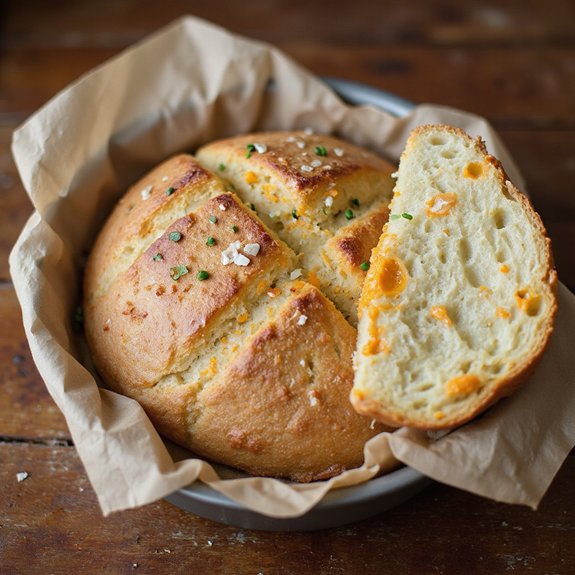
There’s something about pulling a golden, cheese-flecked loaf from the oven that makes the whole kitchen feel warmer.
This sourdough discard cheese bread is a cozy, savory bake—soft and tender inside, with a lightly crisp crust and ribbons of melted cheese throughout.
It comes together quickly compared to traditional loaves, making it ideal for busy weeknights, casual Sunday suppers, or those moments when a last-minute craving hits and you’ve got extra discard to use.
It’s perfect for beginners who are still getting comfortable with sourdough, families who go through bread fast, and anyone who hates wasting discard.
More than once, this bread has saved me on an evening when soup was simmering but the pantry was bare of anything special.
A warm slice, steam curling up, turned a simple meal into something memorable.
Ready to turn that extra discard into your new favorite cheese bread?
Why You’ll Love It
- Delivers bold, cheesy, garlicky flavor with a gentle sourdough tang.
- Saves waste by using up extra sourdough discard from regular feedings.
- Mixes in one bowl, no kneading, proofing, or stand mixer needed.
- Adapts easily with different cheeses, herbs, or tasty add-ins.
- Slices cleanly and reheats beautifully for snacks, soups, or breakfasts.
Ingredients
- 240 g sourdough discard, unfed, 100% hydration — use relatively fresh discard (fed within a week) for milder tang
- 120 g milk, room temperature — whole milk preferred for richer crumb
- 60 g unsalted butter, melted and slightly cooled — avoid adding while piping hot to prevent curdling egg
- 1 large egg, room temperature — room temp helps batter mix evenly
- 8 g fine sea salt — fine grain disperses more evenly in batter
- 10 g granulated sugar — balances tang and enhances browning
- 260 g all-purpose flour, leveled — don’t pack the cup if measuring by volume
- 6 g baking powder — provides primary lift for this quick bread
- 2 g baking soda — reacts with acidic discard for extra rise
- 150 g cheddar cheese, shredded — sharp cheddar gives best flavor punch
- 30 g parmesan cheese, finely grated — use real Parmigiano Reggiano if possible
- 5 g garlic powder — gives consistent garlic flavor without excess moisture
- 2 g smoked paprika (optional) — adds subtle smokiness and color
- 10 g chopped fresh chives or green onions (optional) — fold in for fresh allium notes
- 15 g unsalted butter, melted, for brushing top (optional) — brush on hot loaf for softer, glossy crust
Step-by-Step Method
Prep the Pan & Heat the Oven
Preheat the oven to 375°F (190°C). Grease a 9×5-inch loaf pan with butter or nonstick spray, or line it with parchment for easier removal.
Smooth the parchment into the corners. Set the prepared pan aside while you mix the batter so it’s ready as soon as the batter is finished.
Combine the Wet Ingredients
Whisk together the sourdough discard, milk, melted butter, and egg in a large mixing bowl. Mix until the mixture is smooth and uniform.
Add the salt and sugar, then whisk again until both are fully dissolved.
Scrape down the sides of the bowl as needed so everything is evenly combined.
Mix the Dry Ingredients
In a separate bowl, whisk together the flour, baking powder, baking soda, garlic powder, and smoked paprika.
Break up any lumps of flour or baking powder with the whisk.
Make certain the leavening agents are evenly dispersed.
This even distribution helps the bread rise uniformly and prevents pockets of baking powder in the finished loaf.
Toss the Cheese with Dry Mix
Add the shredded cheddar, grated parmesan, and chopped chives (if using) to the dry ingredient bowl.
Toss everything together with your hands or a spoon until the cheese is well coated in flour.
This prevents the cheese from clumping and helps keep it suspended throughout the loaf instead of sinking.
Fold Wet and Dry Together
Tip the dry mixture into the bowl with the wet ingredients. Use a spatula or wooden spoon to gently fold the batter together.
Scrape from the bottom and turn the bowl as you mix. Stop as soon as no dry streaks of flour remain.
Avoid overmixing to keep the bread’s crumb tender and soft.
Fill the Pan & Smooth the Top
Scrape the thick batter into the prepared loaf pan, using the spatula to get every bit. Spread it evenly, pressing gently into the corners.
Smooth the top with the back of a spoon or spatula so it bakes level. A relatively even surface helps the loaf rise and brown more uniformly.
Rest the Batter in the Pan
Let the filled loaf pan sit at room temperature for about 30 minutes. Allow the batter to rest undisturbed.
This rest relaxes the gluten and fully hydrates the flour, resulting in a more even crumb. Use this time to clear your workspace and get a cooling rack ready.
Bake Until Golden and Set
Place the pan in the preheated oven. Bake for 25–30 minutes, rotating the pan halfway if your oven has hot spots.
Check for doneness by inserting a skewer into the center; it should come out clean or with a few moist crumbs. The top should be deeply golden and fragrant.
Brush with Butter (Optional)
Remove the loaf from the oven and place the pan on a heatproof surface. Immediately brush the hot top with the melted butter, if using.
Use a pastry brush to cover the entire surface.
This step softens the crust slightly and adds a rich, buttery flavor that complements the cheese.
Cool, Unmold & Slice
Let the bread cool in the pan for 10 minutes to set its structure. Carefully loosen the edges and lift or turn the loaf out onto a wire rack.
Cool for at least 50 minutes before slicing to avoid a gummy texture. Once cooled, slice with a sharp serrated knife and serve.
Ingredient Swaps
- No sourdough discard: Replace with 120 g flour + 120 g buttermilk or milk, and add 1–2 tsp lemon juice or vinegar for tang.
- Dairy-free: Use plant milk, vegan butter, and dairy-free cheddar/parmesan-style shreds.
- No cheddar/parmesan: Use any good melting cheese (Colby, Gouda, Jack) and a hard grating cheese (Grana Padano, aged Asiago, or a local hard cheese).
- No egg: Substitute 60 g plain yogurt or 1 “flax egg” (1 tbsp ground flax + 3 tbsp water, rested).
- No chives/green onions: Use 1–2 tsp dried chives, onion powder, or finely chopped leeks/shallots.
You Must Know
– Doneness • If the center seems set but you’re unsure: Insert a skewer straight down in the thickest part; it should come out with just a few moist crumbs and the top should be a deep golden brown (usually around 28–32 minutes).
The loaf should also feel springy, not jiggly, when you tap the center.
– Troubleshoot • If your bread turns out dense or gummy**: Extend the cooling time on the rack** to at least 70–80 minutes before slicing and aim for a slightly darker top next time.
This lets internal steam finish setting the crumb so slices don’t smear or feel underdone.
– Avoid • To prevent a collapsed or sunken middle: Use sourdough discard that’s no more than about 5–7 days old from the fridge and avoid** very sharp, vinegary-smelling starter.
An overly acidic discard can weaken the rise from baking powder/soda, making the center cave as it cools.
– Scale • For a taller bakery-style loaf: Increase all ingredients by 25% (multiply by 1.25) and check doneness starting around 35 minutes; the center may need up to 40 minutes.
A more domed top and slightly longer time give slices closer to sandwich-bread height.
– Flavor Boost • For stronger cheese and savory notes: Reserve 20–30 g of the cheddar to sprinkle over the surface right before the pan goes into the oven, and add an extra 1–2 g garlic powder if you like it punchy.
The cheese on top should bubble and brown by the last 5 minutes for a toasty, cheesy crust.
Serving Tips
- Serve warm slices with salted butter and a drizzle of honey.
- Pair with tomato soup or chili for a cozy, hearty meal.
- Toast leftover slices and top with a fried or poached egg.
- Use as a base for grilled cheese or tuna melts.
- Cut into cubes for cheesy croutons on salad or soup.
Storage & Make-Ahead
Store fully cooled bread in an airtight container or wrapped tightly in foil in the refrigerator for up to 5 days.
For make-ahead, bake, cool, and slice, then freeze well-wrapped slices up to 2 months.
Reheat from chilled or frozen in a toaster or low oven until warmed through.
Reheating
Reheat slices gently.
In a 300°F (150°C) oven for 8–10 minutes, in a covered skillet over low heat, or briefly in the microwave wrapped in a damp towel.
Sourdough Discard in Media
Once you’ve warmed a slice and the cheese turns melty again, it’s easy to see why sourdough discard keeps popping up in cookbooks, blogs, and cozy baking shows.
I see loaves like this one framed as quiet magic: thrifty, golden, and bubbling with cheese at the edges.
Food writers love that it rescues “scrap” starter and turns it into something fragrant and dignified.
You’ve probably noticed the same pattern I have:
- Slow close-ups of batter ribbons folding over shredded cheddar
- Overhead shots of bubbly starters, like living kitchen pets
- Rustic crumbs torn open beside steaming mugs of coffee
- Recipes that promise “no waste, all comfort” in a single pan
Everywhere I look, sourdough discard is shorthand for warmth, care, and home.
Final Thoughts
Give this sourdough discard cheese bread a try next time you’re craving something warm, cheesy, and comforting from the oven.
Don’t hesitate to tweak the mix-ins—swap cheeses, add herbs, or toss in extras like bacon or jalapeños to make it your own.
Frequently Asked Questions
Can I Make This Sourdough Cheese Bread Entirely Vegan?
Yes, you can. I’d swap milk and butter for rich plant versions, use flax “egg,” and meltable vegan cheeses. You’ll still pull a warm, fragrant loaf from the oven, steam curling up like savory comfort.
How Can I Adapt This Recipe for High-Altitude Baking?
You’ll reduce baking powder to 4–5 g, increase milk by 10–15 g, and bake hotter (385°F) but slightly shorter. I’d rest the batter longer; watch for a fragrant, deep-gold top and dry tester.
Is It Possible to Bake This Batter as Individual Muffins?
Yes, you can bake it as muffins. I’d fill greased tins ¾ full, bake at 375°F about 15–20 minutes. You’ll get tender, cheese-scented domes with crisp, golden edges and warm, steamy centers.
How Do I Prevent the Loaf From Sinking in the Middle?
You prevent sinking by baking until the center’s fully set, dear reader. I check with a skewer, don’t overmix, measure leaveners carefully, and let the loaf cool slowly in its pan before unmolding.
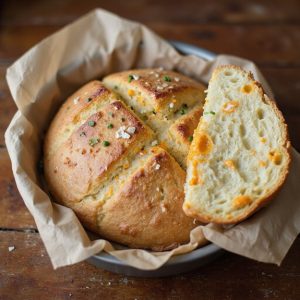
Sourdough Discard Cheese Bread
Equipment
- 2 Mixing bowls
- 1 Whisk
- 1 Wooden spoon or spatula
- 1 9×5-inch loaf pan
- 1 pastry brush (optional, for buttering)
- 1 Measuring cups set
- 1 Measuring spoons set
- 1 box grater
- 1 Wire rack
Ingredients
- 240 gram sourdough discard unfed 100% hydration
- 120 gram milk room temperature
- 60 gram unsalted butter melted and slightly cooled
- 1 large egg room temperature
- 8 gram fine sea salt
- 10 gram granulated sugar
- 260 gram all-purpose flour leveled
- 6 gram baking powder
- 2 gram baking soda
- 150 gram cheddar cheese shredded
- 30 gram parmesan cheese finely grated
- 5 gram garlic powder
- 2 gram smoked paprika optional
- 10 gram chopped fresh chives or green onions optional
- 15 gram unsalted butter melted for brushing top optional
Instructions
- Preheat the oven to 375°F (190°C) and lightly grease or line a 9×5-inch loaf pan with parchment paper.
- In a large mixing bowl, whisk together the sourdough discard, milk, melted butter, and egg until smooth.
- Add the salt and sugar to the wet mixture and whisk to fully dissolve.
- In a separate bowl, whisk together the flour, baking powder, baking soda, garlic powder, and smoked paprika.
- Add the shredded cheddar, grated parmesan, and chopped chives to the dry ingredients and toss to coat the cheese in flour.
- Gently fold the dry mixture into the wet mixture using a spatula or wooden spoon until just combined and no dry patches of flour remain.
- Transfer the thick batter to the prepared loaf pan and smooth the top with the back of a spoon or spatula.
- Let the batter rest in the pan at room temperature for about 30 minutes to relax the gluten and hydrate the flour.
- Place the loaf pan in the preheated oven and bake for 25–30 minutes, or until the top is deeply golden and a skewer inserted in the center comes out clean or with a few moist crumbs.
- If desired, brush the hot top of the loaf with melted butter immediately after baking for a softer, flavorful crust.
- Cool the bread in the pan for 10 minutes, then carefully remove it and transfer to a wire rack to cool for at least 50 minutes before slicing.
Notes

Cynthia Weatherford is a seasoned chef and culinary enthusiast who serves as the Recipe creator of Somonday. With decades of experience in the kitchen and a passion for exploring diverse cuisines, Cynthia brings a blend of creativity and technique to every dish. Known for transforming simple ingredients into show-stopping meals, Cynthia believes that cooking is an art form anyone can master. Dedicated to inspiring home cooks, Cynthia shares approachable recipes, pro tips, and culinary wisdom to make every meal memorable.