
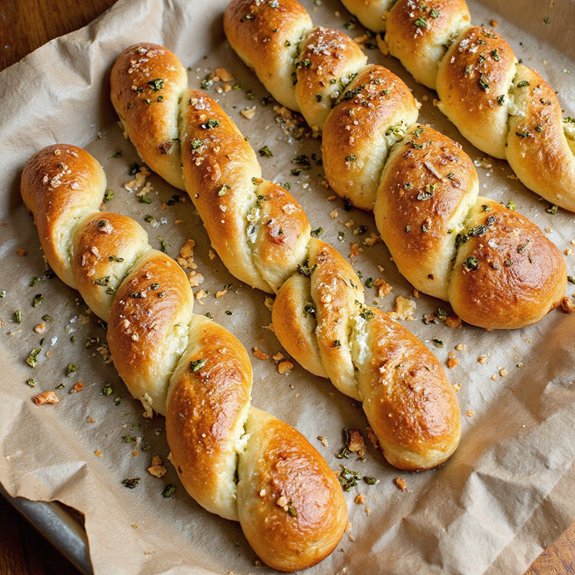
There’s something about tearing into a warm bread stick, its crust just crisp enough to crackle, releasing a wave of buttery garlic and tangy sourdough aroma.
These sourdough garlic bread sticks are cozy, shareable comfort food—perfect alongside a simple pasta, hearty soup, or quick skillet dinner—and they’re ready faster than you’d expect from anything “yeasted.”
They’re ideal for busy weeknights, hungry families, and anyone who loves the flavor of sourdough but wants an easy, approachable bake.
I still remember a rainy Sunday when dinner was nothing more than leftover marinara and a bagged salad.
These bread sticks turned it into something that felt intentional: golden rods of dough, brushed with garlic butter, scattered with herbs, and devoured straight off the pan.
They’ve since become my go‑to for last-minute gatherings, game nights, and comfort cravings on cold evenings.
Ready to bring this dish to life?
Why You’ll Love It
- Delivers bold, garlicky, herby flavor with tangy sourdough depth
- Makes bakery-style bread sticks with a perfectly chewy, tender interior
- Uses active starter discard, reducing waste and boosting homemade bakes
- Pairs effortlessly with soups, salads, and pasta for easy meals
- Preps ahead and refrigerates, fitting smoothly into busy schedules
Ingredients
- 240 g sourdough starter, active and bubbly — use recently fed, fully risen starter
- 240 ml warm water (about 30°C) — comfortably warm to the touch, not hot
- 30 ml olive oil — a mild, good-quality extra-virgin oil
- 10 g granulated sugar — helps browning and fermentation
- 8 g fine sea salt — fine texture dissolves evenly in the dough
- 480 g bread flour — higher protein gives chewier, structured sticks
- 60 g unsalted butter, melted — cool slightly so it doesn’t cook the garlic
- 15 g garlic, minced (about 3 cloves) — mince finely for even flavor
- 5 g dried oregano, crushed — rub between fingers to release aroma
- 3 g dried parsley or 10 g fresh parsley, finely chopped — fresh gives brighter color
- 30 g grated Parmesan cheese (optional) — grate finely so it melts on contact
- 2 g flaky sea salt, for topping — sprinkle lightly over hot bread sticks
Step-by-Step Method
Mix the Wet Ingredients
Whisk the active sourdough starter, warm water, olive oil, and sugar in a large mixing bowl. Combine until the mixture looks smooth and slightly frothy.
Make certain the water is just warm, not hot, so you don’t damage the wild yeast. Set aside briefly while you prepare the flour and salt for the dough.
Form a Shaggy Dough
Add the fine sea salt and about three-quarters of the bread flour to the wet mixture. Stir with a rubber spatula until a rough, shaggy dough forms.
Scrape the sides and bottom of the bowl to incorporate all dry patches. The dough should look uneven and sticky at this stage, which is completely normal.
Knead Until Smooth and Soft
Gradually add the remaining flour while kneading by hand in the bowl or on a lightly floured surface. Work the dough for 8–10 minutes until it becomes smooth, elastic, and only slightly tacky.
Avoid adding too much extra flour. The dough should feel soft but not cling heavily to your hands.
Let the Dough Rise
Lightly oil a clean mixing bowl and place the dough inside, turning it once to coat. Cover with a damp kitchen towel to prevent drying.
Let the dough rest at room temperature until doubled in size, about 1½–2 hours. Rising time may vary with room temperature and starter strength, so watch the dough, not the clock.
Prepare the Baking Sheets
Line two baking sheets with parchment paper to prevent sticking. Lightly dust the parchment with flour to make handling easier later.
Set the trays aside within easy reach of your work surface. This preparation helps you transfer shaped bread sticks quickly and keeps their structure intact during the final proof.
Roll the Dough into a Rectangle
Gently turn the risen dough onto a lightly floured surface, trying not to deflate it completely. Pat it into a rough rectangle with your hands.
Use a rolling pin to roll it evenly to about 1 cm thickness. Keep the edges as straight and even as possible to ensure uniform bread stick sizes.
Cut and Shape the Bread Sticks
Using a bench scraper or sharp knife, cut the dough into 12 even strips, each about 2–3 cm wide. Gently pick up each strip, stretch it slightly, and twist once or twice.
Don’t overwork the dough. Arrange the twisted strips evenly spaced on the prepared baking sheets to allow room for expansion.
Proof While Preheating the Oven
Cover the shaped bread sticks loosely with a clean kitchen towel. Let them puff slightly at room temperature for 20–30 minutes.
Meanwhile, preheat the oven to 220°C (425°F) with a rack in the middle position. This short proof adds lightness and improves texture before baking.
Mix the Garlic Butter Topping
While the bread sticks proof, combine the melted butter, minced garlic, dried oregano, and parsley in a medium bowl. Stir until the garlic and herbs are evenly distributed.
Adjust garlic to taste if desired. Keep the mixture at room temperature so it stays liquid and easy to brush over the dough later.
Brush and Bake the Bread Sticks
Just before baking, lightly brush the tops of the proofed bread sticks with about half of the garlic butter mixture. Place the trays in the preheated oven.
Bake for 14–18 minutes, rotating the trays halfway through. Remove when the tops are golden and the bottoms lightly browned, indicating they’re fully baked.
Finish with Garlic Butter and Toppings
Immediately after baking, brush the hot bread sticks with the remaining garlic butter. Sprinkle grated Parmesan cheese and flaky sea salt evenly over the tops while still warm.
Let the bread sticks cool on the trays for 5–10 minutes. Serve warm for the best texture and most aromatic garlic-herb flavor.
Ingredient Swaps
- Use all-purpose flour instead of bread flour; reduce water slightly if the dough feels too soft.
- Replace butter with olive oil or a vegan butter for a dairy-free version; skip Parmesan or use a plant-based hard “cheese” to keep it vegan.
- Swap fresh garlic with 4–5 g garlic powder if needed; dried mixed Italian herbs can replace oregano/parsley.
- Substitute granulated sugar with honey or maple syrup (same weight) or omit it entirely for a less sweet, slightly slower rise.
- If you don’t have sourdough starter, use 7 g (1 packet) instant yeast plus an extra 60 g flour and 60 ml water, and shorten the rise to about 1 hour.
You Must Know
- Doneness • If the bread sticks look pale at 14 minutes: leave them in 2–4 minutes longer until the tops are a deep golden color and the bottoms show evenly browned spots; this guarantees the centers aren’t doughy even if they feel soft when squeezed.
- Troubleshoot • If the dough is spreading into flat strips: gently fold it onto itself a few times, dust with 5–10 g extra flour, and chill for 15–20 minutes; slightly firmer, cooler dough holds shape better and bakes up taller.
- Scale • For a half or double batch: multiply every ingredient by 0.5 or 2.0, keeping the same hydration (240 ml water : 480 g flour baseline); fermentation and proof times stay roughly similar, but larger batches often need 2–3 extra minutes in the oven for even color.
- Make-Ahead • To serve fresh for a party: fully cool the baked sticks, store airtight up to 24 hours, then rewarm at 180°C (355°F) for 6–8 minutes and refresh with ½ batch of new garlic butter; this restores a just-baked crust and aroma.
- Flavor Boost • For stronger sourdough tang and garlic: chill the dough after the first rise for 8–12 hours at 4°C, and increase garlic to 20 g; the long, cold fermentation builds sharper flavor while the extra garlic intensifies the topping without overpowering in 18 minutes of heat.
Serving Tips
- Serve warm in a bread basket lined with a cloth to keep them soft.
- Pair with marinara, pesto, or warm cheese sauce for dipping.
- Plate alongside salad and soup as a cozy, bistro-style side.
- Slice lengthwise and fill with mozzarella for quick stuffed bread sticks.
- Serve on a wooden board with antipasti: olives, cured meats, and roasted peppers.
Storage & Make-Ahead
Store cooled sourdough garlic bread sticks in an airtight container in the fridge for up to 3–4 days.
Rewarm in a 175°C oven for best texture.
They freeze well for 1–2 months—wrap tightly.
Reheat from frozen in a hot oven until warmed through and crisp.
Reheating
Reheat gently to keep them soft.
Wrap in foil and warm in a 175°C oven 5–8 minutes.
Briefly microwave covered with a damp towel.
Rewarm in a lidded skillet over low heat.
Sourdough in Italian-American Culture
Steam rising from a pan of garlicky bread sticks instantly evokes the red‑sauce Italian‑American kitchens where many of us first fell in love with this cuisine, and sourdough slips into that story more naturally than you might expect.
I picture checkered tablecloths, fogged‑up windows, and a basket of warm bread sticks passed from hand to hand, each one torn open to reveal a tender, fragrant crumb.
While many Italian‑American spots lean on yeasted dough, sourdough fits right in with the culture’s thrift and abundance—nothing wasted, everything deeply flavored.
Final Thoughts
Give these sourdough garlic bread sticks a try and enjoy them fresh from the oven with your favorite meal or dipping sauce.
Feel free to tweak the herbs, garlic, and cheese to match your own taste and make the recipe your own.
Frequently Asked Questions
Can I Freeze the Unbaked Bread Sticks and Bake Them Straight From Frozen?
Yes, you can, but I wouldn’t bake them straight from frozen. Freeze after shaping, then thaw and proof until puffy. When they look airy and relaxed, slide them into the hot oven and let them sing.
How Do I Adjust This Recipe for High-Altitude Baking Conditions?
You’ll lower yeast activity with cooler water, add 15–30 g extra flour, and reduce bake temperature by about 10°C. I’d also shorten rise times; you’ll want slightly under-proofed dough in your mountain kitchen.
What Dipping Sauces Pair Best With These Sourdough Garlic Bread Sticks?
I’d serve you warm marinara, silky Alfredo, or herb‑bright pesto. I’d also mix olive oil, balsamic, and chili flakes, plus a tangy garlic‑Parmesan yogurt dip that clings lovingly to every airy, golden bite.
Are These Bread Sticks Suitable for Vegan or Dairy-Free Diets With Modifications?
Yes, with simple swaps they can. I’d guide you to use olive oil instead of butter, skip Parmesan or use vegan cheese, and confirm your starter’s just flour and water—then you’ve got cozy, dairy‑free comfort.
How Can I Scale This Recipe for a Large Party or Catering Event?
You can safely scale everything by weight; I’d multiply in batches of 3–4×, mixing separate bowls. I’d proof on sheet pans, stagger baking times, and hold finished sticks warm, loosely tented with foil.
Sourdough Garlic Bread Sticks
Equipment
- 1 large mixing bowl
- 1 medium mixing bowl
- 1 kitchen scale (optional but recommended)
- 1 Measuring cups set
- 1 Measuring spoons set
- 1 Rubber spatula
- 1 Whisk
- 1 bench scraper or knife
- 1 Rolling Pin
- 2 baking sheets
- 2 sheets parchment paper
- 1 pastry brush
- 1 clean kitchen towel
Ingredients
- 240 gram sourdough starter active and bubbly
- 240 milliliter warm water about 30°C
- 30 milliliter olive oil plus extra for greasing
- 10 gram granulated sugar
- 8 gram fine sea salt
- 480 gram bread flour plus extra for dusting
- 60 gram unsalted butter melted
- 15 gram garlic minced about 3 cloves
- 5 gram dried oregano crushed
- 3 gram dried parsley or 10 g fresh parsley finely chopped
- 30 gram grated Parmesan cheese optional
- 2 gram flaky sea salt for topping
Instructions
- In a large mixing bowl whisk together the active sourdough starter, warm water, olive oil, and sugar until well combined.
- Add the salt and about three-quarters of the bread flour, stirring with a spatula until a shaggy dough forms.
- Gradually add the remaining flour, switching to hand kneading in the bowl or on a lightly floured surface until the dough is soft, smooth, and only slightly tacky, about 8–10 minutes.
- Lightly oil a clean bowl, place the dough inside, cover with a damp kitchen towel, and let rest at room temperature until doubled in size, about 1½–2 hours depending on room warmth and starter activity.
- Line two baking sheets with parchment paper and lightly dust them with flour.
- Gently turn the risen dough onto a lightly floured surface and pat it into a rectangle.
- Use a rolling pin to roll the dough into a larger rectangle about 1 cm thick, keeping the edges as even as possible.
- With a bench scraper or sharp knife cut the dough into 12 even strips about 2–3 cm wide.
- Gently stretch and twist each strip once or twice, then place them evenly spaced on the prepared baking sheets.
- Cover the shaped bread sticks loosely with a kitchen towel and let them puff slightly for 20–30 minutes while the oven preheats.
- Preheat the oven to 220°C (425°F) with a rack in the middle position.
- While the bread sticks proof, combine the melted butter, minced garlic, oregano, and parsley in a small bowl and set aside.
- Just before baking, lightly brush the tops of the bread sticks with about half of the garlic butter mixture.
- Bake the bread sticks for 14–18 minutes, rotating the trays halfway through, until they are golden brown on top and lightly browned on the bottom.
- Remove the bread sticks from the oven and immediately brush them with the remaining garlic butter.
- Sprinkle the hot bread sticks with grated Parmesan cheese and flaky sea salt, then let cool on the trays for 5–10 minutes before serving warm.
Notes
Cynthia Weatherford is a seasoned chef and culinary enthusiast who serves as the Recipe creator of Somonday. With decades of experience in the kitchen and a passion for exploring diverse cuisines, Cynthia brings a blend of creativity and technique to every dish. Known for transforming simple ingredients into show-stopping meals, Cynthia believes that cooking is an art form anyone can master. Dedicated to inspiring home cooks, Cynthia shares approachable recipes, pro tips, and culinary wisdom to make every meal memorable.


