There’s something about the first scent of warm spice and citrus that makes the whole house feel softer.
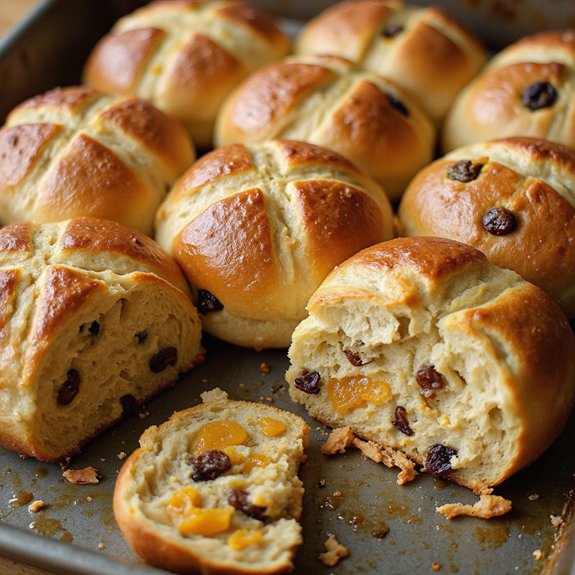
Picture a tray of sourdough hot cross buns emerging from the oven: golden-brown tops, plump with fruit, the glaze catching the light, and that unmistakable tang of slow-fermented dough mingling with cinnamon and nutmeg.
This is a cozy, gently sweet bake—perfect for leisurely breakfasts, holiday brunches, or an afternoon treat—and it’s mostly hands-off time, with the dough quietly working its magic while you get on with your day.
These buns are ideal for comfort seekers, baking enthusiasts, and anyone who loves the deeper flavor of sourdough without complicated techniques.
I still remember a chilly Easter weekend when a batch of these turned a small, slightly homesick gathering into a warm, shared ritual.
They shine at Sunday suppers, festive mornings, or anytime you need simple, fragrant comfort.
Ready to bring this bake to life?
Why You’ll Love It
- Delivers rich, complex flavor from long-fermented sourdough and warm spices
- Keeps buns soft and moist thanks to milk, butter, and egg
- Makes shaping easy with an overnight chill for firmer dough
- Reduces food waste by using active sourdough starter instead of discard
- Reheats and toasts beautifully for next-day breakfasts and snacks
Ingredients
- 150 g active sourdough starter, 100% hydration — use freshly fed & bubbly
- 250 g whole milk, lukewarm — just warm to the touch, not hot
- 80 g unsalted butter, melted & slightly cooled — avoid adding while piping hot
- 1 large egg, room temperature — cold eggs can slow fermentation
- 80 g granulated sugar — fine white sugar dissolves most evenly
- 500 g bread flour — higher protein helps buns stay tall & fluffy
- 8 g fine sea salt — distributes more evenly than coarse salt
- 2 tsp ground cinnamon — use fresh, fragrant spice for best aroma
- 1 tsp ground mixed spice or pumpkin pie spice — adds classic hot cross flavor
- 1/2 tsp ground nutmeg — freshly grated if possible for brighter taste
- 150 g raisins or sultanas — choose soft, plump dried fruit
- 50 g mixed peel (optional) — traditional; skip if you prefer milder citrus
- 1 tsp orange zest, finely grated — just the colored peel, not the bitter pith
- 50 g water, hot, for soaking fruit — helps keep fruit moist in the bake
- 50 g bread flour, for crosses — same flour as dough keeps texture consistent
- 60 g water, for crosses — adjust slightly for a thick, pipeable paste
- 50 g apricot jam, for glaze — strain for a smooth, shiny finish
- 1 tbsp water, for glaze — thins jam so it brushes on easily
Step-by-Step Method
Soak the Fruit
Soak the raisins and mixed peel in the hot water for 10–15 minutes to plump them up. Drain thoroughly, then pat dry with a clean towel to remove excess moisture. Set aside.
This prevents the fruit from stealing hydration from the dough and helps guarantee evenly distributed, juicy pieces in every bun.
Mix the Wet Ingredients
Whisk the lukewarm milk, melted cooled butter, egg, sugar, and active sourdough starter in a large bowl until smooth. Guarantee the milk is just warm, not hot, so it doesn’t harm the starter.
Mix well to fully dissolve the sugar and evenly distribute the butter and starter through the liquid base.
Form a Shaggy Dough
Add the bread flour, salt, cinnamon, mixed spice, and nutmeg to the wet ingredients. Stir with a wooden spoon until no dry flour pockets remain and a rough, shaggy dough forms.
Scrape down the sides as needed. Don’t knead heavily yet; this stage simply combines everything into one cohesive mass.
Rest the Dough (Autolyse)
Cover the bowl and let the dough rest for 30 minutes at room temperature. Allow the flour to fully hydrate and gluten to begin developing naturally. Avoid disturbing it during this period.
This rest makes the dough easier to handle and reduces the amount of kneading or folding required later.
Strengthen with Gentle Kneading
After resting, gently knead or perform stretch-and-folds in the bowl for 2–3 minutes. Pull one edge of the dough up and fold it over the center, rotating the bowl as you go.
Work until the dough feels smoother and slightly more elastic. Avoid adding extra flour unless absolutely necessary.
Incorporate Fruit and Zest
Add the soaked, dried fruit and orange zest to the dough. Gently knead or fold until the fruit is evenly distributed. Use a plastic scraper if needed to help tuck fruit into the dough.
Try not to tear the dough; work slowly so the pieces stay inside rather than ripping through the surface.
Bulk Ferment with Folds
Cover the bowl and let the dough bulk ferment at room temperature for 4–6 hours. During the first 2 hours, perform 3–4 sets of stretch-and-folds every 30–45 minutes.
Lift and fold the dough from each side. Then leave it undisturbed. Stop when it has increased about 60–80% and feels airy.
Cold Proof Overnight
Once bulk fermentation is complete, cover the bowl tightly and place it in the fridge. Cold proof for 8–12 hours. Chill the dough thoroughly to develop flavor and make shaping easier.
Don’t worry if it rises only slightly in the fridge. This slow, cool rest deepens the sourdough notes and spices.
Divide the Chilled Dough
Lightly flour your work surface, then gently turn out the cold dough. Use a scale and dough scraper to divide it into 12 equal pieces. Aim for even sizes to promote uniform baking.
Avoid using too much flour. Keep the cut edges neat so each portion is easy to shape into a smooth bun.
Shape into Tight Buns
Cup your hand around each piece and move it in small circles on the work surface. Tuck the edges underneath to create surface tension and a smooth top. Shape into tight, round balls.
Adjust with minimal extra flour. Place each shaped bun seam-side down so it holds structure during proofing.
Arrange and Proof the Buns
Grease or line a 9×13-inch pan, then arrange the buns in a 3×4 grid. Space them evenly so they can rise and just touch. Cover loosely with a kitchen towel or plastic wrap.
Proof at room temperature for 2–3 hours, until puffy and joined, but still slightly springing back when gently pressed.
Preheat the Oven
About 30 minutes before baking, preheat the oven to 375°F (190°C). Confirm the rack is in the middle position for even heat. Keep the buns covered while the oven preheats so they don’t dry out.
Use this time to prepare the paste for the crosses so you can pipe them right before baking.
Mix the Cross Paste
Combine the bread flour and water for the crosses in a small bowl. Stir until you have a thick, smooth, pipeable paste. Add a few drops of water if it seems too stiff to pipe.
Avoid making it runny, or the lines will spread. Scrape the paste into a piping bag or small zip-top bag.
Pipe the Crosses
Snip a tiny corner off the bag. Pipe long straight lines across all the buns in one direction, keeping pressure steady.
Then pipe lines in the opposite direction to form neat crosses where the buns meet. Aim for thin, defined lines. Do this gently so you don’t deflate the risen dough.
Bake Until Golden
Place the pan in the preheated oven. Bake for 20–25 minutes, until the buns are deep golden brown and reach about 200°F (93°C) inside. Rotate the pan once if your oven bakes unevenly.
Remove promptly when done to avoid drying. The buns should feel light and sound slightly hollow when tapped.
Prepare the Apricot Glaze
While the buns bake, warm the apricot jam and 1 tablespoon of water in a small saucepan. Stir until fluid and glossy.
Strain through a fine sieve if you prefer a smooth glaze without fruit pieces. Keep warm on low heat. The glaze should be easily brushable but not watery.
Glaze and Cool the Buns
As soon as the buns come out of the oven, brush the warm apricot glaze generously over the tops. Coat every surface for shine and flavor.
Let them cool in the pan for 10 minutes to set their structure. Then transfer carefully to a wire rack and cool further before serving warm or at room temperature.
Ingredient Swaps
- Use whole or 2% milk; for dairy-free, swap milk for oat/soy milk and butter for vegan block butter or neutral oil (reduce by ~10%).
- Replace egg with 50 g unsweetened applesauce or a “flax egg” (1 tbsp ground flax + 3 tbsp water, rested).
- Any bread or strong white flour works; you can replace up to 25–30% with whole wheat (add 10–20 g extra milk if dough feels stiff).
- Swap raisins/sultanas for any dried fruit (chopped apricots, cranberries, cherries); use extra zest if mixed peel is unavailable.
- If you don’t have mixed spice, use pumpkin pie spice or a blend of cinnamon with a pinch each of cloves and allspice.
You Must Know
– Avoid • If the dough turns very slack or spreads in the pan: Chill it until it’s firm and cool to the touch (at least 30–45 minutes in the fridge), then reshape more tightly.
This prevents flat, joined-at-the-hip buns and keeps them tall and fluffy.
– Troubleshoot • When the fruit keeps tearing through the dough: Lightly dampen your hands and do gentle folds over 1–2 minutes rather than aggressive kneading.
This reduces rips and keeps the fruit from clumping in the center, so buns rise more evenly.
– Flavor Boost • For a more complex, tangy flavor without extra sourness: Let the shaped buns rise just until they’re touching and feel marshmallow-soft but still slowly spring back when pressed (often closer to 3 hours in a cool kitchen).
Stopping there avoids an overly acidic or “bready” taste.
– Scale • To make a smaller batch (6 buns): Use half of every ingredient by weight and arrange the buns in a 8×8 inch (20×20 cm) pan in a 2×3 grid.
Rise and bake times stay roughly the same; start checking for doneness at 18 minutes.
Serving Tips
- Serve warm with salted butter, clotted cream, or orange marmalade.
- Plate in a lined basket, brushed again lightly with warm apricot jam.
- Split and toast leftover buns; serve with butter and a drizzle of honey.
- Pair with strong tea, spiced chai, or dark-roast coffee to balance sweetness.
- Use day-old buns for a custardy bread-and-butter pudding dessert.
Storage & Make-Ahead
Sourdough hot cross buns keep in the fridge, well wrapped, for up to 4 days.
Gently reheat before serving.
For make-ahead, you can chill shaped buns overnight, then bake fresh next day.
Baked buns also freeze well for about 2 months.
Thaw at room temperature and refresh in a warm oven.
Reheating
Reheat gently to avoid drying.
Microwave halved buns 10–15 seconds under a damp towel.
Warm in a 300°F/150°C oven for 8–10 minutes.
Toast cut sides on a covered skillet.
Easter Breakfast Traditions
Once those tender buns are gently warmed, they’re ready to slip into the kind of Easter breakfast that feels like a small celebration all on its own.
I like to bring them to the table in their pan, glaze still tacky, steam curling up in little spirals that smell of spice and citrus.
I set out softened butter, a jar of good marmalade, maybe a bowl of berries beading with cold droplets. There’s a pot of strong coffee, and a jug of milk turning the surface a soft, cloudy brown.
Someone always reaches in, tears a bun apart, and the crumb sighs open, pillowy and fragrant. For a quiet moment, conversation pauses, and all you hear is crust, gently crackling.
Final Thoughts
Give these sourdough hot cross buns a try and enjoy how much flavor your starter brings to a classic treat.
Once you’ve made them once, have fun tweaking the spices, fruit, or zest to make the recipe your own.
Frequently Asked Questions
Can I Make These Hot Cross Buns Dairy-Free or Vegan Without Affecting Texture?
Yes, you can. I’d swap milk for creamy oat milk, butter for vegan block, and egg for 40g aquafaba. Your dough will still feel plush under your palms and bake into tender, fragrant, gently golden buns.
How Do I Adjust Proofing Times for Very Hot or Very Cold Climates?
I watch the dough, not the clock: in heat, I shorten each proof and chill between folds; in cold, I lengthen rises, use a slightly warm spot, and wait for softly domed, springy dough.
Can I Freeze the Unbaked Shaped Buns and Bake Them From Frozen?
Yes, you can. I’d freeze them after shaping, then bake from frozen, adding 10–15 minutes. Expect a slower rise, but your kitchen will still fill with that warm, spiced, buttery aroma.
What’s the Best Way to Mill or Use Whole Grains in This Recipe?
You can swap 20–30% of the flour for freshly milled whole grain, sifted if you’d like. I’d choose soft, buttery wheat; it makes the dough smell nutty, feel velvety, and taste deeply wholesome.
How Do I Scale This Recipe for a Larger Crowd or Commercial Baking?
You’ll scale best by baker’s percentages: I convert every ingredient to a percent of flour, then multiply for your batch size, keeping fermentation times, gentle handling, and pan crowding the same for that pillowy, fragrant crumb.
Sourdough Hot Cross Buns
Equipment
- 1 Kitchen scale
- 2 Mixing bowls
- 1 Small saucepan
- 1 Wooden spoon
- 1 Dough scraper
- 1 plastic dough scraper or flexible spatula
- 1 9×13 inch baking pan
- 1 Wire rack
- 1 pastry brush
- 1 piping bag or small zip-top bag
- 1 measuring jug
- 1 clean kitchen towel or plastic wrap
Ingredients
- 150 gram active sourdough starter 100% hydration
- 250 gram whole milk lukewarm
- 80 gram unsalted butter melted and cooled slightly
- 1 large egg room temperature
- 80 gram granulated sugar
- 500 gram bread flour
- 8 gram fine sea salt
- 2 teaspoon ground cinnamon
- 1 teaspoon ground mixed spice or pumpkin pie spice
- 1/2 teaspoon ground nutmeg
- 150 gram raisins or sultanas
- 50 gram mixed peel optional
- 1 teaspoon orange zest finely grated
- 50 gram water for soaking fruit hot
- 50 gram bread flour for crosses
- 60 gram water for crosses
- 50 gram apricot jam for glaze
- 1 tablespoon water for glaze
Instructions
- In a small bowl soak the raisins and mixed peel in the hot water for 10 to 15 minutes then drain and pat dry.
- In a large mixing bowl whisk together the lukewarm milk, melted butter, egg, sugar, and active sourdough starter until smooth.
- Add the bread flour, salt, cinnamon, mixed spice, and nutmeg to the bowl and mix with a wooden spoon until a shaggy dough forms.
- Cover the bowl and let the dough rest for 30 minutes at room temperature.
- After resting, gently knead or stretch and fold the dough in the bowl for 2 to 3 minutes until it starts to feel smoother.
- Add the soaked and dried fruit and orange zest to the dough and knead or fold until the fruit is evenly distributed.
- Cover the bowl and bulk ferment at room temperature for 4 to 6 hours, performing 3 to 4 sets of stretch and folds every 30 to 45 minutes during the first 2 hours.
- When the dough has increased by about 60 to 80 percent in volume and feels airy, transfer it to the fridge to cold proof for 8 to 12 hours.
- The next day lightly flour your work surface, turn out the chilled dough, and divide it into 12 equal pieces.
- Shape each piece into a tight ball by cupping your hand around it and circling on the work surface until smooth and taut.
- Arrange the dough balls in a greased or parchment-lined 9×13 inch pan, spacing them evenly in a 3 by 4 grid.
- Cover the pan loosely with a clean kitchen towel or plastic wrap and proof at room temperature for 2 to 3 hours until the buns are puffy and touching.
- About 30 minutes before baking, preheat the oven to 375°F (190°C).
- For the crosses, mix the bread flour and water in a small bowl to form a thick pipeable paste, adding a little more water if needed.
- Transfer the paste to a piping bag or small zip-top bag with a tiny corner snipped off.
- Pipe straight lines across the buns in one direction, then pipe lines in the other direction to form crosses.
- Bake the buns for 20 to 25 minutes until golden brown and an internal temperature of about 200°F (93°C) is reached.
- While the buns are baking, warm the apricot jam and 1 tablespoon of water in a small saucepan until fluid, then strain if desired.
- As soon as the buns come out of the oven, brush the tops with the warm apricot glaze.
- Let the buns cool in the pan for 10 minutes, then transfer to a wire rack to cool further before serving.
Notes
Cynthia Weatherford is a seasoned chef and culinary enthusiast who serves as the Recipe creator of Somonday. With decades of experience in the kitchen and a passion for exploring diverse cuisines, Cynthia brings a blend of creativity and technique to every dish. Known for transforming simple ingredients into show-stopping meals, Cynthia believes that cooking is an art form anyone can master. Dedicated to inspiring home cooks, Cynthia shares approachable recipes, pro tips, and culinary wisdom to make every meal memorable.