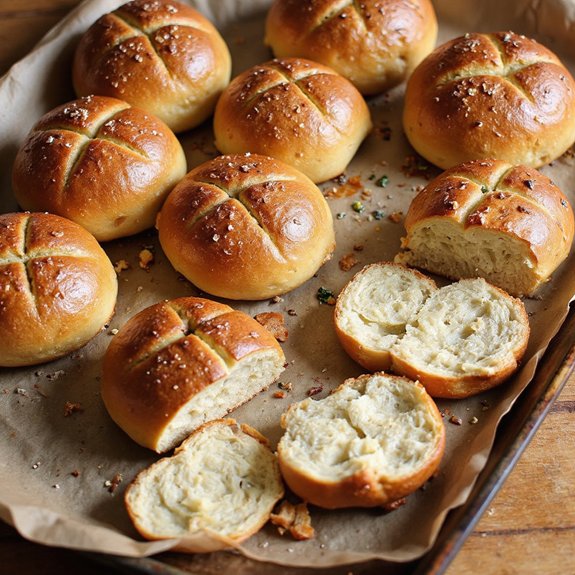
There’s something about a tray of freshly baked sourdough pretzel buns that instantly makes a kitchen feel like a cozy bakery.
Picture glossy, deep brown rolls with a slight crackle on top, a dusting of coarse salt, and that unmistakable malty aroma curling through the air.
These buns turn any simple meal—sausages, burgers, soups, or a quick sandwich—into something special, and they’re surprisingly doable in an afternoon.
They’re perfect for comfort seekers, families, and anyone who loves meal-prepping homemade breads that feel “bakery-level” without being fussy.
I remember one chilly Sunday when unexpected guests dropped by; I split open a batch of these still-warm pretzel buns, piled them with ham and cheese, and suddenly we’d an easy, memorable supper that felt far more planned than it was.
They shine at game-day gatherings, casual Sunday dinners, or whenever a simple meal needs a cozy upgrade. Ready to bring this dish to life?
Why You’ll Love It
- Delivers deep, malty flavor from sourdough, brown sugar, and barley malt.
- Creates chewy, glossy pretzel crust with soft, fluffy bun interior.
- Skips commercial yeast, relying entirely on your bubbly sourdough starter.
- Adapts easily for burgers, sandwiches, sliders, or simple snacking.
- Freezes well, perfect for make-ahead game days and parties.
Ingredients
- 150 g sourdough starter, active, 100% hydration — use very bubbly, recently fed starter
- 250 g water, room temperature — cool but not cold to keep fermentation steady
- 450 g bread flour — higher protein for chewy pretzel texture
- 50 g whole wheat flour — adds flavor and a bit of color
- 30 g unsalted butter, softened — brings richness and tender crumb
- 20 g brown sugar, packed — slight sweetness and better browning
- 10 g fine sea salt — balances flavor; don’t skip or reduce much
- 1 tbsp barley malt syrup (optional) — classic pretzel flavor boost
- 2 L water — for the baking soda bath before baking
- 40 g baking soda — creates the pretzel’s deep color and flavor
- 1 large egg — for glossy brown crust via egg wash
- 15 ml water — thins egg for easy brushing
- 10 g coarse pretzel salt or flaky sea salt — sprinkle lightly on top before baking
Step-by-Step Method
Mix the Starter Base
Whisk the active sourdough starter, room-temperature water, brown sugar, and optional barley malt syrup in a large mixing bowl. Stir until everything is fully dissolved and the mixture looks smooth and slightly frothy.
This guarantees the sugar is evenly distributed and the starter is well dispersed before adding flour for a more consistent dough.
Bring Dough Together
Add the bread flour, whole wheat flour, and fine sea salt to the starter mixture. Use a dough scraper or your hand to mix until a shaggy, rough dough forms and no dry patches of flour remain.
Scrape the bowl sides as needed. Don’t worry about smoothness yet; just guarantees everything is hydrated and combined.
Knead Until Smooth
Add the softened butter to the dough and knead in the bowl until mostly incorporated. Transfer the dough to a clean work surface and knead for 8–10 minutes.
Use a push-and-fold motion until the dough becomes smooth, elastic, and slightly tacky but not sticky. Adjust with a light dusting of flour only if absolutely necessary.
Bulk Ferment the Dough
Lightly oil a clean mixing bowl, then place the kneaded dough inside. Cover the bowl with plastic wrap or a clean kitchen towel to prevent drying.
Let the dough rise at room temperature for 2–3 hours. Wait until it looks slightly puffy and relaxed, but not fully doubled in size, to maintain pretzel chew.
Divide into Equal Portions
Turn the dough onto a lightly floured surface and gently press to deflate large air bubbles. Use a kitchen scale to divide the dough into 8 equal pieces by weight for consistent baking.
Cut with a dough scraper rather than tearing to preserve gluten structure and keep each portion roughly the same size.
Shape Tight Buns
Work with one piece at a time. Tuck the edges of the dough underneath to form a rough ball. Place seam-side down and roll gently against the counter, creating tension on the surface.
Aim for smooth, taut buns without visible seams. Repeat with all pieces, keeping them covered lightly to prevent drying.
Proof the Shaped Buns
Arrange the buns seam-side down on a parchment-lined baking sheet. Space them slightly apart to allow for expansion. Cover loosely with plastic wrap or a towel.
Let them proof at room temperature for 45–60 minutes, until they look slightly puffy but still feel firm. This controlled rise supports a dense, pretzel-like crumb.
Chill to Set Shape
Transfer the baking sheet with proofed buns to the refrigerator, uncovered. Chill for at least 30 minutes and up to 12 hours.
Cooling firms the dough, helping the buns keep their shape during boiling. It also enhances flavor through slow fermentation. Leave them exposed so the surface dries slightly for better pretzel texture.
Preheat Oven and Prepare Trays
When ready to bake, preheat your oven to 425°F (220°C). Line a second rimmed baking sheet with parchment paper.
Position an oven rack in the middle to encourage even browning. Having the second tray ready lets you transfer boiled buns quickly, preventing sticking and preserving their shape before baking.
Boil Water and Add Soda
Fill a large pot (at least 4-quart) with 2 liters of water. Bring it to a boil over medium-high heat. Carefully add the baking soda, as it may fizz vigorously at first.
Stir to dissolve fully. Reduce the heat to maintain a steady, gentle boil rather than a vigorous one to avoid tearing the dough.
Boil the Chilled Buns
Work in manageable batches. Gently lower each chilled bun into the boiling alkaline solution, seam-side down. Boil for 20–30 seconds per side to develop color and pretzel flavor.
Use a slotted spoon or spider to flip them carefully. Avoid overcrowding the pot so the water stays at a consistent gentle boil.
Drain and Arrange for Baking
Lift each bun from the pot with the slotted spoon, allowing excess water to drain back into the pot. Place the boiled buns on the prepared parchment-lined baking sheet, spacing them slightly apart.
Ensure they sit seam-side down. The surface will appear slightly gelatinous, which helps form the signature pretzel crust.
Prepare and Apply Egg Wash
Whisk the egg with 15 ml of water in a small bowl until smooth and well combined. Use a pastry brush to coat each bun generously with the egg wash.
Cover the tops and sides evenly. This egg wash helps create a deep golden-brown, glossy finish during baking and also helps the pretzel salt adhere.
Score and Salt the Buns
Use a sharp knife or lame to score a cross or single slash on top of each bun. Cut confidently but not too deep, just enough to control expansion.
Immediately sprinkle each bun with coarse pretzel salt or flaky sea salt to taste. Press lightly if needed so the salt sticks to the egg-washed surface.
Bake Until Deep Golden
Place the tray in the preheated oven and bake for 15–18 minutes. Watch for a deep golden-brown, glossy crust and firm, set tops.
Rotate the tray halfway if your oven bakes unevenly. If they darken too quickly, tent loosely with foil. Remove from the oven once they reach the desired color and sheen.
Cool Before Serving
Transfer the baked pretzel buns to a cooling rack using tongs or a spatula. Allow them to cool for at least 15 minutes before slicing or serving.
This brief rest lets the interior finish setting and prevents gummy texture. Serve warm or at room temperature, and store any leftovers in an airtight container.
Ingredient Swaps
- Use all-purpose flour in place of bread flour if needed; reduce water by 10–20 g if the dough feels too sticky.
- Replace whole wheat flour with rye flour for a heartier flavor, or with more bread/AP flour if you don’t have it.
- For dairy-free buns, swap the butter with an equal amount of neutral oil or vegan butter.
- If you don’t have barley malt syrup, use honey, molasses, or extra brown sugar for sweetness and color.
- Instead of an egg wash, brush with plant milk (optionally mixed with a little oil or syrup) for a vegan-friendly shine.
- Any coarse salt (kosher, coarse sea salt, flaky salt) can stand in for traditional pretzel salt.
You Must Know
– Doneness • If the buns look done but you’re not sure inside
Use an instant-read thermometer and pull them at 200–205°F (93–96°C) in the center; the crust should be deep mahogany, not just golden, and they’ll feel light for their size when lifted, which means the interior is set, not gummy.
– Troubleshoot • If your buns bake up dense or squat
Give the first rise closer to 3 hours and the shaped proof a full 60 minutes, aiming for dough that looks slightly puffy but still springs back slowly when gently pressed; under‑fermented dough won’t trap enough gas to lift in the oven.
– Troubleshoot • If buns split wildly or get wrinkly after boiling
Chill them at least 45–60 minutes so they’re firmly cold, and keep the baking‑soda bath at a gentle simmer, not a rolling, jostling boil; over‑agitation plus warm dough makes the skin tear and collapse as they cool.
– Flavor Boost • For deeper pretzel flavor and tang
Extend the cold hold to 8–12 hours in the fridge and include the barley malt syrup; the long, cool time lets organic acids and malt sugars develop, giving a more complex, “bakery pretzel” taste and a richer brown color.
– Scale • When doubling or halving the recipe
Multiply all ingredients, including starter, salt, and baking soda, by the same factor (e.g., ×0.5 or ×2), but keep the boil time (20–30 seconds/side) and oven temperature (425°F / 220°C) unchanged; dough pieces will just be heavier or lighter, so adjust total baking time by ±2–4 minutes based on color and internal temp.
Serving Tips
- Slice and fill with bratwurst, grainy mustard, and sauerkraut for hearty sandwiches.
- Serve warm with beer cheese dip, whipped honey butter, or mustard trio.
- Use as slider buns for pulled pork, mini burgers, or shredded roast chicken.
- Pair with a German-inspired board: sliced sausages, pickles, cheeses, and mustards.
- Split, toast, and top with fried egg, bacon, and cheese for breakfast buns.
Storage & Make-Ahead
Sourdough pretzel buns keep 2–3 days in an airtight container in the fridge; rewarm at 300°F until just soft.
For make-ahead, refrigerate shaped dough up to 12 hours before boiling and baking.
Baked buns freeze well up to 2 months; thaw, then crisp in a warm oven.
Reheating
Reheat buns gently: in a 300°F (150°C) oven for 5–8 minutes.
In a covered skillet over low heat.
Or briefly microwave wrapped in a damp towel to prevent drying.
Oktoberfest and Beer Gardens
Once you’ve warmed a leftover bun until the crust turns gently crisp again, it’s easy to picture them somewhere far from your kitchen: stacked in wicker baskets on long wooden tables, steins clinking, brass bands humming in the background.
I always think of an Oktoberfest tent when that malty, toasty aroma rises—yeast, butter, and a whisper of tang from the starter, like beer’s bready cousin.
In a beer garden, I’d split one open with my fingers, steam drifting into the cool evening air, and swipe it through sharp mustard while the sun slips behind chestnut trees.
At home, I’ll pour a cold lager, lean on the counter, and let each salty, chewy bite pretend it belongs under striped canvas.
Final Thoughts
Give these sourdough pretzel buns a try and enjoy them fresh, warm, and deeply flavorful—perfect for sandwiches, burgers, or simple snacking.
Once you’ve made them once, have fun tweaking the proofing time, salt, or sweetness to create your own favorite version.
Frequently Asked Questions
Can I Freeze Unbaked, Boiled Buns and Bake Them Straight From Frozen?
Yes, you can. I freeze the boiled, cooled buns on a tray, then bag them. You’ll bake from frozen at the same temp, adding a few minutes until they’re deeply bronzed and smell nutty.
How Do I Adapt This Recipe for a Bread Machine or Stand Mixer?
You’ll mix everything on medium in your stand mixer 8–10 minutes, or use your bread machine’s dough cycle. I’d still shape, chill, boil, and bake by hand so the crust sings and snaps.
Are There High-Altitude Adjustments Needed for Proofing and Baking Times?
Yes—at high altitude I’d proof a bit faster and bake slightly cooler and shorter. Watch the dough: puffy, soft, and fragrant; pull when deeply bronzed, before the crust turns harsh or dry.
Can I Make These Buns Fully Vegan, Including the Wash and Butter?
Yes, you can. I’d swap butter for vegan butter, then brush the bronzed crust with oat or soy milk and a drizzle of oil. You’ll still get that deep color, shine, and tender, fragrant crumb.
How Do I Scale This Recipe for a Large Party or Catering Event?
You’ll scale everything by multiplying each ingredient by your needed batch factor, then I’d mix in separate bowls, stagger rises, and boil‑bake in waves so your kitchen still smells like warm, toasty heaven.
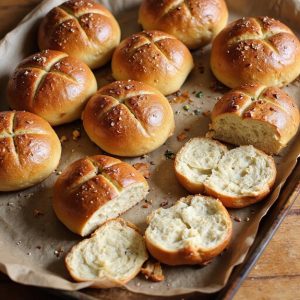
Sourdough Pretzel Buns
Equipment
- 1 Kitchen scale
- 2 large mixing bowls
- 1 Medium bowl
- 1 Dough scraper
- 1 plastic wrap or clean kitchen towel
- 2 rimmed baking sheets
- 2 sheets parchment paper
- 1 large pot (at least 4-quart)
- 1 slotted spoon or spider
- 1 pastry brush
- 1 sharp knife or lame
- 1 Cooling rack
Ingredients
- 150 gram sourdough starter active 100% hydration
- 250 gram water room temperature
- 450 gram bread flour
- 50 gram whole wheat flour
- 30 gram unsalted butter softened
- 20 gram brown sugar packed
- 10 gram fine sea salt
- 1 tablespoon barley malt syrup optional for flavor
- 2 liter water for boiling
- 40 gram baking soda for boiling
- 1 large egg for egg wash
- 15 milliliter water for egg wash
- 10 gram coarse pretzel salt or flaky sea salt for topping
Instructions
- In a large mixing bowl whisk together the active sourdough starter, water, brown sugar, and barley malt syrup until dissolved.
- Add bread flour, whole wheat flour, and salt to the bowl and mix with a dough scraper or your hand until a rough dough forms.
- Add the softened butter and knead in the bowl until mostly incorporated, then transfer to a work surface and knead 8–10 minutes until smooth and elastic.
- Place the dough in a lightly oiled bowl, cover with plastic wrap or a towel, and let rise at room temperature for 2–3 hours until slightly puffy but not doubled.
- Transfer the dough to a lightly floured surface, gently deflate, and divide into 8 equal portions by weight.
- Shape each portion into a tight ball by tucking the edges under and rolling against the counter to create surface tension.
- Place the shaped buns seam-side down on a parchment-lined baking sheet, cover lightly, and let proof 45–60 minutes until slightly puffy.
- Transfer the baking sheet with buns to the refrigerator uncovered for at least 30 minutes and up to 12 hours to firm up and enhance flavor.
- When ready to bake, preheat the oven to 425°F (220°C) and line a second baking sheet with parchment paper.
- In a large pot bring 2 liters of water to a boil, then carefully add the baking soda and return to a gentle boil.
- Working in batches, gently lower each chilled bun into the boiling solution, seam-side down, and boil for 20–30 seconds per side.
- Remove buns with a slotted spoon, let excess water drip off, and place them on the prepared baking sheet.
- In a small bowl whisk together the egg and 15 ml water to make an egg wash.
- Brush each bun generously with egg wash, then score a cross or single slash on top with a sharp knife or lame.
- Sprinkle the tops with coarse pretzel salt or flaky sea salt to taste.
- Bake the buns for 15–18 minutes until deep golden brown and glossy.
- Transfer the baked buns to a cooling rack and let cool at least 15 minutes before slicing or serving.
Notes

Cynthia Weatherford is a seasoned chef and culinary enthusiast who serves as the Recipe creator of Somonday. With decades of experience in the kitchen and a passion for exploring diverse cuisines, Cynthia brings a blend of creativity and technique to every dish. Known for transforming simple ingredients into show-stopping meals, Cynthia believes that cooking is an art form anyone can master. Dedicated to inspiring home cooks, Cynthia shares approachable recipes, pro tips, and culinary wisdom to make every meal memorable.