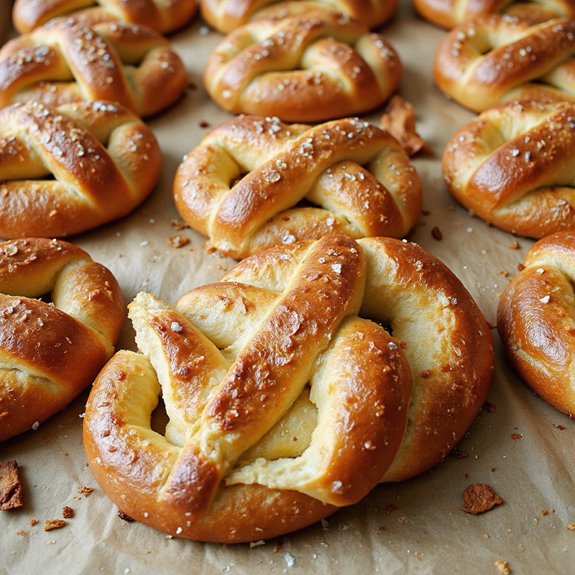
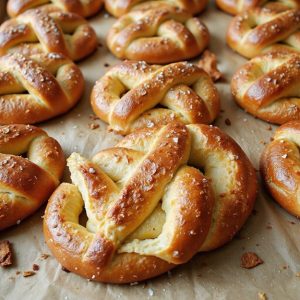
There’s something about a tray of golden, twisted pretzels coming out of the oven—the deep brown sheen, coarse salt crystals catching the light, and that warm, toasty aroma of butter and tangy sourdough.
These soft pretzels are cozy comfort food, ideal for snacking, sharing, or pairing with a simple soup or salad.
They’re not “instant,” but they come together surprisingly quickly for a sourdough bake, making them perfect for relaxed weekends or slow afternoons.
They’re especially great for beginners looking to use up extra sourdough starter and families who love a hands-on, kid-friendly project.
I still remember a stormy Sunday when plans were canceled; a batch of these pretzels turned a dreary day into a warm, salty, mustard-dipping party around the table.
They shine at game-day gatherings, casual get-togethers, and last-minute cravings.
Ready to bring this small-bakery magic to your own kitchen?
Why You’ll Love It
- Delivers deep, tangy flavor from active sourdough starter
- Creates soft, chewy interiors with beautifully burnished pretzel crust
- Uses simple pantry ingredients and basic kitchen equipment
- Adapts easily for sweet or savory toppings and seasonings
- Makes an impressive snack that’s perfect for sharing or parties
Ingredients
- 200 g sourdough starter, active, 100% hydration — use freshly fed and bubbly.
- 240 g water, lukewarm — aim for about 75–80°F (24–27°C).
- 40 g unsalted butter, melted and slightly cooled — don’t add while piping hot.
- 30 g granulated sugar — helps browning and balances tang.
- 10 g fine sea salt — measure by weight for consistency.
- 500 g bread flour — higher protein gives better chew.
- 1 large egg — for a shiny golden egg wash.
- 1 tbsp water — to loosen the egg wash.
- 2 L water — for the pretzel boiling bath.
- 60 g baking soda — creates the classic pretzel crust and flavor.
- 2 tbsp coarse pretzel salt — sprinkle generously right before baking.
Step-by-Step Method
Mix the starter base
Whisk the sourdough starter, lukewarm water, melted butter, and sugar in a large mixing bowl. Stir until the mixture looks mostly smooth and the starter is fully dispersed.
Make certain the butter is only slightly warm so it doesn’t harm the yeast activity in the starter. Set the bowl aside briefly while you prepare the dry ingredients.
Bring the dough together
Add the fine sea salt and bread flour to the bowl. Mix with a wooden spoon or dough whisk until a rough, shaggy dough forms and no dry flour remains.
Scrape down the sides of the bowl as you go. The dough will look uneven at this stage, which is normal before kneading develops the gluten.
Knead until smooth and elastic
Turn the dough onto a lightly floured surface. Knead for 8–10 minutes, adding only a dusting of flour as needed to prevent sticking.
Work the dough until it becomes smooth, elastic, and only slightly tacky to the touch. Form it into a tight ball so it rises evenly during the next step.
Let the dough rise
Lightly oil a large mixing bowl and place the dough ball inside. Cover the bowl with a clean kitchen towel or plastic wrap.
Let it rise at warm room temperature for 2–3 hours, until puffy and almost doubled in size. Adjust the time depending on how active your sourdough starter is and your kitchen temperature.
Prepare baking sheets
Line two large baking sheets with parchment paper. Smooth out any wrinkles so the pretzels sit flat and bake evenly.
Set the trays aside within easy reach of your work surface. Having the sheets ready before shaping helps prevent the dough from drying out while you work through each pretzel.
Divide and pre-shape the dough
Turn the risen dough out onto a lightly floured surface and gently deflate it with your hands. Use a bench scraper or knife to divide the dough into 8 equal pieces.
Shape each piece into a loose log. This pre-shaping step makes it easier to roll the dough into long, even ropes later.
Roll into ropes
Roll each piece into a rope about 20–24 inches (50–60 cm) long. Start from the center and work outward, applying gentle, even pressure.
Taper the ends slightly so they’re thinner than the middle. Avoid using too much flour on the surface so the dough grips the counter and stretches more easily.
Shape classic pretzels
Form each rope into a large U shape. Cross the ends over each other twice near the top to create a double twist.
Fold the twisted ends down toward the bottom curve of the U and press them firmly into the dough to seal. Adjust the shape so each pretzel looks even and well-balanced.
Rest the shaped pretzels
Transfer each shaped pretzel to the prepared parchment-lined baking sheets. Space them apart so they’ve room to puff slightly.
Cover the trays lightly with a clean kitchen towel. Let the pretzels rest for 20–30 minutes while you heat the oven and prepare the boiling solution.
Preheat the oven
Set your oven to 450°F (230°C). Position the racks in the upper and lower thirds to allow even airflow.
Give the oven enough time to fully preheat before baking. Proper heat guarantees the pretzels develop a deep golden color and soft interior without overbaking or drying out.
Prepare the baking-soda bath
Bring 2 liters of water to a gentle boil in a large pot. Carefully add the baking soda, stirring to dissolve it completely.
Watch for foaming as it reacts with the hot water. Adjust the heat to maintain a steady simmer instead of a vigorous boil so the pretzels hold their shape during boiling.
Boil the pretzels
Use a slotted spoon to gently lower 1–2 pretzels at a time into the simmering baking-soda water. Boil each pretzel for 20–30 seconds per side.
Turn them carefully so they don’t tear. Remove the pretzels, let excess water drip off, and place them back on the parchment-lined baking sheets.
Make the egg wash
In a small bowl, whisk together the egg and 1 tablespoon of water until fully combined and slightly foamy. This egg wash will give the pretzels a glossy, richly colored crust.
Keep the bowl and a pastry brush near the baking sheets so you can brush the pretzels immediately after boiling.
Brush and salt the pretzels
Brush each boiled pretzel generously with the egg wash, coating all exposed surfaces. Work quickly so the surface stays tacky.
Immediately sprinkle coarse pretzel salt evenly over the tops. Adjust the amount to your taste. The salt will adhere best to the freshly brushed egg-washed dough.
Bake until deep golden
Slide the baking sheets into the oven, using both racks. Bake for 12–15 minutes, rotating the sheets halfway through baking.
Watch for an even, deep golden-brown color and a slightly firm crust. Remove the pretzels from the oven as soon as they reach your preferred shade.
Cool briefly before serving
Transfer the hot pretzels to a wire rack using a spatula or tongs. Let them cool for at least 10 minutes so the interior sets and the crust softens slightly.
Serve warm for the best texture and flavor. Enjoy them plain, with mustard, or with your favorite dipping sauce.
Ingredient Swaps
- Use all-purpose flour instead of bread flour; reduce water by ~10–15 g if the dough feels too soft.
- Replace butter with an equal amount of neutral oil or melted coconut oil for dairy-free pretzels.
- Swap granulated sugar with brown sugar, honey, or maple syrup (same weight) for a slightly different flavor.
- If you don’t have pretzel salt, use coarse kosher salt or flaky sea salt.
- For egg-free, skip the egg wash and use milk, cream, or a mix of water and a little oil to help browning.
You Must Know
– Flavor Boost • When you want more pretzel-shop richness… brush the hot pretzels with 20–30 g melted butter right after they come out and let them sit 5 minutes on the rack; the butter soaks in, softens the crust slightly, and adds a richer aroma.
Serving Tips
- Serve warm with grainy mustard, beer cheese dip, or classic queso.
- Pair with German-style sausages, sauerkraut, and pickles for a hearty snack board.
- Slice and use as slider buns for mini bratwurst or pulled pork sandwiches.
- Offer sweet versions with cinnamon sugar and cream cheese icing for dessert.
- Plate in a basket lined with parchment alongside small ramekins of assorted dips.
Storage & Make-Ahead
Store baked pretzels in an airtight container in the fridge for up to 3 days.
Rewarm in a 350°F (175°C) oven until soft.
Shape ahead, freeze unbaked pretzels after boiling, then bake from frozen, adding a few minutes.
Fully baked pretzels also freeze well for about 2 months.
Reheating
Reheat pretzels gently: in a 300°F (150°C) oven for 5–8 minutes.
In a covered skillet over low heat.
Or briefly in the microwave wrapped in a damp towel to avoid drying.
Oktoberfest and Pretzel Tradition
Once you’ve warmed yesterday’s pretzels back to life, it’s easy to imagine them in their spiritual home: a packed Oktoberfest tent, brass band playing, and the air rich with the smell of malt and warm bread.
I always picture long wooden tables, shoulders pressed together, everyone clutching frosty steins while servers weave through with towering racks of golden Brezeln.
At Oktoberfest, pretzels aren’t just snacks; they’re edible centerpieces.
Their deep brown crust, coarse salt, and soft, pale interior feel like the festival in bread form—cheerful, hearty, a little rustic.
I love that a simple twist of dough connects us to centuries of Bavarian tradition, where bakers shaped pretzels as symbols of good luck, generosity, and sharing food with your neighbors.
Final Thoughts
Give these sourdough soft pretzels a try and enjoy that classic pretzel flavor with a tangy, homemade twist.
Once you’ve mastered the basic recipe, have fun experimenting with different toppings and flavors to make them your own!
Frequently Asked Questions
Can I Make These Pretzels Without Weighing Ingredients on a Kitchen Scale?
Yes, you can, but I’d gently warn you: cups and spoons may yield denser, less chewy pretzels. If you’re flexible about texture, go ahead; otherwise, I’d borrow a scale for that cozy, bakery-style crumb.
How Do I Adapt This Recipe for High-Altitude Baking Conditions?
You’ll shorten the bake a bit, simmer pretzels 10 seconds less per side, slightly reduce water, and watch the dough closely. I’d lean on visual cues—puffy, smooth, bronzed—to guide you in that thinner mountain air.
What Dipping Sauces Pair Best With Sourdough Soft Pretzels?
I’d reach for warm beer cheese, grainy mustard, or honey mustard first. Then I’d invite you to dunk into garlicky herb butter, creamy ranch, or a dark chocolate ganache for dessert.
Can I Freeze the Unbaked Shaped Pretzels for Later Baking?
Yes, you can freeze them. I’d freeze the shaped, unboiled pretzels on a tray, then bag them. When you’re ready, bake from frozen after a brief thaw, baking-soda bath, and glossy egg wash.
How Do I Troubleshoot Pretzels That Turn Out Pale or Patchy?
You’re seeing pale, patchy tops because the lye-soda bath, egg wash, or oven heat isn’t quite right. I’d simmer longer, brush thoroughly, rotate pans, and preheat fully until the oven feels like a glowing hearth.
Sourdough Soft Pretzels
Equipment
- 1 large mixing bowl
- 1 medium mixing bowl
- 1 Small bowl
- 1 wooden spoon or dough whisk
- 1 Kitchen scale
- 1 measuring cup set
- 1 measuring spoon set
- 1 clean kitchen towel or plastic wrap
- 1 bench scraper or knife
- 2 large baking sheets
- 2 sheets parchment paper
- 1 Large pot
- 1 slotted spoon
- 1 pastry brush
- 1 Wire rack
Ingredients
- 200 gram sourdough starter active and 100% hydration
- 240 gram water lukewarm
- 40 gram unsalted butter melted and cooled slightly
- 30 gram granulated sugar
- 10 gram fine sea salt
- 500 gram bread flour
- 1 large egg for egg wash; beaten
- 1 tablespoon water for egg wash
- 2 liter water for boiling
- 60 gram baking soda for boiling solution
- 2 tablespoon coarse pretzel salt for topping
Instructions
- In a large mixing bowl, whisk together the sourdough starter, lukewarm water, melted butter, and granulated sugar until mostly smooth.
- Add the fine sea salt and bread flour to the bowl and mix with a wooden spoon until a rough dough forms.
- Knead the dough on a lightly floured surface for 8–10 minutes until smooth, elastic, and only slightly tacky.
- Place the dough into a lightly oiled large mixing bowl, cover with a clean kitchen towel or plastic wrap, and let rise at warm room temperature for 2–3 hours until puffy and almost doubled.
- Line two large baking sheets with parchment paper and set them aside.
- Turn the risen dough out onto a lightly floured surface and gently deflate it.
- Divide the dough into 8 equal pieces using a bench scraper or knife.
- Roll each piece into a rope about 20–24 inches (50–60 cm) long, tapering slightly at the ends.
- Shape each rope into a U, cross the ends twice, and fold the twisted ends down to the bottom of the U to form a pretzel shape, pressing the ends firmly to seal.
- Place each shaped pretzel on the prepared baking sheets, cover lightly with a towel, and let rest for 20–30 minutes while you heat the oven.
- Preheat the oven to 450°F (230°C) with racks in the upper and lower thirds.
- In a large pot, bring 2 liters of water to a gentle boil, then carefully add the baking soda.
- Using a slotted spoon, gently lower 1–2 pretzels at a time into the simmering baking-soda water and boil for 20–30 seconds per side.
- Remove the pretzels from the water with the slotted spoon, let excess water drip off, and return them to the parchment-lined baking sheets.
- In a small bowl, whisk together the egg and 1 tablespoon of water to make an egg wash.
- Brush each boiled pretzel generously with egg wash using a pastry brush.
- Sprinkle the tops of the pretzels with coarse pretzel salt.
- Bake the pretzels for 12–15 minutes, rotating the baking sheets halfway through, until deep golden brown.
- Transfer the baked pretzels to a wire rack and let cool for at least 10 minutes before serving.
Notes
Cynthia Weatherford is a seasoned chef and culinary enthusiast who serves as the Recipe creator of Somonday. With decades of experience in the kitchen and a passion for exploring diverse cuisines, Cynthia brings a blend of creativity and technique to every dish. Known for transforming simple ingredients into show-stopping meals, Cynthia believes that cooking is an art form anyone can master. Dedicated to inspiring home cooks, Cynthia shares approachable recipes, pro tips, and culinary wisdom to make every meal memorable.