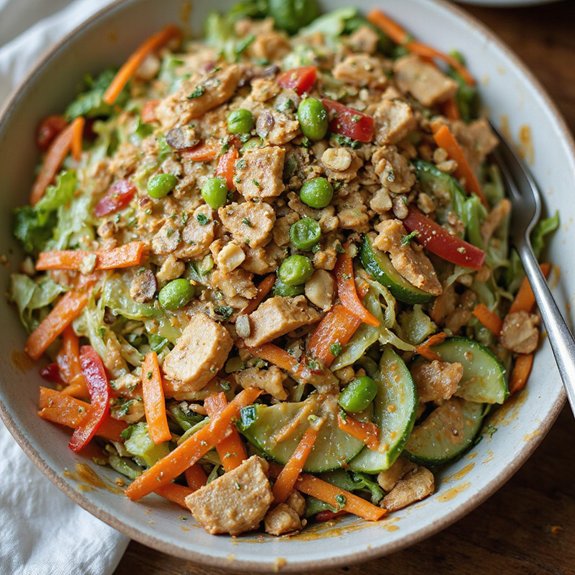
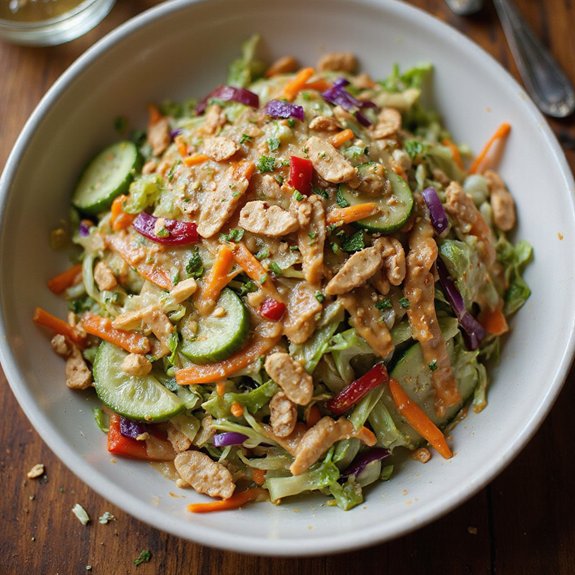
There’s something about a big bowl piled high with crunchy cabbage, bright carrots, and crisp cucumbers, all glistening under a silky, nutty peanut dressing.
This Thai Peanut Salad is a vibrant, invigorating meal—light yet satisfying, with a creamy-tangy-sweet sauce that clings to every colorful bite.
It comes together fast, making it perfect for busy weeknights, work lunches, or anyone who wants a wholesome dish without a lot of fuss.
I first leaned on this salad during a hectic week when everyone in my house seemed to need dinner at a different time.
I prepped the vegetables and dressing ahead, stored them separately, and we each tossed our own bowl as we passed through the kitchen.
No complaints, no chaos, and not a leaf left behind.
It shines at casual gatherings, easy entertaining, or when a last-minute craving for something fresh hits. Ready to bring this dish to life?
Why You’ll Love It
- Delivers bold, restaurant-style Thai flavor in every crunchy bite
- Packs in colorful veggies for a fresh, nutrient-dense meal
- Comes together quickly with simple prep and no cooking required
- Stays crisp for hours, perfect for meal prep or parties
- Easily customizable with your favorite protein and spice level
Ingredients
- 4 cups shredded green cabbage — core removed, finely shredded for best crunch
- 1 cup shredded purple cabbage — adds color and extra antioxidants
- 1 cup shredded carrots — use pre-shredded to save time
- 1 red bell pepper, thinly sliced — choose a firm, glossy pepper
- 1 cup cucumber, halved and thinly sliced — English or Persian work best
- 3 green onions, thinly sliced — use both white and green parts
- 1 cup cooked edamame, shelled — thaw frozen edamame for convenience
- 1/2 cup fresh cilantro, roughly chopped — pack leaves loosely in the cup
- 1/4 cup fresh mint, roughly chopped — remove tough stems before chopping
- 1/2 cup roasted peanuts, roughly chopped — use unsalted to control sodium
- 1/3 cup creamy peanut butter — smooth, natural style without added sugar
- 3 tablespoons soy sauce or tamari — use low-sodium if preferred
- 2 tablespoons fresh lime juice — from about 1 medium lime
- 1 tablespoon rice vinegar — unseasoned for cleaner flavor
- 1 tablespoon honey or maple syrup — maple keeps it vegan
- 1 tablespoon toasted sesame oil — adds deep nutty aroma
- 1–2 teaspoons sriracha or chili sauce — adjust to your heat preference
- 2–4 tablespoons warm water — add gradually to thin the dressing
- 1 clove garlic, finely minced — fresh garlic for best bite
- 1 teaspoon fresh ginger, finely grated — microplane for a smooth paste
- 1/4 teaspoon salt — adjust at the end after tasting
Step-by-Step Method
Shred the green and purple cabbage finely. Slice the carrots into thin shreds. Cut the red bell pepper into thin strips.
Halve and slice the cucumber. Thinly slice the green onions. Roughly chop the cilantro and mint.
Place everything, along with the cooked edamame, into a large mixing bowl and set aside.
Mix the Peanut Dressing
Add peanut butter, soy sauce or tamari, lime juice, rice vinegar, honey or maple syrup, sesame oil, sriracha, garlic, ginger, and salt to a small mixing bowl. Whisk firmly until the mixture starts to come together.
Make sure the peanut butter is well incorporated and no streaks remain. Taste and adjust sweetness or salt before thinning.
Thin to a Pourable Consistency
Drizzle in warm water a tablespoon at a time. Whisk constantly to keep the dressing smooth and glossy.
Stop adding water when the dressing is thick but pourable, similar to heavy cream. Scrape down the sides of the bowl as you whisk. Taste again and adjust lime or sriracha if needed.
Dress and Toss the Salad
Pour about three-quarters of the dressing over the vegetables in the large mixing bowl. Use salad tongs or a large spoon to toss thoroughly.
Lift from the bottom so all vegetables get coated. Add more dressing if the salad looks dry. Keep a bit of dressing back if you prefer a lighter coating.
Add Peanuts and Let Rest
Sprinkle the chopped roasted peanuts over the dressed salad. Toss gently once more to distribute the peanuts without breaking them too much.
Let the salad rest at room temperature for about 10 minutes. Allow the flavors to meld and the cabbage to slightly soften while staying crisp and fresh.
Taste, Adjust, and Serve
Taste the rested salad and check the balance. Add extra lime juice for brightness, soy sauce for saltiness, or a pinch of salt if needed.
Toss briefly after any adjustments. Transfer to a serving bowl or plates. Top with a few extra peanuts or herbs if desired. Serve immediately for maximum crunch.
Ingredient Swaps
- Nut-free: Use sunflower seed butter or tahini instead of peanut butter; top with roasted sunflower or pumpkin seeds instead of peanuts.
- Gluten-free: Swap soy sauce for tamari or coconut aminos.
- Vegan: Use maple syrup or agave instead of honey.
- Budget/availability: Replace edamame with chickpeas or cooked lentils; use all green cabbage if purple isn’t available; swap fresh mint for more cilantro or flat-leaf parsley.
- Lower spice: Omit sriracha and add a pinch of chili flakes or none at all; for extra heat, increase sriracha or add a chopped fresh chili.
You Must Know
- Flavor Boost • If the dressing tastes flat: Add 1–2 teaspoons more lime juice and a tiny pinch (1/8 teaspoon) of salt or soy sauce until it tastes bright and “pops” on your tongue; the right balance is when you taste salty–sweet–tangy–spicy in the first 2–3 seconds, not just peanut.
- Troubleshoot • If the dressing is too thick or pasty: Stir in warm water 1 teaspoon at a time, stopping when it falls from a spoon in a thick ribbon rather than a clump; too much water makes it dull and runny.
- Avoid • Soggy salad after chilling: For salads held more than 1–2 hours, keep vegetables and dressing in separate containers and coat only 10–15 minutes before serving; salt and acid pull water from cabbage and cucumber, which waters down flavor and crunch.
- Scale • For a crowd or leftovers: Double the vegetables but only make 1.5× the dressing, then start by using about three-quarters of it; add more in 1–2 tablespoon increments until the shreds look lightly glossy, not heavy or pooling at the bottom.
- Swap • For nut-free or different textures: Use sunflower seed butter at a 1:1 swap for peanut butter and top with roasted pumpkin seeds (about 1/2 cup); the look should be similar—creamy coating with visible crunchy bits—while keeping the same rich, toasty flavor profile.
Serving Tips
- Serve in shallow bowls, topping each portion with extra peanuts and fresh herbs.
- Pair with grilled chicken, shrimp, or tofu skewers for a complete meal.
- Offer lime wedges, extra sriracha, and chopped peanuts at the table for customization.
- Use as a crunchy filling for lettuce wraps or rice paper rolls.
- Plate on a large platter for family-style sharing at parties or potlucks.
Storage & Make-Ahead
Thai peanut salad keeps in the fridge for 2–3 days if stored in an airtight container.
For best make-ahead results, prep and refrigerate vegetables and dressing separately up to 24 hours, then toss with peanuts just before serving.
This salad doesn’t freeze well; freezing ruins the crunchy texture.
Reheating
This salad is best served cold.
If adding cooked chicken, shrimp, or tofu, gently reheat those separately in the microwave, low oven, or stovetop before tossing with chilled salad.
Thai Street-Food Inspiration
I love serving the salad chilled, because it reminds me of wandering Bangkok’s evening markets with a bowl of something crisp, cold, and nutty in hand while the air hums with grills and sizzling woks.
When I toss cabbage, carrots, and cucumber with that creamy peanut dressing, I’m chasing the same contrast you find on the streets there—cool crunch against the heat of smoky stalls.
The soy, lime, and rice vinegar echo the tiny plastic bags of tangy dressings vendors splash over salads in seconds.
A drizzle of sriracha gives that familiar back-of-the-throat warmth, like breathing in chili-laced steam from noodle carts.
As the salad rests and the flavors mingle, it feels like that quiet pause you take between bites, watching neon flicker on metal tabletops.
Final Thoughts
Give this Thai Peanut Salad a try and see how quickly it becomes a weeknight favorite.
Don’t hesitate to tweak the veggies, spice level, or protein add-ins so it fits your taste perfectly.
Frequently Asked Questions
Can I Make This Salad Oil-Free Without Changing the Texture Too Much?
You can, and I’d replace sesame oil with extra peanut butter, a splash more lime, and warm water. I picture it coating the crisp veggies like a childhood slaw, creamy, bright, and still tender-crunchy.
How Can I Adapt This Recipe for a Low-Sodium Diet?
You can lower sodium by using low-sodium tamari, halving its amount, and boosting lime, ginger, and garlic. I’d skip added salt, lightly roast unsalted peanuts, and taste as my kitchen fills with that warm, nutty aroma.
What Are Some Kid-Friendly Variations With Less Spice and Vegetables?
You can swap sriracha for a tiny drizzle of honey, use mild peanut butter dressing, and add noodles or diced chicken. I’d keep just carrots, cucumber, and a little cabbage—like the crunchy bowls I loved as a kid.
Does This Salad Fit Into Keto, Paleo, or Whole30 Eating Plans?
It’s not strict keto, paleo, or Whole30 as written, but you can nudge it close—skip honey, edamame, peanuts, adjust carrots. I picture curling up, fork in hand, savoring that nutty, lime-bright crunch.
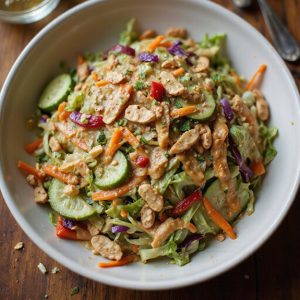
Thai Peanut Salad
Equipment
- 1 large mixing bowl
- 1 Small mixing bowl
- 1 Whisk
- 1 Chef's knife
- 1 Cutting board
- 1 measuring cup set
- 1 measuring spoon set
- 1 salad tongs or large serving spoon
Ingredients
- 4 cup shredded green cabbage
- 1 cup shredded purple cabbage
- 1 cup shredded carrots
- 1 red bell pepper thinly sliced
- 1 cup cucumber halved and thinly sliced
- 3 green onions thinly sliced
- 1 cup cooked edamame shelled
- 1/2 cup fresh cilantro roughly chopped
- 1/4 cup fresh mint roughly chopped
- 1/2 cup roasted peanuts roughly chopped
- 1/3 cup creamy peanut butter
- 3 tablespoon soy sauce or tamari
- 2 tablespoon fresh lime juice
- 1 tablespoon rice vinegar
- 1 tablespoon honey or maple syrup
- 1 tablespoon toasted sesame oil
- 1 1–2 teaspoons sriracha or chili sauce to taste
- 1 2–4 tablespoons warm water as needed to thin dressing
- 1 clove garlic finely minced
- 1 teaspoon fresh ginger finely grated
- 1/4 teaspoon salt or to taste
Instructions
- Add shredded green cabbage, purple cabbage, carrots, bell pepper, cucumber, green onions, edamame, cilantro, and mint to the large mixing bowl.
- In the small mixing bowl, combine peanut butter, soy sauce, lime juice, rice vinegar, honey, sesame oil, sriracha, garlic, ginger, and salt.
- Whisk the dressing ingredients until smooth, adding warm water a little at a time until it reaches a pourable consistency.
- Pour the peanut dressing over the vegetables in the large mixing bowl.
- Toss the salad thoroughly with salad tongs or a large spoon until all vegetables are evenly coated with dressing.
- Sprinkle chopped roasted peanuts over the top and gently toss once more.
- Let the salad rest for 10 minutes at room temperature to allow the flavors to meld.
- Taste and adjust seasoning with extra lime juice, soy sauce, or salt if needed before serving.
Notes
Cynthia Weatherford is a seasoned chef and culinary enthusiast who serves as the Recipe creator of Somonday. With decades of experience in the kitchen and a passion for exploring diverse cuisines, Cynthia brings a blend of creativity and technique to every dish. Known for transforming simple ingredients into show-stopping meals, Cynthia believes that cooking is an art form anyone can master. Dedicated to inspiring home cooks, Cynthia shares approachable recipes, pro tips, and culinary wisdom to make every meal memorable.