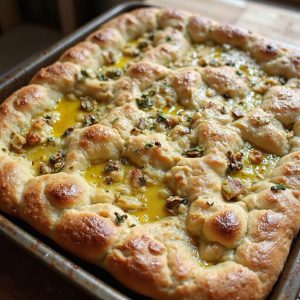
Garlic And Herb Sourdough Focaccia Bread
Equipment
- 1 large mixing bowl
- 1 medium mixing bowl
- 1 9x13 inch baking pan or sheet pan
- 1 digital kitchen scale
- 1 measuring cup
- 1 set measuring spoons
- 1 dough scraper or spatula
- 1 plastic wrap or reusable cover
- 1 clean kitchen towel
- 1 Small saucepan
- 1 pastry brush (optional
Ingredients
- 500 gram bread flour
- 375 gram water lukewarm
- 100 gram active sourdough starter 100% hydration bubbly
- 12 gram fine sea salt
- 40 gram extra virgin olive oil plus extra for pan and topping
- 3 clove garlic finely minced
- 2 tablespoon fresh rosemary leaves finely chopped
- 1 tablespoon fresh thyme leaves finely chopped
- 1 teaspoon dried oregano
- 1 teaspoon flaky sea salt for topping
Instructions
- In a large mixing bowl, whisk together the active sourdough starter and lukewarm water until the starter is mostly dissolved.
- Add the bread flour to the bowl and mix with a dough scraper or your hand until no dry flour remains and a shaggy dough forms.
- Cover the bowl with plastic wrap or a reusable cover and let the dough rest (autolyse) for 30 minutes at room temperature.
- Sprinkle the fine sea salt over the dough, then gently pinch and fold the dough several times to incorporate the salt evenly.
- Perform 3–4 sets of stretch-and-folds every 30 minutes over 1.5–2 hours, keeping the dough covered between sets.
- After the final stretch-and-fold, cover the bowl tightly and let the dough bulk ferment at room temperature for 4–6 hours, or until puffy and roughly doubled.
- Coat the baking pan generously with olive oil, making sure the bottom and sides are well covered.
- Gently scrape the dough into the oiled pan and turn it over once or twice to coat the surface with oil.
- Let the dough rest in the pan for 20–30 minutes, then with oiled fingers gently stretch and press it toward the corners of the pan without tearing.
- Cover the pan and place it in the refrigerator for 8–12 hours for a cold retard, or leave it at room temperature for 1–2 hours until very puffy.
- In a small saucepan, gently warm the extra virgin olive oil with the minced garlic, chopped rosemary, thyme, and dried oregano over low heat for 2–3 minutes, then cool to room temperature.
- When ready to bake, remove the dough from the fridge (if chilled) and let it sit at room temperature 30–45 minutes until very bubbly on top.
- Preheat the oven to 425°F (220°C) with a rack in the middle position.
- Using oiled fingertips, dimple the surface of the dough by pressing straight down to the bottom of the pan all over.
- Spoon or brush the cooled garlic and herb oil evenly over the top of the dough, letting it pool in the dimples.
- Sprinkle flaky sea salt evenly over the top.
- Bake for 20–25 minutes, or until the focaccia is deep golden brown on top and crisp around the edges.
- Remove the pan from the oven and let the focaccia cool in the pan for 10 minutes.
- Carefully transfer the focaccia to a wire rack and cool at least 20 minutes before slicing.
Notes
For best results, make sure your sourdough starter is very active before mixing the dough, and adjust fermentation time based on your kitchen temperature, giving more time if the dough looks sluggish and less if it rises quickly. A well-fermented dough will look aerated and jiggly when you shake the pan gently, which leads to an open, soft crumb. Keep your fingers well oiled when dimpling so you don’t tear the dough, and avoid pressing the gas out completely—those bubbles are what make focaccia light. You can vary the herbs to your taste, add toppings like cherry tomatoes or olives after dimpling, and if the top browns too fast during baking, loosely tent with foil for the last few minutes.
Tried this recipe?Let us know how it was!