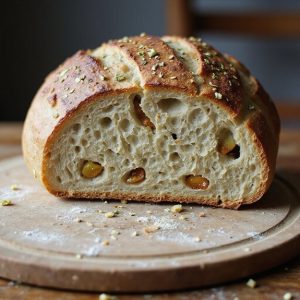
Roasted Garlic Sourdough Bread
Equipment
- 1 Kitchen scale
- 2 medium mixing bowls
- 1 Small bowl
- 1 Dough scraper
- 1 bench scraper
- 1 clean kitchen towel
- 1 9–10 inch (23–25 cm) banneton or bowl
- 1 Dutch oven with lid (4–6 quart)
- 1 sharp bread lame or razor blade
- 1 aluminum foil sheet
- 1 oven mitt pair
- 1 Cooling rack
Ingredients
- 1 head garlic whole
- 2 teaspoon olive oil
- 400 gram bread flour
- 100 gram whole wheat flour
- 100 gram active sourdough starter 100% hydration
- 350 gram water room temperature plus more as needed
- 10 gram fine sea salt
- 10 gram olive oil for dough handling optional
- 10 gram rice flour for dusting banneton
Instructions
- Preheat the oven to 400°F (200°C), slice the top off the garlic head to expose the cloves, drizzle with 2 teaspoons olive oil, wrap in foil, and roast for 30–35 minutes until soft and caramelized, then cool completely.
- In a medium bowl, mix 400 grams bread flour and 100 grams whole wheat flour until combined.
- In a separate bowl, whisk together 350 grams water and 100 grams active sourdough starter until mostly dissolved.
- Pour the wet mixture into the flour and mix with your hand or a dough scraper until no dry flour remains, then cover and rest (autolyse) for 45–60 minutes.
- Once the roasted garlic is cool, squeeze the soft cloves from the skins into a small bowl and lightly mash with a fork.
- Sprinkle 10 grams fine sea salt over the dough, add the mashed roasted garlic, and pinch and fold the dough until both are evenly incorporated.
- Perform a series of stretch-and-folds every 30 minutes for 3–4 rounds (over about 2 hours), keeping the dough covered between rounds.
- After the last fold, cover the bowl and let the dough bulk ferment at room temperature until roughly doubled and puffy, 3–6 hours depending on room temperature and starter strength.
- Lightly flour the work surface, gently turn the dough out, and use a bench scraper to shape it into a tight round or oval loaf.
- Dust the banneton or bowl generously with rice flour, then place the shaped dough seam-side up in the banneton.
- Cover the banneton with a towel or plastic and refrigerate for 8–12 hours for a cold proof.
- About 45–60 minutes before baking, place the Dutch oven with its lid into the oven and preheat to 475°F (246°C).
- When ready to bake, carefully remove the hot Dutch oven, invert the chilled dough onto a piece of parchment or directly into the pot seam-side down, and quickly score the top with a sharp lame.
- Cover the Dutch oven with the lid, return it to the oven, and bake for 20 minutes at 475°F (246°C).
- Remove the lid, reduce the oven temperature to 450°F (232°C), and bake for another 20–25 minutes until deep golden brown and crackling.
- Carefully transfer the bread to a cooling rack and let it cool completely for at least 1–2 hours before slicing.
Notes
For best results, use a vigorous sourdough starter that has peaked within a few hours of feeding, and adjust fermentation times based on your kitchen temperature, allowing more time in cooler environments and less in warmer ones. Roasted garlic adds extra moisture, so resist the urge to add too much extra water until you see the dough’s strength during folds. A well-floured banneton and a tight final shape help prevent sticking and promote good oven spring. If you don’t have a Dutch oven, bake on a preheated stone with a tray of hot water or ice for steam, watching the crust color closely. Store the cooled loaf at room temperature in a paper bag or cut side down on a board and refresh the crust by reheating slices briefly in a hot oven or toaster.
Tried this recipe?Let us know how it was!