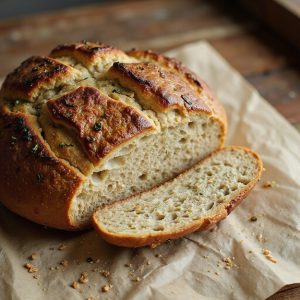
Rosemary Olive Oil Sourdough Bread
Equipment
- 1 large mixing bowl
- 1 digital kitchen scale
- 1 Dough scraper
- 1 kitchen towel or plastic wrap
- 1 banneton or medium bowl
- 1 Dutch oven with lid (4–6 quart)
- 1 parchment paper sheet
- 1 sharp lame or serrated knife
- 1 wire cooling rack
Ingredients
- 400 gram bread flour
- 50 gram whole wheat flour
- 350 gram water room temperature
- 100 gram active sourdough starter 100% hydration recently fed
- 10 gram fine sea salt
- 25 gram extra virgin olive oil plus extra for greasing
- 8 gram fresh rosemary leaves finely chopped
- 5 gram fresh rosemary leaves whole sprigs for topping optional
Instructions
- In a large mixing bowl, whisk together the bread flour and whole wheat flour until well combined.
- Pour in the water and mix with your hand or a dough scraper until no dry flour remains, then cover and rest for 30–45 minutes (autolyse).
- Add the active sourdough starter, sea salt, and olive oil to the dough and squeeze and fold until fully incorporated and smooth.
- Cover the bowl and let the dough rest for 30 minutes at room temperature.
- After 30 minutes, perform a set of stretch-and-folds by lifting and folding each side of the dough toward the center 4–6 times.
- Repeat the stretch-and-folds every 30 minutes for a total of 3–4 sets during the first 2 hours of bulk fermentation.
- During the second set of folds, sprinkle in the chopped rosemary and gently fold until evenly distributed.
- After the final fold, cover the bowl and let the dough rise at room temperature until roughly doubled in size, bubbly, and slightly domed, about 4–6 hours depending on temperature.
- Lightly flour your work surface, gently turn the dough out, and shape it into a round or oval by folding the edges into the center and tightening the surface.
- Lightly flour the banneton or line a bowl with a floured kitchen towel, then place the shaped dough seam-side up into it.
- Cover the dough and proof at room temperature for 1–2 hours or refrigerate for 8–12 hours for a cold retard.
- About 45 minutes before baking, place the Dutch oven with its lid into your oven and preheat to 475°F (245°C).
- Cut a piece of parchment paper, invert the dough onto it so it is seam-side down, and gently reshape if needed.
- Score the top of the dough with a lame or sharp knife, making a 1/4–1/2 inch deep slash, and optionally press a few rosemary sprigs on top.
- Carefully remove the hot Dutch oven from the oven, lift the dough using the parchment, and place it inside, then cover with the lid.
- Bake covered for 20 minutes at 475°F (245°C).
- Remove the lid, lower the oven temperature to 450°F (230°C), and bake for another 18–22 minutes until the crust is deep golden brown.
- Carefully transfer the bread to a wire rack and let it cool completely for at least 1 hour before slicing.
Notes
For best results, use an active, bubbly starter that has recently peaked, as sluggish starter will extend fermentation times and reduce oven spring. Room temperature greatly affects bulk fermentation, so in cooler kitchens expect the dough to take longer to double and look for visual cues—bubbles, domed top, and a lighter feel—rather than watching the clock. If the dough feels very sticky, lightly wet your hands instead of adding extra flour, which can make the loaf dense. Cold-proofing in the refrigerator not only makes the dough easier to score but also develops deeper flavor, so use it whenever your schedule allows. Finally, always let the loaf cool fully before cutting to prevent a gummy crumb and to allow the rosemary aroma and flavor to fully settle.
Tried this recipe?Let us know how it was!