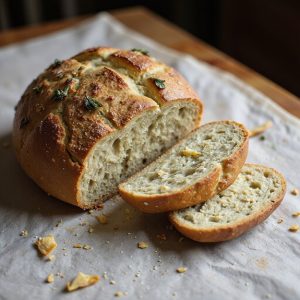
Rosemary Parmesan Sourdough Bread
Equipment
- 1 large mixing bowl
- 1 Medium bowl
- 1 digital kitchen scale (optional but recommended)
- 1 Measuring cups and spoons set
- 1 dough scraper or rubber spatula
- 1 proofing basket or medium bowl lined with a clean towel
- 1 sharp knife or lame (scoring blade)
- 1 Dutch oven with lid (4–6 quart)
- 1 wire cooling rack
Ingredients
- 100 gram active sourdough starter 100% hydration
- 350 gram water room temperature
- 450 gram bread flour
- 50 gram whole wheat flour
- 10 gram fine sea salt
- 2 tablespoon olive oil
- 2 tablespoon fresh rosemary finely chopped
- 80 gram Parmesan cheese finely grated
- 10 gram Parmesan cheese optional; shaved; for topping
- 1 tablespoon cornmeal or flour for dusting
Instructions
- In a large mixing bowl, whisk together the active sourdough starter and water until mostly dissolved.
- Add the bread flour and whole wheat flour to the bowl and mix with a dough scraper or your hand until no dry flour remains and a shaggy dough forms.
- Cover the bowl and let the dough rest (autolyse) at room temperature for 30–45 minutes.
- Sprinkle the salt and olive oil over the dough and gently pinch and fold the dough until both are fully incorporated.
- Add the chopped rosemary and grated Parmesan to the dough and fold several times to distribute them evenly.
- Begin bulk fermentation by covering the bowl and letting the dough rest at room temperature for 3–4 hours, depending on warmth.
- During the first 1.5–2 hours of bulk fermentation, perform 3–4 sets of stretch-and-folds every 30 minutes, lifting and folding each side of the dough toward the center.
- After the final stretch-and-fold, let the dough rest undisturbed until it has risen by about 50% and shows bubbles along the sides.
- Lightly flour your work surface, gently turn the dough out, and let it rest for 10–15 minutes uncovered.
- Shape the dough into a tight round or oval loaf by folding the edges toward the center and then tightening the surface against the counter.
- Generously dust the proofing basket or towel-lined bowl with flour or cornmeal and place the shaped dough seam-side up inside.
- Cover the dough and proof at room temperature for 1–2 hours, or refrigerate for 8–12 hours for a slow overnight proof.
- About 45 minutes before baking, place the Dutch oven with its lid into the oven and preheat to 475°F (245°C).
- Carefully remove the hot Dutch oven from the oven, gently invert the dough onto a piece of parchment or directly into the pot so it is seam-side down.
- Score the top of the loaf with a sharp knife or lame and, if using, sprinkle the shaved Parmesan over the top.
- Cover the Dutch oven with the lid and bake for 20 minutes at 475°F (245°C).
- Remove the lid, reduce the oven temperature to 450°F (230°C), and continue baking for 15–20 minutes until the crust is deep golden brown.
- Carefully transfer the bread to a wire rack and let it cool completely for at least 1 hour before slicing.
Notes
For best results, make sure your starter is bubbly and recently fed so the dough rises properly, and adjust fermentation time according to your kitchen temperature—warmer rooms shorten rise time, cooler rooms lengthen it. Hydration can vary slightly depending on your flour, so if the dough feels very stiff, add a tablespoon or two of water; if it feels overly sticky and slack, lightly flour your hands instead of adding more flour to the dough. Distribute the rosemary and Parmesan evenly during folds to avoid dense pockets, and avoid cutting into the loaf while it is still hot, as this can make the crumb gummy. This bread freezes well when fully cooled and sliced, and it’s excellent toasted, served with soup, or used for savory sandwiches.
Tried this recipe?Let us know how it was!