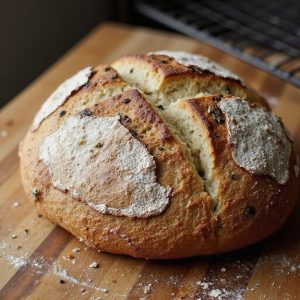
Rosemary Sourdough Bread
Equipment
- 2 Mixing bowls
- 1 Kitchen scale
- 1 measuring spoon set
- 1 Dough scraper
- 1 bench scraper
- 1 proofing basket or 1 medium bowl lined with a floured towel
- 1 Dutch oven with lid
- 1 sharp lame or serrated knife
- 1 Cooling rack
Ingredients
- 100 gram active sourdough starter 100% hydration
- 350 gram water room temperature
- 450 gram bread flour
- 50 gram whole wheat flour
- 10 gram fine sea salt
- 15 gram fresh rosemary finely chopped
- 10 gram olive oil plus extra for greasing
- 10 gram cornmeal or rice flour for dusting
Instructions
- In a mixing bowl, whisk together the active sourdough starter and water until mostly dissolved.
- Add the bread flour and whole wheat flour to the bowl and mix until no dry flour remains and a shaggy dough forms.
- Cover the bowl and let the dough rest (autolyse) for 45–60 minutes at room temperature.
- Sprinkle the salt and olive oil over the dough and pinch and fold the dough until both are fully incorporated.
- Add the chopped rosemary and gently fold and stretch the dough until the herb is evenly distributed.
- Cover the bowl and let the dough bulk ferment for 3–4 hours at room temperature, performing 3–4 sets of stretch-and-folds every 30 minutes during the first 2 hours.
- After bulk fermentation, lightly flour your work surface, gently turn out the dough, and rest it uncovered for 15–20 minutes.
- Perform a final shape by folding the dough into a tight round or oval loaf, using a bench scraper to create surface tension.
- Generously dust a proofing basket or towel-lined bowl with cornmeal or rice flour and place the shaped dough seam side up into the basket.
- Cover the basket and refrigerate for 8–12 hours for a slow cold proof.
- About 45 minutes before baking, place a Dutch oven with its lid into your oven and preheat to 475°F (245°C).
- Remove the dough from the refrigerator, carefully invert it onto a piece of parchment or a cornmeal-dusted board so it is seam side down.
- Score the top of the loaf with a sharp lame or serrated knife to allow for controlled expansion.
- Carefully transfer the dough into the preheated Dutch oven, cover with the lid, and bake for 20 minutes.
- Remove the lid, reduce the oven temperature to 450°F (230°C), and bake for an additional 18–22 minutes until deep golden brown.
- Remove the loaf from the Dutch oven and let it cool completely on a cooling rack for at least 1 hour before slicing.
Notes
For best results, use an active sourdough starter that has recently peaked and smells mildly tangy, and adjust fermentation times based on your kitchen temperature (warmer rooms speed things up, cooler rooms slow them down). Hydration can vary by flour brand, so if the dough feels very stiff add 5–10 g more water, and if extremely sticky hold back a little next time. A tight final shaping and a well-floured proofing basket help maintain structure and prevent sticking, while a deep score encourages good oven spring. Letting the loaf cool fully before cutting keeps the crumb from turning gummy, and storing leftovers cut-side down on a board or in a paper bag preserves the crust’s crispness.
Tried this recipe?Let us know how it was!