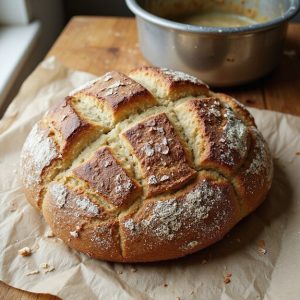
Rustic Over-Proofed Sourdough Rescue Loaf
Equipment
- 1 large mixing bowl
- 1 bench scraper or dough scraper
- 1 baking sheet or cast-iron skillet
- 1 piece parchment paper
- 1 sharp knife or bread lame
- 1 Kitchen scale
- 1 clean kitchen towel
- 1 wire cooling rack
Ingredients
- 400 gram over-proofed sourdough dough
- 40 gram bread flour for reshaping
- 10 gram olive oil for greasing
- 5 gram water for smoothing crust
- 2 gram fine sea salt for topping optional
Instructions
- Lightly flour your work surface with a portion of the bread flour.
- Gently tip the over-proofed sourdough dough out of its container onto the floured surface using the dough scraper.
- Dust the top of the dough lightly with more flour to prevent sticking.
- Using the bench scraper, gently fold the dough edges toward the center to tighten it into a rough round or oval shape without aggressively degassing it.
- Let the shaped dough rest on the counter for 15 minutes uncovered to relax the gluten slightly.
- While the dough rests, line a baking sheet or cast-iron skillet with parchment paper and lightly grease the parchment with olive oil.
- After resting, perform a final gentle shaping, tucking the dough edges underneath to build surface tension and form a smooth top.
- Transfer the shaped dough seam-side down onto the prepared parchment-lined pan.
- Lightly brush or dab the dough surface with a little water to help with crust development.
- Loosely cover the dough with a clean kitchen towel and let it rest at room temperature for 45 minutes to 1 hour for a short final proof.
- About 30 minutes before baking, preheat your oven to 450°F (230°C).
- Just before baking, sprinkle the dough surface with fine sea salt if using.
- Score the top of the dough with a sharp knife or lame in one or two swift cuts to control expansion.
- Place the pan with the dough into the preheated oven on the middle rack.
- Bake for 20 minutes, then reduce the oven temperature to 425°F (220°C) and continue baking for another 15–20 minutes until deep golden brown.
- If the crust is browning too quickly, loosely tent the loaf with a piece of foil for the final 10 minutes.
- Remove the bread from the oven and carefully transfer it to a wire cooling rack.
- Let the loaf cool completely for at least 30 minutes before slicing to allow the crumb to set.
Notes
To get the best result from over-proofed dough, handle it gently to avoid knocking out all the remaining gas, and focus on tightening the surface with light folds rather than full kneading. Over-proofed dough often spreads more, so using a smaller baking vessel with parchment “walls” helps it rise up instead of out. Longer, slightly cooler baking can improve structure and reduce gumminess in an overly wet crumb. If the dough is extremely slack, you can fold in a small extra dusting of flour while reshaping, but avoid adding so much that you lose the open sourdough texture. Finally, remember that flavor is usually excellent in over-proofed dough—so even if the loaf is flatter than ideal, it will still make great toast, crostini, or croutons.
Tried this recipe?Let us know how it was!