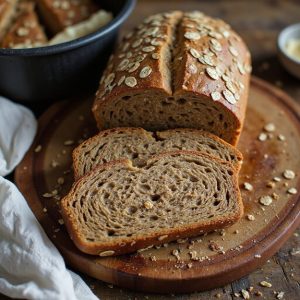
Sourdough Brown Bread
Equipment
- 1 large mixing bowl
- 1 medium mixing bowl
- 1 digital kitchen scale
- 1 wooden spoon or dough whisk
- 1 bench scraper
- 1 proofing basket or 1 medium bowl with towel
- 1 8x4-inch loaf pan or 1 Dutch oven
- 1 Oven
- 1 sharp knife or lame
- 1 Cooling rack
- 1 clean kitchen towel
Ingredients
- 150 gram active sourdough starter 100% hydration
- 300 gram warm water
- 200 gram whole wheat flour
- 150 gram bread flour
- 100 gram rye flour
- 25 gram brown sugar packed
- 20 gram unsalted butter melted
- 10 gram molasses
- 9 gram fine sea salt
- 15 gram rolled oats optional topping
- 5 gram neutral oil for greasing pan
Instructions
- In a large mixing bowl, whisk together the active sourdough starter and warm water until mostly dissolved.
- Add the whole wheat flour, bread flour, rye flour, brown sugar, melted butter, molasses, and salt to the bowl and mix with a wooden spoon until a rough dough forms.
- Let the dough rest uncovered for 20–30 minutes to hydrate (autolyse).
- After resting, use damp hands to perform a series of stretches and folds in the bowl until the dough feels smoother and more elastic.
- Cover the bowl with a towel or lid and let the dough bulk ferment at room temperature for 6–8 hours, performing 3–4 sets of stretch and folds every 30–45 minutes in the first 2 hours.
- When the dough has risen by about 50% and looks airy with bubbles, lightly flour your work surface and gently turn the dough out.
- Use a bench scraper to pre-shape the dough into a loose round, then let it rest for 15–20 minutes uncovered.
- Shape the dough into a tight loaf suitable for your loaf pan or into a boule for a Dutch oven, creating surface tension without tearing the dough.
- Place the shaped dough seam-side up in a floured proofing basket or seam-side down in a lightly oiled loaf pan.
- Cover and proof at room temperature for 1–2 hours, then refrigerate for 4–8 hours for improved flavor and easier scoring (optional but recommended).
- About 45 minutes before baking, preheat the oven to 450°F (230°C), placing the Dutch oven inside if using.
- If using a loaf pan, lightly brush the top of the dough with water and sprinkle rolled oats on top if desired.
- Turn the dough out onto parchment (if using a Dutch oven) or keep it in the loaf pan, then score the top with a sharp knife or lame.
- For a Dutch oven, carefully transfer the dough with parchment into the preheated pot, cover, and place in the oven.
- Bake at 450°F (230°C) for 20 minutes covered (Dutch oven) or uncovered (loaf pan), then reduce the temperature to 400°F (200°C) and bake another 15–20 minutes until deep brown.
- Check that the internal temperature of the bread reaches about 205–210°F (96–99°C) and the bottom sounds hollow when tapped.
- Remove the bread from the pan or Dutch oven and cool on a cooling rack for at least 1 hour before slicing.
Notes
For best results, make sure your starter is active and bubbly before mixing, and adjust hydration slightly if your flours are very dry or very moist, adding a tablespoon of water at a time if the dough feels stiff. Whole grains and rye ferment faster, so watch the dough rather than the clock and avoid overproofing, which can cause collapse and dense texture. If your kitchen is cool, extend bulk fermentation or use a slightly warmer spot (around 75–78°F / 24–26°C). Letting the shaped loaf chill in the refrigerator helps develop flavor, makes scoring easier, and can improve oven spring. Always allow the bread to cool completely before slicing to avoid a gummy crumb, and store leftover bread wrapped in a towel or paper bag at room temperature, refreshing slices by toasting if they start to stale.
Tried this recipe?Let us know how it was!