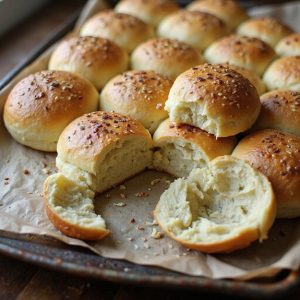
Sourdough Slider Buns
Equipment
- 1 Kitchen scale
- 2 medium mixing bowls
- 1 large mixing bowl
- 1 Dough scraper
- 1 stand mixer with dough hook (optional)
- 1 plastic wrap roll or 1 reusable bowl cover
- 2 rimmed baking sheets
- 2 sheets parchment paper
- 1 pastry brush
- 1 small whisk or fork
- 1 Cooling rack
Ingredients
- 150 gram active sourdough starter 100% hydration
- 250 gram warm water about 80–85°F
- 40 gram granulated sugar
- 60 gram unsalted butter melted and cooled
- 1 large egg room temperature
- 500 gram bread flour
- 9 gram fine sea salt
- 30 gram whole milk room temperature
- 1 large egg for egg wash
- 10 gram water for egg wash
- 10 gram sesame seeds optional topping
Instructions
- In a large mixing bowl whisk together the active sourdough starter, warm water, sugar, melted butter, and egg until smooth.
- Add the bread flour and salt to the bowl and mix with a dough scraper or spoon until a shaggy dough forms.
- Knead the dough by hand for 8–10 minutes or in a stand mixer on low speed for 6–8 minutes until it is smooth, elastic, and slightly tacky but not sticky.
- Shape the dough into a ball, place it in a lightly oiled bowl, cover, and let it bulk ferment at warm room temperature for 2–3 hours until puffed and about doubled.
- Lightly flour your work surface, gently turn out the dough, and pat or roll it into an even rectangle about ¾–1 inch thick.
- Use a scale or visual estimate to divide the dough into 12 equal pieces, about 70–75 g each.
- Shape each piece into a tight ball by tucking the edges underneath and rolling against the counter to create surface tension.
- Line two rimmed baking sheets with parchment paper and arrange 6 dough balls on each sheet with at least 2 inches of space between them.
- Lightly cover the shaped buns with plastic wrap or a clean towel and let them proof at warm room temperature for 60–90 minutes until noticeably puffy and slightly jiggly.
- About 20 minutes before baking, preheat the oven to 400°F (200°C) with racks in the upper and lower thirds.
- In a small bowl whisk together the egg and milk to make the egg wash until fully combined and smooth.
- Gently brush the tops of the proofed buns with a thin, even layer of egg wash, taking care not to deflate them.
- If using, sprinkle sesame seeds evenly over the tops of the buns.
- Bake the buns for 15–18 minutes, rotating the pans halfway through, until deep golden brown and an instant-read thermometer in the center reads about 200°F (93°C).
- Transfer the buns to a cooling rack and let them cool at least 20–30 minutes before slicing and serving.
Notes
For best results, use a lively, recently fed starter so the dough rises predictably, and keep the dough on the softer side by avoiding excess flour during kneading and shaping to maintain tenderness. If your kitchen is cool, extend bulk fermentation and proofing times rather than adding more starter, and use a clear straight-sided container or bowl marks to track dough expansion. Brushing with egg wash right before baking yields the shiniest tops; if you prefer a softer crust, tent the buns loosely with foil for the last few minutes of baking or brush with melted butter while warm. These buns freeze well once fully cooled—slice or leave whole, wrap tightly, and rewarm in a low oven to refresh before serving.
Tried this recipe?Let us know how it was!