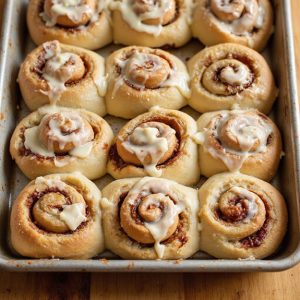
Sourdough Starter Cinnamon Rolls
Equipment
- 1 stand mixer with dough hook (optional)
- 2 large mixing bowls
- 1 medium mixing bowl
- 1 9x13 inch baking pan
- 1 Rolling Pin
- 1 dough scraper or knife
- 1 Measuring cups set
- 1 Measuring spoons set
- 1 Small saucepan
- 1 Whisk
- 1 Rubber spatula
- 1 pastry brush
- 1 plastic wrap or clean kitchen towel
Ingredients
- 240 gram active sourdough starter 100% hydration
- 240 milliliter whole milk warmed to lukewarm
- 100 gram granulated sugar
- 100 gram unsalted butter melted and cooled slightly
- 2 large eggs room temperature
- 8 gram fine sea salt
- 1 520–600 g all-purpose flour plus more for dusting
- 120 gram unsalted butter very soft
- 180 gram light brown sugar packed
- 2 tablespoon ground cinnamon
- 1 teaspoon ground vanilla or 2 tsp vanilla extract
- 120 gram cream cheese softened
- 60 gram unsalted butter softened
- 180 gram powdered sugar sifted
- 1 teaspoon vanilla extract
- 1 15–30 ml milk or cream as needed
- 1 pinch fine sea salt
Instructions
- In a large mixing bowl, whisk together the active sourdough starter, lukewarm milk, granulated sugar, melted butter, and eggs until smooth.
- Add the salt and 520 g of flour to the bowl and mix with a spoon or in a stand mixer on low speed until a shaggy dough forms.
- Knead by hand or with the dough hook for 7–10 minutes, adding small amounts of the remaining flour only if needed, until the dough is soft, slightly tacky, and elastic.
- Shape the dough into a ball, place it in a lightly greased large bowl, cover tightly, and let it rise at room temperature for 6–8 hours or until roughly doubled and puffy.
- In a medium bowl, combine the soft butter, brown sugar, cinnamon, and vanilla for the filling and mix into a smooth, spreadable paste.
- Lightly flour your work surface, turn out the risen dough, and gently deflate it by pressing it into a rectangle with your hands.
- Using a rolling pin, roll the dough into a large rectangle about 40 x 30 cm (16 x 12 inches), keeping the thickness even.
- Spread the cinnamon filling evenly over the surface of the dough, leaving a 1 cm (½ inch) border along one long edge.
- Starting from the opposite long edge, roll the dough up tightly into a log, pinching the seam to seal.
- Trim the ends if desired, then cut the log into 12 equal slices using a sharp knife or dough scraper.
- Arrange the rolls cut-side up in a greased 9x13-inch baking pan, spacing them evenly.
- Cover the pan tightly with plastic wrap or a clean towel and let the rolls rise at room temperature for 2–4 hours, or refrigerate overnight for a slower rise.
- When ready to bake, remove the pan from the refrigerator (if chilled) and let the rolls sit at room temperature until noticeably puffy, about 45–60 minutes.
- Preheat the oven to 180°C (350°F) while the rolls finish proofing.
- Bake the rolls for 22–28 minutes, until lightly golden on top and the centers read about 88–93°C (190–200°F) if checked with a thermometer.
- While the rolls bake, make the icing by whisking together the cream cheese and butter until smooth, then adding powdered sugar, vanilla, salt, and just enough milk or cream to reach a thick, spreadable consistency.
- Let the baked rolls cool in the pan for 10–15 minutes, then spread or drizzle the cream cheese icing over the warm rolls.
- Serve the cinnamon rolls warm and store any leftovers covered at room temperature for 1 day or refrigerated for up to 3 days.
Notes
For best results, make sure your sourdough starter is very active and bubbly before mixing the dough, as a sluggish starter will lengthen rising times considerably; dough temperature and room warmth dramatically affect fermentation, so if your kitchen is cool, allow extra time or proof in a slightly warm (but turned off) oven. Aim for a soft, slightly tacky dough—adding too much flour leads to dense rolls—so resist over-flouring the surface while rolling. An overnight proof in the fridge not only makes timing easier for a morning bake but also improves flavor and makes the dough easier to handle and slice. Finally, slightly underbaking keeps the centers tender and gooey; you can tent with foil near the end if the tops brown too quickly while the middle finishes baking.
Tried this recipe?Let us know how it was!