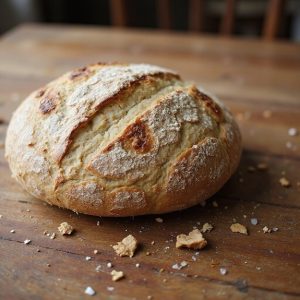
Spelt Sourdough Bread
Equipment
- 1 large mixing bowl
- 1 Dough scraper
- 1 Kitchen scale
- 1 measuring jug
- 1 proofing basket or 1 medium bowl lined with a floured towel
- 1 Dutch oven with lid (or 1 baking stone plus 1 oven-safe tray for steam)
- 1 razor blade or sharp knife for scoring
- 1 clean kitchen towel or plastic wrap
Ingredients
- 100 gram active sourdough starter 100% hydration
- 350 gram water room temperature
- 450 gram whole spelt flour
- 50 gram bread flour
- 9 gram fine sea salt
Instructions
- In the large mixing bowl, whisk together the active sourdough starter and water until mostly dissolved.
- Add the whole spelt flour and bread flour to the bowl and mix with your hand or a dough scraper until no dry flour remains and a shaggy dough forms.
- Cover the bowl with a towel or plastic wrap and let the dough rest (autolyse) for 30 minutes.
- Sprinkle the salt over the dough, pinch and fold it in until evenly incorporated and the dough tightens slightly.
- Over the next 2 hours, perform 3–4 sets of stretch-and-folds every 30 minutes, pulling the dough up from one side and folding it over to the other side, turning the bowl and repeating.
- After the final set of folds, cover the bowl and let the dough bulk ferment at room temperature for 3–5 hours, or until it has risen by about 50% and feels airy and puffy.
- Lightly flour your work surface, gently turn the dough out, and let it rest for 10–15 minutes uncovered to relax.
- Shape the dough into a tight boule or batard by gently stretching and folding the edges toward the center, then tightening the surface by dragging it against the counter.
- Generously flour your proofing basket or towel-lined bowl and place the shaped dough seam-side up into it.
- Cover the dough and proof it at room temperature for 1–2 hours, or place it in the refrigerator for 8–12 hours for a cold retard.
- About 45 minutes before baking, place the Dutch oven with its lid into the oven and preheat to 475°F (245°C).
- When ready to bake, carefully remove the hot Dutch oven, gently invert the dough onto a piece of parchment paper so it is seam-side down, and score the top with a sharp blade.
- Transfer the dough on the parchment into the Dutch oven, cover with the lid, and bake for 20 minutes.
- Remove the lid, reduce the temperature to 450°F (230°C), and continue baking for 18–22 minutes until the crust is deep golden-brown and the loaf sounds hollow when tapped on the bottom.
- Transfer the bread to a wire rack and let it cool completely for at least 1–2 hours before slicing.
Notes
Spelt dough ferments faster than wheat dough, so watch the dough rather than the clock to avoid over-proofing, looking for gentle doming and a slight wobble when the basket is shaken. If your starter is mild, a longer cold proof will boost flavor without making the dough too sour, and using slightly cooler water can help slow fermentation in a warm kitchen. Because spelt has a more fragile gluten structure, keep handling gentle and avoid adding too much extra flour during shaping, which can dry the loaf. If the dough feels very sticky, lightly wetting your hands often works better than flouring. Finally, for a thinner but crispier crust, vent steam by cracking the oven door slightly for the last 5 minutes of baking, and always let the bread cool fully so the crumb can set and moisture can redistribute for cleaner slices.
Tried this recipe?Let us know how it was!