There’s something about a crackling, flour-dusted loaf cooling on the counter that makes a kitchen feel complete.
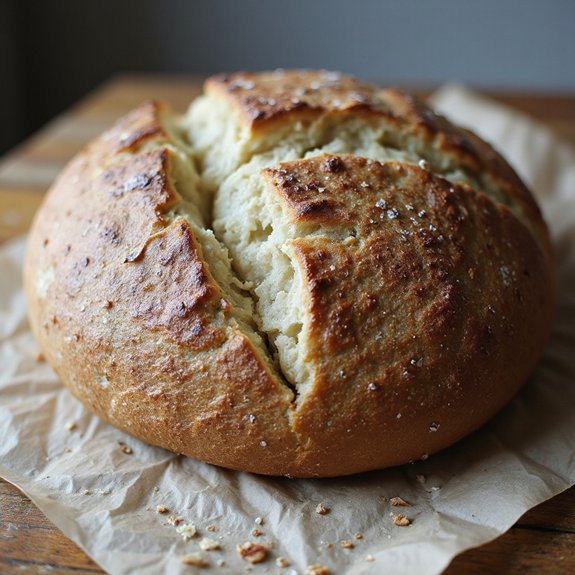
Picture a deep golden crust, blistered and rustic, giving way to a tender, open crumb that smells faintly of toasted wheat and tangy ferment.
This Italian sourdough is classic “table bread” — perfect for dipping into hearty stews, cradling deli-style sandwiches, or simply tearing and swiping through good olive oil.
It’s slow food, yes, but mostly hands-off: the dough does the work while you go about your day.
It’s ideal for beginners ready to try sourdough, families who love real bread, and anyone who enjoys meal-prepping loaves for the week.
I still remember pulling out a loaf before a last-minute Sunday supper with friends; that warm, crackling bread turned basic soup and salad into a cozy, lingering meal.
Ready to bring this loaf to life in your own kitchen?
Why You’ll Love It
- Delivers a beautifully chewy crumb with a crackling artisan-style crust
- Develops complex, tangy flavor from long, slow natural fermentation
- Uses simple pantry staples—flour, water, salt, and starter
- Fits your schedule with hands-off overnight cold proofing
- Bakes perfectly in a Dutch oven—no special bread oven required
Ingredients
- 100 g active sourdough starter — 100% hydration, lively and bubbly
- 350 g water — at room temperature for steady fermentation
- 500 g bread flour — high-protein for better gluten strength
- 10 g fine sea salt — evenly seasons and strengthens dough structure
- 15 g olive oil — optional, adds tenderness and a subtle Italian aroma
Step-by-Step Method
Mix Starter and Water
Dissolve the active sourdough starter in room-temperature water in a medium bowl. Stir until the starter is mostly dispersed and the liquid looks milky and uniform.
This guarantees even fermentation throughout the dough. Use your hand or a wooden spoon to break up any lumps so the starter blends smoothly with the water.
Combine Flour and Form Shaggy Dough
Add the bread flour to the starter-water mixture. Stir with a wooden spoon until no dry flour remains. Scrape down the sides of the bowl as you mix.
Stop once you have a shaggy, slightly sticky mass. Don’t knead at this point; just guarantee everything is evenly moistened and roughly combined.
Autolyse the Dough
Cover the bowl with a clean kitchen towel. Let the dough rest for 45 minutes at room temperature. This autolyse phase allows the flour to hydrate fully and gluten to begin developing.
Resist the urge to mix. Simply leave the dough undisturbed so it relaxes and becomes easier to handle later.
Add Salt and Olive Oil
Sprinkle the fine sea salt evenly over the dough surface. Drizzle the olive oil, if using, on top. Use your hand to pinch the dough repeatedly, then fold it over itself.
Continue until the salt and oil are completely incorporated and no slick patches remain. This step strengthens gluten and balances flavor.
Rest Briefly Before Folds
Cover the bowl again and let the dough rest for 30 minutes at room temperature. This short pause lets the gluten relax after mixing in the salt and oil.
It also allows the natural fermentation to begin more actively. Avoid disturbing the dough so it can start building strength and structure on its own.
Perform First Stretch and Fold
Uncover the bowl and wet your hand lightly. Grab one edge of the dough, stretch it upward gently, then fold it over to the opposite side.
Rotate the bowl and repeat 4–6 times, working all around. This technique develops strength without kneading. Cover the bowl again once all folds are complete.
Repeat Rest and Fold Cycles
Let the dough rest covered for another 30 minutes. Repeat the same set of stretch-and-folds.
Continue this pattern of 30-minute rests followed by folds for a total of 3–4 sets over about 2 hours. The dough should gradually become smoother, more elastic, and slightly puffier with each cycle.
Finish Bulk Fermentation
After the final fold, cover the dough and leave it undisturbed at room temperature. Let it continue to bulk ferment until roughly doubled in size. Look for a puffy surface and small bubbles along the bowl’s sides.
This usually takes 2–4 hours, depending on your kitchen temperature and starter strength.
Turn Out and Pre-Shape
Lightly flour your work surface. Gently loosen the dough from the bowl using a dough scraper and tip it out. Avoid deflating it aggressively. Fold the edges toward the center to form a loose round.
Turn it seam side down and let it rest uncovered for 20 minutes. This pre-shape organizes the crumb.
Shape Into Tight Loaf
Lightly flour the top of the rested dough and flip it over. Shape into a tight round or oval by folding the sides toward the center and rolling gently.
Use your hands to pull the dough toward you on the counter, creating surface tension. Aim for a smooth, taut exterior while keeping the interior airy.
Transfer to Proofing Basket
Generously flour your proofing basket or a bowl lined with a floured towel. Place the shaped dough seam side up into the basket. Adjust it gently so it sits centered and even.
Dust the surface lightly with flour if needed to prevent sticking. Cover the basket with a kitchen towel or plastic wrap.
Cold-Proof Overnight
Move the covered proofing basket to the refrigerator. Let the dough cold-proof for 12–14 hours. This slow fermentation improves flavor, texture, and digestibility.
It also firms the dough, making scoring easier. Don’t disturb the loaf during this time; simply allow it to rise slowly and develop complexity.
Preheat Oven and Dutch Oven
About 45 minutes before baking, place your Dutch oven with its lid inside your oven. Preheat to 250°C (480°F). Heating the Dutch oven thoroughly ensures strong oven spring.
Make sure the rack is centered. Keep the lid on while preheating so both parts are evenly and fully heated.
Invert and Score the Loaf
When ready to bake, cut a piece of parchment paper. Carefully invert the chilled dough from the basket onto the parchment, seam side down.
Use a sharp knife or lame to score the top with a 1–2 cm deep slash. This controlled cut directs expansion and prevents random bursting as the loaf rises.
Bake Covered for Oven Spring
Using the parchment as a sling, lift the scored dough and place it into the preheated Dutch oven. Cover immediately with the hot lid. Bake at 250°C (480°F) for 20 minutes.
The enclosed environment traps steam, helping the loaf expand dramatically and develop a glossy, blistered crust.
Finish Baking and Cool
After 20 minutes, reduce the oven temperature to 220°C (430°F). Remove the lid and continue baking 20–25 minutes until deep golden brown and hollow-sounding when tapped underneath.
Carefully remove the loaf to a wire rack. Let it cool completely for at least 1 hour before slicing to set the crumb.
Ingredient Swaps
- Use up to 50% whole wheat or rye flour for a heartier loaf; you may need to add 10–20 g extra water.
- For a softer crust, swap part of the water (up to 20%) with milk, or add 10–20 g sugar or honey.
- Replace olive oil with any neutral oil or melted butter, or omit it entirely for a leaner, chewier Italian-style bread.
- If you’re short on bread flour, mix all-purpose with a few tablespoons of essential wheat gluten, or use all-purpose alone for a slightly less chewy texture.
You Must Know
– Avoid • When handling sticky dough: Lightly dampen your hands or scraper instead of dusting more flour; extra flour beyond the recipe (more than 10–15 g on the surface) tightens the crumb and can lead to a denser, less open interior.
Serving Tips
- Serve with extra-virgin olive oil, balsamic vinegar, and flaky salt for dipping.
- Pair warm slices with minestrone, ribollita, or tomato basil soup.
- Toast and top with fresh tomatoes, basil, garlic, and olive oil for bruschetta.
- Use for panini with mozzarella, prosciutto, pesto, and arugula.
- Grill slices and serve alongside antipasto: olives, cured meats, and aged cheeses.
Storage & Make-Ahead
Italian sourdough keeps well at room temperature for 1–2 days.
Refrigeration tends to dry it out, so avoid the fridge if possible.
For make-ahead, slice the fully cooled loaf, wrap tightly, and freeze up to 2–3 months.
Toast or reheat in a hot oven to refresh the crust.
Reheating
Reheat slices in a 175°C (350°F) oven for 5–10 minutes, or in a covered skillet over low heat.
Brief microwaving is possible, but may soften the crust.
Italian Village Bakery Traditions
Dawn in a small village bakery feels like a quiet celebration, and Italian sourdough has always stood at its center.
I still picture wooden shutters half-open, the first light catching flour dust in the air, and the slow creak of the oven door as loaves slide onto hot stone.
In these bakeries, time sets the rhythm.
Starters pass from one pair of hands to the next, like a family heirloom.
Bakers judge dough by touch and scent long before any timer rings.
While you mix and fold at home, you’re stepping into that same tradition—listening to dough, respecting long rests, letting flavor build overnight.
You’re not just baking bread; you’re joining a quiet, centuries-old conversation.
Final Thoughts
Give this Italian sourdough bread recipe a try and enjoy the crispy crust and flavorful, chewy crumb fresh from your oven.
Once you’ve made it once, feel free to tweak the hydration, flour blend, or fermentation time to make it truly your own.
Frequently Asked Questions
Can I Convert This Sourdough Recipe to Use Commercial Yeast Instead?
Yes, you can. I’d swap the starter for 7–9 g instant yeast, add 50 g extra water, shorten bulk and cold proof until doubled. You’ll lose sour tang, but gain a soft, pillowy, fragrant loaf.
How Do I Adjust the Recipe for High-Altitude Baking Conditions?
You’ll shorten fermentation, add a bit more water, and slightly reduce oven temperature. I’d watch the dough, not the clock—aim for soft, billowy dough, gentle proof, then bake until bronzed and fragrant.
Is This Italian Sourdough Suitable for People With Mild Gluten Sensitivity?
It might be gentler than quick breads, but I wouldn’t call it safe for gluten sensitivity. I’d invite you to savor its aroma, yet urge you to consult your doctor or choose certified low‑gluten options.
What Are Common Mistakes Beginners Make With This Dough and How to Fix Them?
You’ll often under-ferment, add extra flour to stickiness, or handle the dough too roughly. I watch for bubbles and jiggle, keep my hands wet, stretch gently, and trust time to weave the airy crumb.
Can I Mix in Herbs, Cheese, or Olives Without Affecting Fermentation Too Much?
You can, and I’d fold them in after the first rise. I tuck cool, dry herbs, cheese, or well‑drained olives gently into the dough, keeping amounts modest so its airy lift and gentle tang stay intact.
Italian Sourdough Bread
Equipment
- 1 large mixing bowl
- 1 medium mixing bowl
- 1 Kitchen scale
- 1 measuring jug
- 1 Dough scraper
- 1 Wooden spoon
- 1 proofing basket (or 1 bowl lined with floured towel)
- 1 sharp knife or lame
- 1 Dutch oven with lid (or 1 baking stone and 1 oven-safe tray for steam)
- 1 wire cooling rack
- 1 clean kitchen towel
Ingredients
- 100 gram active sourdough starter 100% hydration
- 350 gram water room temperature
- 500 gram bread flour
- 10 gram fine sea salt
- 15 gram olive oil optional
Instructions
- In a medium mixing bowl, mix the active sourdough starter with the water until the starter is mostly dissolved.
- Add the bread flour to the liquid mixture and stir with a wooden spoon until no dry flour remains and a shaggy dough forms.
- Cover the bowl with a clean kitchen towel and let the dough rest (autolyse) for 45 minutes.
- Sprinkle the salt over the dough, add the olive oil if using, and pinch and fold the dough with your hand until the salt and oil are fully incorporated.
- Let the dough rest for 30 minutes, covered, at room temperature.
- Perform a set of stretch-and-folds by grabbing one edge of the dough, stretching it up, and folding it over to the opposite side, repeating 4–6 times around the bowl.
- Cover and rest the dough for 30 minutes, then repeat the stretch-and-fold process.
- Repeat this rest and stretch-and-fold cycle 2 more times for a total of 3–4 sets over about 2 hours of bulk fermentation.
- After the final fold, cover the dough and let it continue to bulk ferment at room temperature until roughly doubled in size, puffy, and showing bubbles along the sides, about 2–4 hours depending on room temperature.
- Lightly flour your work surface and gently turn out the dough from the bowl using a dough scraper.
- Pre-shape the dough into a loose round by folding the edges toward the center and turning it seam side down, then let it rest uncovered for 20 minutes.
- After the bench rest, lightly flour the top of the dough, flip it over, and shape it into a tight round or oval loaf, creating surface tension by pulling it toward you on the counter.
- Generously flour the proofing basket or floured towel-lined bowl, then place the shaped dough seam side up into the basket.
- Cover the basket with a kitchen towel or plastic wrap and place it in the refrigerator to cold-proof for 12–14 hours.
- About 45 minutes before baking, place the Dutch oven with its lid into the oven and preheat to 250°C (480°F).
- When ready to bake, carefully remove the hot Dutch oven from the oven and gently invert the dough from the basket onto a piece of parchment paper, seam side down.
- Score the top of the dough with a sharp knife or lame, making a 1–2 cm deep slash to allow controlled expansion.
- Lift the dough using the parchment paper and place it into the hot Dutch oven, then cover with the lid.
- Bake covered at 250°C (480°F) for 20 minutes to create steam and good oven spring.
- After 20 minutes, reduce the oven temperature to 220°C (430°F), remove the lid, and continue baking for 20–25 minutes until the crust is deep golden brown and the loaf sounds hollow when tapped on the bottom.
- Carefully remove the bread from the Dutch oven and place it on a wire cooling rack.
- Allow the bread to cool completely for at least 1 hour before slicing to let the crumb set and moisture redistribute.
Notes

Cynthia Weatherford is a seasoned chef and culinary enthusiast who serves as the Recipe creator of Somonday. With decades of experience in the kitchen and a passion for exploring diverse cuisines, Cynthia brings a blend of creativity and technique to every dish. Known for transforming simple ingredients into show-stopping meals, Cynthia believes that cooking is an art form anyone can master. Dedicated to inspiring home cooks, Cynthia shares approachable recipes, pro tips, and culinary wisdom to make every meal memorable.