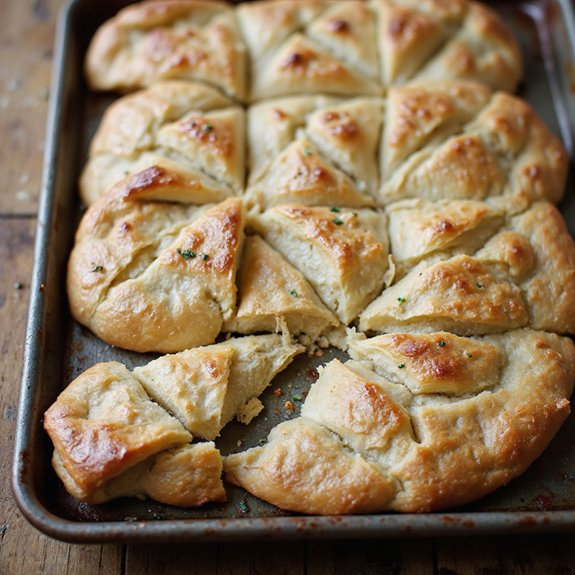
There’s something about pulling a tray of golden, shatteringly crisp pastry from the oven that makes the whole kitchen feel special.
Picture buttery layers, blistered and puffed, with that gentle tang of sourdough in the air—rich, toasty, and just a little bit nostalgic.
This sourdough puff pastry is a versatile base, ready in advance, then baked off quickly for whatever you’re craving: cozy fruit turnovers, elegant tarts, savory cheese twists, or flaky pot pie lids.
It’s ideal for home bakers who love make-a-head magic—busy parents, weekend entertainers, and curious beginners ready to level up.
I still remember a rainy Sunday when unexpected guests dropped by; I pulled a disc of this dough from the fridge, wrapped sliced apples and sugar inside, and 20 minutes later we were all crowded around the table, warm plates in hand. Perfect for brunches, last-minute desserts, or easy appetizers.
Ready to bring this dough to life?
Why You’ll Love It
- Delivers deep, complex flavor from natural sourdough fermentation
- Creates ultra-flaky, buttery layers without commercial puff pastry sheets
- Makes ahead-friendly dough that refrigerates or freezes for future bakes
- Uses simple pantry ingredients plus your active sourdough starter
- Adapts easily for both sweet desserts and savory appetizers
Ingredients
- 200 g sourdough starter, 100% hydration — active and bubbly for best lift
- 120 g water, room temperature — cool but not cold for easy mixing
- 250 g unsalted butter, cold, cut into chunks — high-fat European-style if possible
- 300 g all-purpose flour — medium-protein, not bread flour
- 8 g fine sea salt — evenly seasons the dough
- 10 g granulated sugar (optional) — adds a lightly sweet pastry note
- 5 g lemon juice or white vinegar (optional) — helps tenderize and brighten flavor
Step-by-Step Method
Mix the Dry Ingredients
Whisk together the flour, salt, and sugar (if using) in a large mixing bowl. Distribute the salt and sugar evenly through the flour.
This helps season the dough and guarantees even browning. Set the bowl aside while you prepare the wet mixture so everything is ready to combine quickly.
Combine the Wet Ingredients
Stir the sourdough starter, water, and lemon juice or vinegar in a medium bowl until smooth. Break up any lumps of starter so the mixture is uniform.
This guarantees even hydration and fermentation throughout the dough, giving better flavor and structure once the pastry is layered and baked.
Bring the Dough Together
Pour the wet mixture into the dry ingredients. Mix with a dough scraper until a rough, shaggy dough forms.
Aim to moisten all the flour without overworking it. Scrape the sides and bottom of the bowl so no dry patches remain. Stop mixing once everything just clumps together.
Knead Briefly and Chill
Knead the dough gently for 1–2 minutes until it holds together smoothly. Shape it into a rough rectangle.
Wrap tightly in plastic wrap to prevent drying. Refrigerate for 30–45 minutes. This rest relaxes the gluten and chills the dough, making it easier to roll without shrinking or tearing later.
Shape the Butter Block
Place the cold butter chunks between two sheets of parchment. Pound and roll them into a 15 x 15 cm square, about 1–1.5 cm thick.
Keep the edges neat and even. Chill the butter block for about 15 minutes until firm but still pliable, so it can bend without cracking when enclosed in dough.
Roll the Dough for Lamination
Lightly flour your work surface. Roll the rested dough into a 30 x 20 cm rectangle.
Keep the thickness even and the edges as straight as possible. Use your dough scraper or hands to square off corners. Work quickly so the dough stays cool and doesn’t soften or stick to the surface.
Encase the Butter
Place the butter block in the center of the dough like a diamond, with its corners pointing to the sides. Fold each corner of dough over the butter to meet in the middle.
Pinch the seams well so the butter is completely enclosed. Seal any gaps to prevent butter leaking during rolling.
Roll and Fold the First Turn
Gently roll the butter-encased dough into a long rectangle about 45 x 20 cm. Use light, even pressure so the butter spreads without breaking through.
Fold the top third down, then the bottom third up like a letter. Rotate 90 degrees so the folded edge faces you. This is your first turn.
Chill Between Turns
Wrap the dough in plastic wrap and refrigerate for 30–45 minutes. Let the butter firm up and the gluten relax.
Chilling between turns prevents smearing the butter into the dough. It preserves distinct layers that will puff dramatically in the oven, creating the classic flaky sourdough pastry texture.
Complete the Remaining Turns
Place the dough with the “spine” on your left. Roll again to 45 x 20 cm, then repeat the letter fold and rotate.
Chill 30–45 minutes. Repeat this process once more for a total of three turns. After the third turn, wrap tightly and refrigerate at least 2 hours or overnight to rest and ferment.
Roll and Shape the Pastry
Preheat the oven to 200°C and line baking sheets with parchment. Roll the rested dough on a lightly floured surface to 3–4 mm thickness.
Work quickly to keep it cold. Use a sharp knife or pastry wheel and a ruler if desired to cut neat shapes for turnovers, napoleons, or palmiers.
Chill, Bake, and Cool
Transfer cut pieces to lined baking sheets, spacing them apart. Optionally brush with water and sprinkle sugar, or leave plain for savory fillings.
Chill 15–20 minutes to firm. Bake at 200°C for 20–25 minutes until deeply golden and crisp. Cool 5 minutes on the sheet, then move to a wire rack.
Ingredient Swaps
- Use strong bread flour for slightly more chew and rise, or swap up to 30–40% whole‑wheat or spelt flour and add 10–15 g extra water if the dough feels dry.
- Replace unsalted butter with European-style butter for richer flavor, or use a high‑fat plant-based “butter block” or vegan margarine (that stays firm when cold) for a dairy‑free version.
- Any 100% hydration wheat-based starter (white, whole‑wheat, or rye) works; if using a very tangy or rye starter, reduce added acid or omit the lemon juice/vinegar.
- Granulated sugar is optional—substitute coconut sugar or light brown sugar for a caramel note, or omit entirely for fully savory pastry.
You Must Know
– Scale • When doubling or halving the recipe… keep the butter block about 1–1.5 cm thick no matter the batch size and maintain the same fold pattern (3 total turns); consistent thickness and turns, not the absolute dimensions, make sure you get hundreds of thin layers that puff evenly.
Serving Tips
- Serve warm with whipped cream and fresh berries for a simple, elegant dessert.
- Pair savory shapes with soft cheeses, smoked salmon, and herbs for appetizers.
- Layer baked sheets with pastry cream and fruit for rustic mille-feuille.
- Dust with powdered sugar and drizzle with dark chocolate for rich coffee accompaniment.
- Top with honey-roasted stone fruit and a scoop of vanilla ice cream.
Storage & Make-Ahead
Sourdough puff pastry keeps in the fridge, well wrapped, for up to 2 days before rolling and baking.
For longer storage, freeze the dough (or cut, unbaked shapes) up to 1 month, tightly wrapped.
Bake from chilled for best lift, or from frozen adding a few minutes to the bake time.
Reheating
Reheat sourdough puff pastry gently: use a 175°C oven for 5–8 minutes to re‑crisp.
Avoid microwaving (it softens).
Brief stovetop reheating in a covered skillet restores warmth and some flakiness.
Sourdough in French Baking
On a quiet French morning, I imagine a bakery filled with the buttery scent of puff pastry, but beneath that perfume lies something older and wilder: levain, the French sourdough.
I think of it as the bakery’s quiet heartbeat, fed at dawn, sleeping by noon, whispering flavor into every layer.
When I fold sourdough into French doughs—brioche, croissants, puff pastry—it adds a gentle tang, like yogurt against cream, never harsh, just deep.
The crumb feels more alive: tender, slightly chewy, fragrant with butter and wheat. I love how levain slows everything down.
Fermentation stretches the hours, and with that extra time, aromas bloom—hazelnut, warm milk, faint apple. You don’t just bake; you wait, you listen, you savor.
Final Thoughts
Give this sourdough puff pastry a try and enjoy the incredible layers and flavor you can create with just a bit of time and care.
Once you’ve made it once, don’t be afraid to tweak the sweetness, shapes, or fillings to make it truly your own.
Frequently Asked Questions
Can I Make This Sourdough Puff Pastry Gluten-Free?
You can, but it’s tricky. I’d choose a good 1:1 gluten‑free blend, add a teaspoon xanthan gum, and handle the dough like cool, fragile silk—short, gentle rolls, long chills, listening for that subtle crackle.
How Do Altitude and Humidity Affect Lamination and Baking?
Altitude makes your layers puff faster yet dry, so I watch closely and sometimes lower heat; humidity softens butter and dough, so I chill often, dust lightly with flour, and let the kitchen feel brisk, not steamy.
Is It Possible to Laminate With Plant-Based or Vegan Butter?
Yes, you can. I choose a high‑fat, block-style vegan butter, keep it icy‑cold, and fold quickly. You’ll hear crisp layers shatter, smell warm toast and caramel, and see golden sheets rise like flaky, buttery paper.
Can I Use Discard-Only Starter Without Additional Commercial Yeast?
Yes, you can, but I’d urge patience: nurture that discard so it’s lively first. When it finally rises, your kitchen will smell gently tangy, butter hissing in the oven, layers blooming like crisp, golden pages.
How Do I Prevent Butter Leakage on the Baking Sheet?
You prevent butter leakage by chilling shaped pieces well and sealing edges firmly. I keep layers cold, cut cleanly, avoid rolling too thin, and bake on preheated trays so butter steams upward, not puddling beneath.
Sourdough Puff Pastry
Equipment
- 1 digital kitchen scale
- 2 medium mixing bowls
- 1 large mixing bowl
- 1 Dough scraper
- 1 Rolling Pin
- 1 pastry brush
- 1 sharp knife or pastry wheel
- 1 ruler (optional, for measuring dough)
- 2 baking sheets
- 2 sheets parchment paper
- 1 plastic wrap roll
Ingredients
- 200 gram sourdough starter 100% hydration active and bubbly
- 120 gram water room temperature
- 250 gram unsalted butter cold cut into chunks
- 300 gram all-purpose flour plus extra for dusting
- 8 gram fine sea salt
- 10 gram granulated sugar optional for slightly sweet pastry
- 5 gram lemon juice or white vinegar optional for tenderness
Instructions
- In a large mixing bowl whisk together the all-purpose flour, fine sea salt, and granulated sugar if using.
- In a medium mixing bowl stir the sourdough starter, water, and lemon juice or vinegar until well combined.
- Pour the wet mixture into the dry ingredients and mix with a dough scraper until a rough shaggy dough forms.
- Knead the dough gently by hand for 1–2 minutes just until it comes together without dry patches, then shape into a rough rectangle.
- Wrap the dough tightly in plastic wrap and refrigerate for 30–45 minutes to relax the gluten.
- Place the cold unsalted butter chunks between two sheets of parchment paper and pound with a rolling pin into a flat rectangle about 15 x 15 cm and 1–1.5 cm thick.
- Chill the butter block in the refrigerator for 15 minutes until firm but still pliable.
- Lightly flour your work surface and roll the rested dough into a rectangle about 30 x 20 cm.
- Place the butter block in the center of the dough so the corners of the butter point toward the middle of each dough side (like a diamond).
- Fold the four corners of the dough over the butter to completely encase it, pinching seams to seal well.
- Gently roll the butter-encased dough into a long rectangle about 45 x 20 cm, keeping thickness even and edges as straight as possible.
- Perform a simple letter fold by folding the top third of the dough down toward the center and the bottom third up over it to create three layers.
- Rotate the dough 90 degrees so the folded edge faces you like a book spine, then this counts as your first turn.
- Wrap the dough in plastic wrap and refrigerate for 30–45 minutes to chill and relax.
- Remove the dough and place it with the “spine” on your left, then roll again into a 45 x 20 cm rectangle.
- Repeat the letter fold (top third down, bottom third up), rotate 90 degrees, then wrap and chill for another 30–45 minutes for the second turn.
- Repeat the rolling, folding, rotating, and chilling process one more time for a total of 3 turns.
- After the third turn, wrap the dough tightly and refrigerate for at least 2 hours or up to overnight to fully rest and ferment.
- When ready to bake, preheat the oven to 200°C and line baking sheets with parchment paper.
- On a lightly floured surface roll the rested puff pastry dough to about 3–4 mm thickness, working quickly to keep it cold.
- Use a sharp knife or pastry wheel and ruler to cut desired shapes such as rectangles for turnovers, squares for napoleons, or strips for palmiers.
- Transfer the cut pieces to prepared baking sheets, spacing them apart to allow for puffing.
- If desired, brush the tops lightly with water and sprinkle with a little granulated sugar or leave plain for savory uses.
- Chill the shaped pastry on the baking sheets for 15–20 minutes to firm up before baking.
- Bake at 200°C for 20–25 minutes, or until deeply golden, well puffed, and crisp all the way through.
- Let the pastries cool on the baking sheets for 5 minutes, then transfer to a wire rack to cool completely or serve warm.
Notes

Cynthia Weatherford is a seasoned chef and culinary enthusiast who serves as the Recipe creator of Somonday. With decades of experience in the kitchen and a passion for exploring diverse cuisines, Cynthia brings a blend of creativity and technique to every dish. Known for transforming simple ingredients into show-stopping meals, Cynthia believes that cooking is an art form anyone can master. Dedicated to inspiring home cooks, Cynthia shares approachable recipes, pro tips, and culinary wisdom to make every meal memorable.